For home gardeners seeking effective, environmentally friendly options, organic pesticides offer a balance of performance and safety. This guide highlights five top choices designed to protect vegetables, ornamentals, and houseplants without harsh synthetic chemicals. Each product supports pest control while aiming to minimize environmental impact, making them suitable for organic gardens and safe around kids and pets when used as directed.
| Product | Brand | Type | Key Value |
|---|---|---|---|
| Lab QT Organocide 3-in-1 Garden Spray | Organic Laboratories | Insecticide, Fungicide, Miticide | Nature-safe, EPA exempt |
| Garden Safe Insecticidal Soap Ready-to-Use | Garden Safe | Insecticidal Soap | Direct-spray control, ready-to-use |
| Garden Safe Fungicide3 (Neem Oil) 32 oz | Garden Safe | Fungicide, Insecticide, Miticide | Three-in-one with neem oil |
| Garden Safe Fungicide3 1 Gallon | Garden Safe | Fungicide, Insecticide, Miticide | Large-volume option |
| Organic Laboratories Organocide RTU 24 oz | Organic Laboratories | Insecticide, Fungicide | OMRI-listed, soybean/sesame oils |
Lab QT Organocide 3-in-1 Garden Spray

Lab QT Organocide combines insecticidal, fungicidal, and miticidal actions in a single, natural formulation. It’s designed to be effective against a wide range of pests, including insects and mites, while maintaining a nature-safe profile. The product is EPA exempt and suitable for use around harvest times or indoors, offering flexibility for various garden scenarios. It aims to reduce reliance on harsher pesticides without compromising pest control.
Garden Safe Insecticidal Soap Ready-to-Use

This ready-to-use insecticidal soap provides direct-contact control of soft-bodied pests by coating exposed surfaces of insects and mites. It is suitable for indoor, outdoor, and greenhouse use on a variety of edibles and ornamentals. The product is designed for easy application, with no mixing required, and can be applied up to the day of harvest on edible crops when used as directed.
Garden Safe Fungicide3 Neem Oil 32 oz

This three-in-one product combines fungicidal protection with neem oil’s natural pest-repellent properties. It targets fungal diseases like black spot, rust, and powdery mildew while also addressing insect and mite pressures. The neem oil component provides a broad-spectrum approach suitable for diverse garden settings, including roses, fruits, vegetables, and ornamentals.
Garden Safe Fungicide3 1 Gallon

This 1-gallon formulation provides a three-in-one solution—fungicide, insecticide, and miticide—with neem oil extract as the active ingredient. It offers broad protection against powdery mildew, black spot, rust, aphids, spider mites, and other common garden pests. The product is designed for use around the home garden and is suitable for multiple plant types, including vegetables and ornamentals.
Organic Laboratories Organocide RTU 24 oz
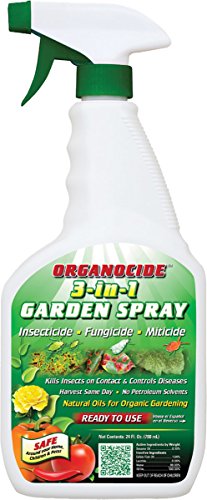
This RTU spray is OMRI-listed and designed for organic production, using a soybean/sesame/fish oil blend to provide insecticidal and fungicidal action. It targets a wide range of pests, including insects, mites, armored and soft scales, and certain fungal diseases. The formulation emphasizes safety and versatility across edible and ornamental crops, aligning with organic gardening standards.
Buying Guide
When selecting organic pesticides, consider pest type, crop safety, usage timing, and environmental impact. Key considerations include:
- Pest spectrum: Choose products tailored to the insects, mites, or fungi you’re facing. Some formulas act broadly, while others target specific pests like spider mites or powdery mildew.
- Plant safety and compatibility: Review label instructions for crop types and application limits to prevent phytotoxicity and to protect pollinators when applicable.
- Mode of action: Insecticidal soaps kill by contact, while oils and neem-based products work via coating, repellence, or disruption of pests’ life cycles. Consider integrating products to reduce resistance risk.
- Residual activity and re-entry time: Some products require minimal or no re-entry time, making them suitable for indoor or edible-plant use. Note any pre-harvest intervals.
- Organic certification and ingredients: Look for OMRI-listed options and ingredients derived from plant or mineral sources. Verify compatibility with your organic gardening goals.
- Safety and application: Follow protective gear recommendations, spray coverage (including undersides of leaves), and weather considerations to maximize efficacy and minimize environmental impact.
- Compatibility with beneficials: Some products may affect beneficial insects. Plan an integrated approach that preserves natural pest controllers where possible.
Comparative Notes
– Insecticidal soaps (Garden Safe Ready-to-Use) offer immediate contact kill with simple use but require direct spraying on pests. They’re best for soft-bodied insects and can be safer for sensitive plants when used as directed.
– Neem oil-based products (Fungicide3) provide antifungal protection and insect deterrence, suitable for a broad range of crops but may require repeated applications for best control.
– Multi-action organics (Organocide lines) combine insecticidal, fungicidal, and miticidal properties, offering convenient all-in-one protection, though performance can depend on pest type and environmental conditions.
– Large-volume options (1 gallon) are cost-efficient for bigger gardens but require proper storage and handling to maintain efficacy.