Answering the need for precise, local weather data for gardens, these weather stations provide inside/outside temperature, humidity, barometric pressure, and more. They’re ideal for gardeners who want to optimize irrigation, plant care, and seasonal planning. The top picks below cater to different budgets and tech preferences—from wireless multi-sensor setups to WiFi-enabled displays for remote access. Each option is evaluated for garden suitability, ease of use, and data clarity.
| Product | Best For | Key Benefit |
|---|---|---|
| Newentor Weather Station | Small to medium gardens; users wanting a color display | Large 7.5″ color LCD with multi-location sensing |
| Sainlogic 12-in-1 (No WiFi) | Gardens with a DIY setup; readers who prefer large fonts | Easy-to-read, adjustable backlight, precise rainfall |
| Ambient Weather WS-2902 | Tech-forward homes; remote monitoring | WiFi-enabled, hyper-local data with smart home integration |
| EZRead 5-in-1 Weather Station | Basic setups; simple all-in-one readings | Compact, all-in-one rain, wind, and temperature |
| AcuRite Wireless Home Weather Station | Casual users; quick setup | Balanced features with straightforward setup |
Newentor Weather Station Wireless Indoor Outdoor Thermometer

The Newentor station offers a 7.5″ color LCD display that consolidates inside/outside temperature and humidity with min/max readings, a barometric pressure indicator, and a weather forecast for the next 8–24 hours. It supports up to 3 remote sensors, making it suitable for monitoring multiple garden zones—from vegetable beds to container plantings. The adjustable backlight helps readability at dusk or dawn, and an atomic clock ensures accurate timekeeping for daily scheduling of irrigation or feeding routines.
Best for: small to medium gardens where a large, easy-to-read display helps keep track of microclimates around multiple beds or zones. Choose this if you want a single central unit with a color screen and multi-location sensing.
Caution: The forecast is a personal interpretation based on calibration data; local microclimates may vary. Ensure remote sensors are positioned away from direct heat sources to avoid skewed readings.
Sainlogic 12-in-1 Home Weather Station (No WiFi)

Designed with a large 6.5″ display and bold type, this unit emphasizes readability for garden monitoring. It supports multiple placement options (bedrooms, kitchens, gardens) and includes three-level adjustable backlighting for day or night use. The station provides rainfall measurements with high precision, including a manual calibration function to account for local conditions. It’s ideal for gardeners who want precise precipitation data and a straightforward interface without WiFi dependence.
Best for: readers who value a big display and accurate rainfall data for irrigation planning, especially in non-WiFi environments. Better for those who want a simple setup and robust, local-data operation.
Caution: Lacking WiFi means remote access and cloud history aren’t available. Some users may prefer a connected system for long-term data trends.
Ambient Weather WS-2902 WiFi Smart Weather Station
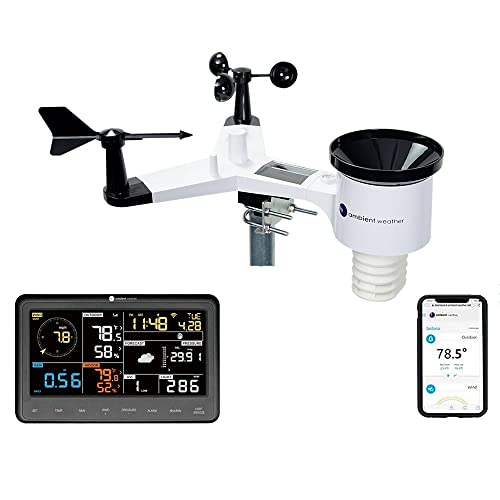
The Ambient Weather WS-2902 pairs a wireless sensor array with a color LCD display for real-time local conditions. It measures wind speed and direction, temperature, humidity, rainfall, UV, and solar radiation. It’s WiFi-enabled for remote access and can be integrated with smart home ecosystems via services like IFTTT, Google Home, and Alexa. This makes it a strong choice for gardeners who want to monitor their plots remotely and set weather-driven irrigation automations.
Best for: gardeners who want cloud-based data access and smart-home automation. Choose this if you prefer remote monitoring and historical data trends for long-term garden planning.
Caution: WiFi reliance means performance depends on network stability; in poor connectivity, data syncing may lag or be unavailable.
EZRead 5-in-1 Weather Station

This all-in-one station combines thermometer, rain gauge, wind speed, and wind direction in a compact package. The unit uses a float and lever system to measure rainfall up to 20 inches with readable increments. It supports dual readings in km/h and mph for wind. EZRead is a simple, affordable option for quick garden weather snapshots and basic irrigation planning.
Best for: budget-conscious gardeners who want a straightforward, all-in-one setup without extra bells and whistles. Choose this if you need a compact device for basic monitoring and rain measurement.
Caution: Limited integration and no advanced analytics; it emphasizes core readings over smart features or long-term data logging.
AcuRite Wireless Home Weather Station
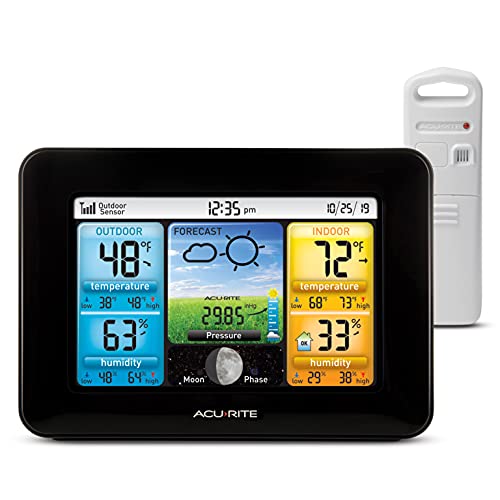
The AcuRite system provides a reliable balance of indoor and outdoor temperature data, humidity, and barometric pressure trends via a wireless sensor. It focuses on real-time readings and a practical forecast capability to help you plan daily gardening tasks. Setups are simple—attach the outdoor sensor, power up, and sync with the indoor display for quick, actionable data.
Best for: casual gardeners who want a dependable, easy-start weather station without needing extensive smart-home integrations. Choose this if you want reliable local readings with a straightforward interface.
Caution: For advanced features or cloud-based history, you may need models with WiFi or higher-end ecosystems; this unit prioritizes ease of use and core data.
Buying Guide: Key Considerations For Garden Weather Stations
- Display readability: For outdoor garden views, a large, high-contrast display helps catch data quickly during daylight and low light. Look for backlit screens and large fonts.
- Sensor coverage: Consider how many remote sensors you can pair. More sensors help you monitor microclimates around different garden zones, but may require more setup space.
- Power and placement: Ensure outdoor sensors are weatherproof and placed away from direct sun or heat sources to avoid distorted readings. Some units use solar power or replaceable batteries; plan for maintenance needs.
- Connectivity and data access: Decide between local-only systems (no WiFi) and WiFi-enabled models. WiFi options offer remote monitoring, historical data, and smart home integrations, but depend on network reliability.
- Rainfall accuracy: If irrigation planning is a priority, prioritize models with precise rainfall measurements and calibration options. Rain gauges should be placed where rainfall is representative of your garden area.
- Expansion potential: For growing gardens or multiple beds, a system that supports extra sensors and easy firmware or software updates can be beneficial over time.
- Budget vs features: Balance essentials (temperature, humidity, rainfall) with extras (wind, UV, solar radiation, moon phase). Choose a model that matches your garden’s monitoring needs without overpaying for unused features.
Frequently Asked Questions
- What is the best weather station for a beginner gardener? — A simple, easy-to-use model with clear display and basic readings, such as the AcuRite Wireless Home Weather Station or EZRead 5-in-1, is ideal for beginners.
- Do I need WiFi for garden weather monitoring? — No. WiFi-enabled models offer remote access and cloud history, but non-WiFi stations provide reliable local readings and are easier to set up with minimal network concerns.
- Can weather stations help with irrigation planning? — Yes. Look for units with rainfall measurement and forecast data to align irrigation scheduling with expected conditions.
- How should I place outdoor sensors in a garden? — Position sensors in an open area, away from buildings and direct sun, to capture representative air temperature and rainfall. Elevate sensors if possible to improve wind measurements.
- Will multi-sensor setups improve accuracy? — They help capture microclimates across different garden zones, which is beneficial for precise watering and frost risk assessment.
- How often should I calibrate rainfall measurements? — Use models with manual calibration options if local conditions differ from standard references. Calibrate during seasonal changes or after extreme weather events.