Answering the question of how to keep a pond clear and safe, these products provide proven options for algae control, water conditioning, and safe water preparation. This guide highlights five top picks for American pond keepers, from algae management to chlorine neutralization. Suitable buyers include hobbyists with koi or goldfish, new pond starters, and experienced aquarists seeking reliable filtration support. The table below compares each selected product and its primary use.
| Product | Best For | Key Benefit | Consideration |
|---|---|---|---|
| API POND ALGAEFIX (32 fl oz) | Algae problems | Fast, copper-free algae control | EPA-registered, safe for fish when used as directed |
| API POND ACCU-CLEAR (32 oz) | Cloudy water | Clumps dirt and fine particles for filter removal | Clear water helps filters work more efficiently |
| API POND STRESS COAT (32 oz) | New water and stress relief | Removes chlorine and adds Aloe for protective coating | Supports fish after water changes |
| API POND AQUA ESSENTIAL (32 oz) | Tap water preparation | Instantly detoxifies harmful chemicals | Reduces fish stress from new water |
| TetraPond AquaSafe 16.9 oz | Safe tap water | Dechlorinates and protects water chemistry | Contains additives for vitality |
API POND ALGAEFIX (32 fl oz) Pond Algae Control
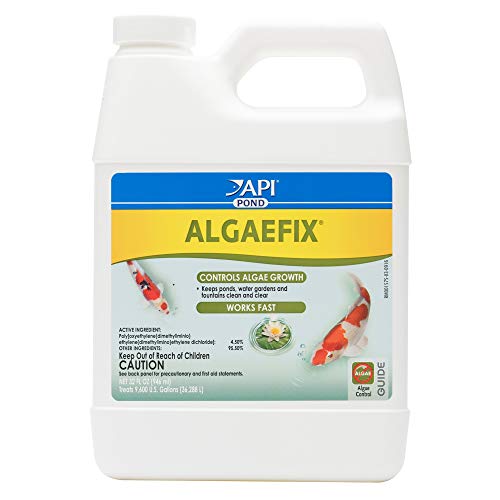
Best for algae control in ponds, koi ponds, and fountains. The product targets existing algae and slows the formation of new growth. It works quickly and is copper-free, reducing risk to fish and plants when used as directed. EPA-registered status supports its safety profile. The formula is suited for up to 9,600 gallons in the 32 fl oz size, making it a strong choice for mid-to-large ponds with persistent algal blooms. It’s especially suitable for pond owners facing green water, hair algae, or blanket weed.
Who it’s best for: pond owners dealing with persistent algae who want a fast-acting, fish-safe solution. Choose this if you prefer a copper-free treatment and need broad algae control without affecting beneficial bacteria. Caution: avoid overuse and follow directions to prevent potential negative impact on sensitive species or aquatic plants.
API POND ACCU-CLEAR Pond Water Clarifier (32 oz)
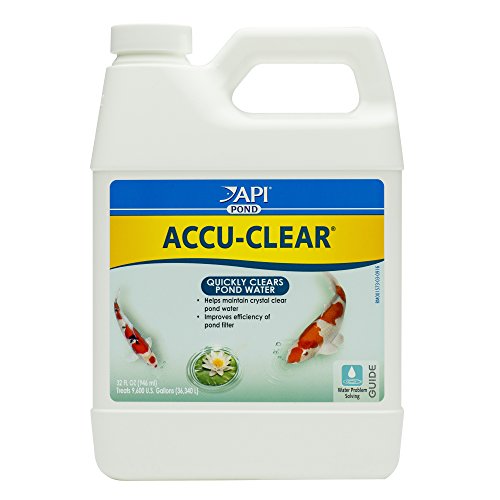
Best for cloudy pond water plagued by dirt and fine particles. Accu-Clear helps flocculate these particles into larger clumps that are easier for pond filters to remove. This can lead to clearer water and improved filtration performance. The product is effective in many pond setups, including those with gravel, plants, and decorative features. It’s a practical choice when the goal is to reduce visible turbidity without changing chemical balance drastically.
Who it’s best for: pond owners with persistent cloudiness seeking measurable clarity improvements through improved filtration capture. Better for situations where mechanical filtration needs a boost. Caution: clarified water may reveal previously hidden issues; ensure filters are compatible with increased debris removal, and monitor biofiltration stability after use.
API POND STRESS COAT (32 oz)

Best for new ponds or after water changes. This conditioner neutralizes chlorine and chloramines while coating fish to reduce stress and support a healthy mucus layer, aided by Aloe Vera. It helps prevent irritation and supports recovery after handling or seasonal changes. The 32-ounce bottle covers large volumes, making it a staple for routine water maintenance. It does not directly control algae but supports overall fish health in treated water.
Who it’s best for: new pond setups, seasonal water changes, or any situation where reducing chemical stress on fish is the priority. Choose this if you want immediate, gentle chemical protection and a protective slime layer. Caution: not a substitute for proper filtration or biological balance; use as part of a broader water management plan.
API POND AQUA ESSENTIAL (32 oz)

Best for new water preparation and ongoing safety. This conditioner works instantly to remove harmful chemicals from tap water, making it safe for fish and reducing the risk of fish loss during pond setup or water changes. It also dechlorinates, and reduces heavy metals, which can cause stress and respiratory issues for aquatic life. The formula is designed to support a stable environment as you establish or maintain a pond.
Who it’s best for: pond owners starting a new pond or performing frequent water changes who need rapid, reliable detoxification of tap water. Choose this if you want a quick-build pathway to safe water without complex chemistry. Caution: use in combination with ongoing biological filtration and avoid relying solely on chemical treatments for long-term balance.
API TAP WATER CONDITIONER Aquarium Water Conditioner (16 oz)

Best for making tap water safe for fish by neutralizing chlorine, chloramines, and other chemicals. It helps prevent gill and tissue damage and reduces stress from tap water exposure. While marketed for aquariums, it is commonly used by pond keepers when adding water from municipal sources, especially during fill-ups or replacements. The product helps maintain safer water chemistry while you establish or maintain biological filtration.
Who it’s best for: pond owners who regularly top off or replace pond water with tap water and need reliable chemical neutralization. Choose this if you want a straightforward dechlorination step in your water care routine. Caution: verify compatibility with your pond’s bacteria-based treatment plan and avoid combining with incompatible formulations.
API POND CHLORINE & HEAVY METAL NEUTRALIZER (32 oz)

Best for correcting tap water chemistry before introduction to the pond. This neutralizer removes harmful-to-fish chemicals from water and uses a super-strength formula to be highly effective. It is a practical step when preparing new water sources or when minor chemical imbalances occur after water changes. The product supports fish health by reducing exposure to toxins that can irritate gills and tissues.
Who it’s best for: pond owners needing a robust chemical neutralizer to safeguard against chlorine and heavy metals. Choose this if your water supply has elevated contaminant levels or if you routinely add water from sources with potential toxins. Caution: follow dosage directions precisely to avoid over-treatment that could affect beneficial bacteria.
Buying Guide: Key Considerations for Pond Water Care
- Goals: Define whether you need algae control, water clarification, or preparation for new water. Each product targets a specific need.
- Safety: Look for EPA-registered or clearly labeled copper-free formulas if you keep sensitive fish or plants. Always follow directions for dosage and frequency.
- Water Volume: Choose products sized to match your pond’s gallon capacity. Larger ponds may require multi-bottle treatments or repeated applications.
- Filtration and Biology: Chemical treatments work best when paired with a reliable filtration system and healthy beneficial bacteria.
- Water Source: For tap water, consider a dechlorinator or neutralizer before adding fish. If you use well water or recycled water, test for metals and toxins first.
- Maintenance Plan: Use clarifiers or algae controls as part of an ongoing maintenance routine rather than solely reacting to issues.
Frequently Asked Questions
- What is the best product for clearing cloudy pond water? – API Accu-Clear is designed to clump and remove fine particles, aiding filtration and water clarity.
- Can I use algae control products with fish and plants? – Yes, many products are formulated to be safe for fish and aquatic plants when used as directed. Always follow label instructions.
- Do I need to dechlorinate tap water before adding it to my pond? – Yes, use a dechlorinator to neutralize chlorine and chloramines to protect fish and beneficial bacteria.
- How often should I treat algae in a pond with koi? – Treatment frequency depends on algae growth and product instructions. Avoid frequent high-dose applications; monitor water quality.
- Is it okay to combine water conditioners with chlorine neutralizers? – Some products can be used together under guidance; check compatibility on product labels or consult a pond care expert.
- What is safer for fish, algaecides or mechanical filtration? – A combination of safe algaecides (copper-free when possible) and strong filtration tends to yield reliable results with minimal risk to fish.