Answering the core buyer question: these soil moisture meters help you know when to water by measuring deep soil moisture, not just surface moisture. They’re ideal for beginners who want simple, immediate readings and for seasoned plant caretakers who want quick checks for pots, raised beds, or outdoor gardens. This guide highlights five reliable options and explains who each is best for, with practical cautions where relevant. A quick summary table follows to compare key details at a glance.
| Product | Best For | Key Benefit |
|---|---|---|
| XLUX Soil Moisture Meter (2015) | New gardeners and indoor plants | Accurate, root-zone reading with no batteries |
| XLUX Long Probe Deep Use Meter | Deep pots and larger planters | Longer probe for bottom-root moisture deep inside soil |
| Antonki 2 Pack Soil Moisture Meter | Budget-conscious multi-plant setups | Two meters for simultaneous checks with quick, color-coded readouts |
| XLUX Long Probe Deep Use Meter (2 Pack) | Multiple large pots or garden beds | Two meters with extended probe for deeper measurement |
| Censinda Soil Moisture Meter | Low-maintenance, no-battery option | No power needed; simple dry/moist/wet readout |
XLUX Soil Moisture Meter (Since 2015)
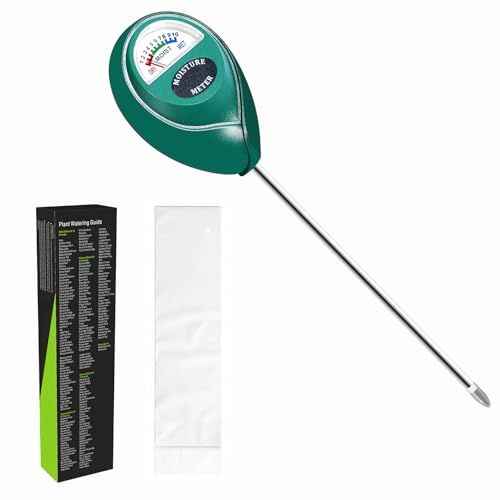
Best for: Beginners and indoor plant owners who want a reliable, straightforward reading. This meter provides a deep-root zone moisture reading with a large color-coded dial (Dry–Moist–Wet) to guide watering. It requires no batteries and offers quick, real-time results.
Why selected: It has established trust since 2015 and is backed by many positive verifications. The probe reaches the root zone, where watering decisions matter most, minimizing guesswork and potential overwatering.
Caution: Use guidance with potted plants and avoid relying on surface moisture alone. For very large or deep pots, monitor depth limitations and consider additional checks if needed.
XLUX Long Probe Deep Use Soil Moisture Meter

Best for: Gardeners with larger pots or outdoor plants where bottom-root moisture matters. Its 5.5-inch (14 cm) longer probe reaches deeper into the soil, enabling accurate detection well below the surface.
Why selected: It complements standard meters by extending reach for deeper roots and larger containers, helping prevent under-watering or over-watering in deeper media.
Caution: Do not leave the meter in soil for more than five minutes to prevent metal tip corrosion; remove, read, and reinsert as needed for an accurate reading.
Antonki 2 Pack Soil Moisture Meter

Best for: Cost-conscious households managing multiple plants. The two meters let you monitor two locations simultaneously, with color-coded zones (red=DRY, green=MOIST, blue=WET) for quick at-a-glance readings.
Why selected: It offers immediate, battery-free readings and simple operation, making it a practical choice for beginners or households with several plants needing regular checks.
Caution: If some soil areas remain wet while others are dry, water evenly across the topsoil to ensure uniform moisture distribution.
XLUX Long Probe Deep Use Meter (2 Pack)

Best for: Users who manage several large pots or garden beds and need a second meter for concurrent checking. The two-pack setup supports more robust monitoring across a collection of plants.
Why selected: Combines depth of reading with value in a two-pack format, suitable for property owners or hobbyists tending multiple containers.
Caution: Like single meters, limit continuous soil contact time and avoid prolonged exposure to moisture on metal components to prevent corrosion.
Censinda Soil Moisture Meter
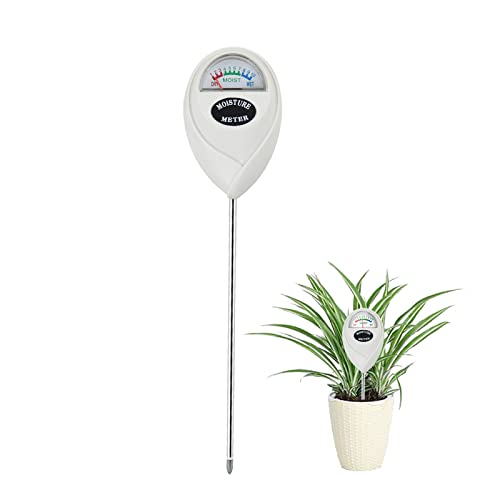
Best for: Those seeking a simple, no-battery option that still provides clear moisture readings. Ideal for quick checks in small to medium pots and garden beds.
Why selected: The no-battery design makes it a low-maintenance choice, reducing the need for power sources while still offering a direct moisture readout.
Caution: The meter measures soil moisture but isn’t a pH or sunlight tester; ensure you’re using the right tool for accurate care in plants requiring more data.
Buying Guide: Practical Considerations for Choosing a Water Monitor for Plants
- Soil depth and pot size: For deep pots, prefer meters with longer probes to read moisture near the root zone. For small pots, standard-length probes suffice.
- Power source: Battery-free meters reduce maintenance but confirm the need for continuous readings. Digital or multi-parameter meters may require batteries but offer additional data.
- Readability: Look for large, color-coded dials or backlit displays for easy reading in day or night conditions.
- Maintenance and longevity: Some meters recommend limited time in soil or periodic calibration; consider your watering frequency and climate to determine durability needs.
- Scope of measurement: Decide if you need just moisture, or also pH, light, and temperature data. 3-in-1 or 4-in-1 meters add versatility but may be more complex.
- Plant variety and environment: Indoor houseplants and herb gardens often need different moisture patterns than outdoor shrubs or aloes. Choose meters aligned with your plant set.
Frequently Asked Questions
- What does a soil moisture meter measure exactly? It measures the water content in the soil at the root zone, helping you decide when to water.
- Do these meters require batteries? Some do (digital or multi-parameter meters), but many are battery-free with a mechanical dial.
- How deep should I insert the probe? Insert the probe until it reaches root-zone depth, then read the dial for moisture status.
- Can I use these meters for outdoor plants? Yes, many meters are designed for both indoor and outdoor use, including garden beds and large pots.
- Is a moisture meter a replacement for watering intuition? It complements it by providing objective data to prevent overwatering or underwatering.
- What’s the best practice if some soil areas are wet and others dry? Water evenly across the topsoil to maintain uniform moisture distribution.