When choosing a fertilizer for water lilies and other pond plants that share the same water as fish, safety for aquatic life is a primary concern. This guide highlights five fish-safe options that support lush pads, strong roots, and vibrant blooms while minimizing risk to koi, goldfish, frogs, and snails. Each product is described with the user in mind: who it’s best for, how it’s applied, and key considerations to avoid algae overload or nutrient imbalances. The included comparison table helps you decide quickly.
Buying table (selected products):
- CrystalClear Thrive Aquatic Pond Plant Food, 30 Tablets — Best for container ponds and potting use.
- VitaPlant Pond Plant Fertilizer (Liquid, 500 mL) — Best for weekly dosing and balanced nutrient delivery without added nitrogen or phosphorus.
- Aquascape Once-A-Year Pond Plant Fertilizer Capsules — Best for low-maintenance annual feeding for ponds.
- IOUFCIY Aquatic Plant Fertilizer Tablets (100 Count) — Best for monthly feeding with easy root-zone application.
- CrystalClear Thrive Aquatic Pond Plant Food, 200 Tablets — Best for larger setups and repeat-year feeding with the same fish-safe formula.
CrystalClear Thrive Aquatic Pond Plant Food — 30 Tablets

Best for small to medium water gardens, this fish-safe tablet fertilizer provides essential nutrients designed to boost root growth and bloom production. The product combines 10% nitrogen, 14% phosphate, and 8% potash to support vigorous growth and colorful flowers. Application is monthly, making it convenient for seasonal feeding. It is explicitly described as safe for fish, koi, goldfish, frogs, snails, and other aquatic life when used as directed.
Who it’s best for: hobbyists with container ponds or small decorative ponds who want simple, reliable monthly feeding without liquid dosing. Why selected: a proven, fish-friendly fertilizer tab with a straightforward dosing cadence and clearly defined nutrient mix. Caution: avoid over-fertilizing, which can lead to algae growth if pond margins are nutrient-rich.
VitaPlant Pond Plant Fertilizer — Liquid (500 mL)
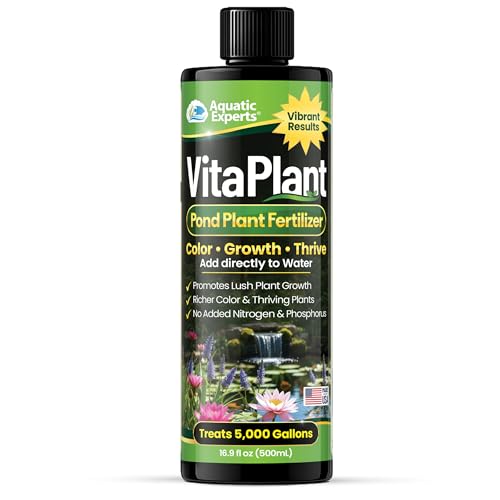
Best for weekly dosing and liquid delivery, VitaPlant provides complete aquatic plant nutrition without added nitrogen or phosphorus. This helps support vibrant color and lush growth in water lilies, lotus, and other marginal plants while reducing the risk of excessive algal blooms. The product is designed for ponds, koi ponds, and water gardens where precise, controlled dosing is preferred.
Who it’s best for: pond keepers seeking a balanced, fish-safe nutrient source without excess nitrogen or phosphorus. Why selected: targeted nutrients delivered through weekly dosing offer flexibility and steady growth. Caution: check your pond’s current nutrient levels to prevent imbalance if already rich in nutrients.
Aquascape Once-A-Year Pond Plant Fertilizer Capsules — 6 Pack

Best for low-maintenance upkeep, Aquascape offers a time-release formula designed to feed aquatic plants for up to 180 days. The 11-3-14 NPK ratio emphasizes steady growth and consistent flower production without heavy dosing. It features low excess nitrogen and low phosphorus to reduce algae risk, while remaining safe for fish and other pond life when used as directed.
Who it’s best for: pond owners who prefer a “set-and-forget” approach with fewer applications per year. Why selected: long-lasting feeding reduces maintenance while focusing on plant health. Caution: seasonal timing matters; apply before peak growth to maximize impact and avoid nutrient gaps.
IOUFCIY Aquatic Plant Fertilizer Tablets — 100 Count

Best for monthly root-zone feeding, IOUFCIY tablets support lush growth and vibrant blooms in water lilies, lotus, and other pond plants. The tablets contain essential macro- and micronutrients, including nitrogen, phosphorus, potassium, and trace elements such as iron and zinc. The tablets are designed for easy placement in the root zone, offering predictable nutrient delivery.
Who it’s best for: pond hobbyists who want straightforward monthly root-zone feeding with clear per-plant dosing. Why selected: comprehensive nutrient profile and user-friendly application. Caution: follow depth and distance guidelines to ensure nutrients reach the roots rather than drifting away.
CrystalClear Thrive Aquatic Pond Plant Food — 200 Tablets

This larger package is ideal for bigger ponds or households that need ongoing supply for the season. As with the 30-tablet version, Thrive 200 tablets provide the same nutrient blend (10% nitrogen, 14% phosphate, 8% potash) designed to support robust roots, lush foliage, and brilliant blooms while remaining fish-safe when used as directed.
Who it’s best for: larger water gardens, multiple containers, or homes with higher planting density. Why selected: consistent, fish-friendly nutrition at scale. Caution: avoid over-application; distribute evenly to prevent localized nutrient pockets that can feed algae growth.
Buying Guide: Key Considerations For Water Lily Fertilizers Safe For Fish
- Nutrient profile: Look for a balanced mix such as N-P-K along with essential micronutrients. Avoid products that add excess nitrogen or phosphorus if your pond is prone to algae.
- Delivery method: Tablets or capsules deliver nutrients to the root zone; liquids mix into water for broader distribution. Choose based on plant type, container size, and maintenance preference.
- Fish-safety: Verify explicit statements about safety for fish, koi, goldfish, and other pond life when used as directed. Consider products offering clear directions for safe use.
- Application frequency: Some products are monthly; others are weekly or annual. Align the schedule with your pond’s planting density and growth pace.
- Pond size and plant load: Larger ponds may require bigger or multiple containers of fertilizer. For multi-plant setups, consider concentrated options to minimize handling and dosing errors.
- Algae risk: Low-phosphorus formulations help reduce algae risk. If your pond already has algae challenges, select products that emphasize controlled nutrient release.
- Ease of use: Simple insertion into soil or root zones reduces dosing mistakes. Liquid formulas offer quick dosing but require regular timing.
Frequently Asked Questions
- Are these fertilizers safe for fish? Yes, all listed products are described as fish-safe when used according to directions.
- How often should I fertilize water lilies? Most root-zone fertilizers suggest monthly feeding during the growing season, while annual capsules provide a longer feed window with minimal applications.
- Can I use regular plant fertilizer in a pond? Regular garden fertilizers may contain higher nitrogen or phosphorus levels that could promote algae growth; use specifically formulated aquatic plant fertilizers or follow a supplier’s guidance for pond use.
- Do I need to test pond water when using these products? It’s prudent to monitor nutrient levels and algae indicators, especially in smaller or intensively planted ponds, to prevent over-fertilization.
- What’s the best method for application? Root-zone tablets or capsules are effective for pot or planted-bed setups. Liquids work well for open ponds with circulating water, but dosing must be precise.
- Can I mix different brands? It’s generally best to avoid mixing multiple fertilizers unless you carefully compare nutrient contents and ensure total levels stay within safe ranges for aquatic life.