Buying the right vertical planter for a balcony means balancing footprint, durability, and plant success. This guide highlights five top picks that are well-suited for small outdoor spaces, urban balconies, and patios. Each option targets different gardener needs—whether you want lightweight portability, built-in trellises for climbing plants, or multi-tier designs for herbs, vegetables, and flowers. The following table summarizes who each product is best for and why.
| Product | Best For |
|---|---|
| Olaiti 5-Tier Vertical Garden Bed | Maximized growing space on narrow balconies; quick replanting |
| OYEAL Raised Garden Bed with Trellis 32″ Tall | Climbing plants and ergonomic height; tidy drainage |
| OYEAL Raised Garden Bed with Legs & Trellis | Balanced, accessible height; indoor/outdoor versatility |
| Luplom 6-Box Vertical Beds | Space-saving multi-plant system; organized tiered layout |
| BTY 3-Tier Vertical Garden Planter | Compact, sturdy metal frame; stable for wind-prone areas |
Olaiti 5-Tier Vertical Garden Bed

Best for maximizing floor space on small balconies. This 5-tier, freestanding planter uses a trapezoid design to stagger plants and prevent shading, enabling full sunlight for leaves across all levels. The structure is Rust-resistant steel with sturdy triangular brackets and additional bottom fixing rods, plus 100% food-safe PP bins. Independent bins lift off the frame for flexible planting and easy reconfiguration. Ideal for growing vegetables, herbs, and flowers in compact outdoor areas. Caution: heavier soil load can affect stability in very windy conditions; ensure secure placement when located on exposed balconies.
OYEAL Raised Garden Bed With Trellis 32″ Tall

Best for climbing plants and ergonomic gardening. This 32-inch raised planter includes four boxes with an 11-inch trellis ideal for tomatoes, strawberries, vines, and peppers. The height reduces bending, making long sessions more comfortable. It features a drainage system with a removable tray to collect excess water and soil, helping to keep adjacent spaces clean. Choose this if you want a compact, tidy setup for balcony gardening with vertical support for climbers. Limitation: back-to-back placement may limit airflow between tiers in very dense plantings.
OYEAL Raised Garden Bed With Legs & Trellis 32″ Tall

Best for accessible gardening and indoor/outdoor versatility. This 32-inch vertical planter has four rectangular planter boxes plus an 11-inch trellis to support climbing crops. The design emphasizes comfortable height for gardeners who want to minimize bending, while the drainage system and removable tray help manage moisture. Choose this if you want a standalone unit that can shift between balcony and patio use. Limitation: assembly complexity may be higher due to multiple components.
Luplom Six-Box Vertical Garden Beds
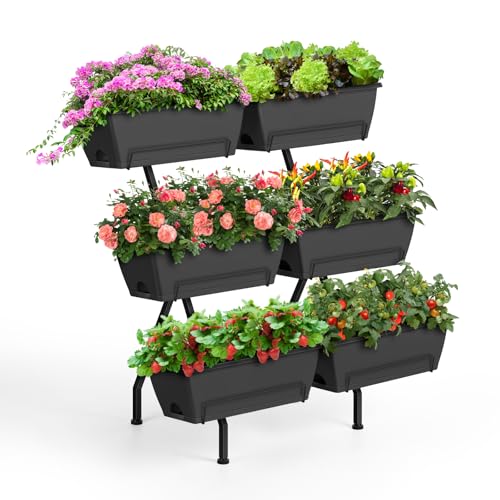
Best for space-saving vertical systems with evenly spaced tiers. This six-tier unit uses an alternating layout that helps lower plants receive full sunlight while keeping soil moisture balanced with drainage holes and removable trays. The triangular base adds stability, suitable for windy balconies. Opt for this if you want a compact, organization-friendly setup that supports herbs, flowers, and vegetables across six levels. Limitation: bulkier footprint than some 3-tier models, requiring more balcony space upfront.
BTY 3-Tier Vertical Garden Planter

Best for small spaces requiring a sturdy metal frame. This three-tier metal planter emphasizes stability with a triangular base, keeping the stand steady in wind and rain. The compact footprint makes it suitable for balconies, patios, or living rooms where space is at a premium. Choose this when you want a solid metal option that’s easy to assemble and maintain. Limitation: fewer tiers mean less total planting area compared with larger multi-tier systems.
Buying Guide
What should you consider before buying?
- Space and footprint: Measure balcony depth and width to ensure the unit fits without blocking doors or railings.
- Weight and materials: Steel frames are durable but heavier; consider rust resistance and whether plastic bins are food-safe for edible plants.
- Height and ergonomics: Taller designs reduce bending but may require more anchoring for stability in windy areas.
- Drainage and moisture control: Look for removable trays and well-ventilated bins to prevent root rot and keep outdoor spaces clean.
- Plant layout: Multi-tier designs help maximize light, but ensure enough airflow between levels to prevent disease.
- Mobility and assembly: Freestanding units allow relocation, while some designs may need more assembly time.
Which features matter most for balcony gardening?
- Sunlight exposure: Staggered or trellis-supported designs maximize sun reaching each plant.
- Water management: Efficient drainage reduces mess and plant stress.
- Stability: Triangular bases and sturdy frames help resist wind on exposed balconies.
- Accessibility: Height-adjustable or ergonomic designs reduce strain during planting and harvesting.
Material and maintenance considerations
- Rust resistance: Choose powder-coated steel or rust-resistant materials for outdoor use.
- Food safety: If growing edible herbs or vegetables, ensure bins are rated for food contact.
- Cleaning: Removable trays simplify washing and replanting.
FAQ
- Are vertical planters suitable for small balconies? Yes, they maximize growing area while occupying minimal floor space.
- Which material lasts longest outdoors? Powder-coated steel frames tend to be durable; check for rust resistance and UV stability.
- Do these planters require assembly? Most units require some assembly, with varying difficulty based on the number of tiers.
- Can you grow vegetables in vertical planters? Yes, you can grow compact vegetables and herbs, especially in multi-tier designs with proper spacing.
- Is drainage important? Yes, proper drainage and a removable tray help prevent water damage and root rot.
- How do you prevent tipping in wind? Look for sturdy triangular bases, anchored frames, and heavier soil in lower tiers.