Answering the search for kid-friendly vegetable gardening, this guide highlights hands-on kits perfect for budding botanists. Each product is chosen for teachable moments in plant life cycles, root growth, and responsibility. Best for beginners: simple setups that build confidence. Best for hands-on learners: transparent or dual-method growth. Best for classroom or group learning: durable kits with clear learning outcomes.
Summary Table of Top Picks
| Product | Best For |
|---|---|
| Root Viewer Kit for Kids | Young scientists curious about roots and growth |
| Discovery Edible Veggie Garden Watch-It-Grow Kit | Patience and observation with transparent growth |
| National Geographic Flower & Herb Kit | Decorative, hands-on pot gardening for herbs |
| DUYOYU Kids Plant Growing Kit | Mini greenhouse experience with grow light |
| PLANTMEW Paint & Plant Kit | Creative gardening combining art and science |
Root Viewer Kit for Kids With Seed Varieties

The Root Viewer Kit by PLANTMEW is designed for curious minds ages 5 and up. It features six seed varieties—kidney bean, pea, soya-bean, radish, chili, and carrot—allowing kids to compare growth rates, colors, and root shapes. The transparent planter helps reveal underground growth, turning gardening into a mini botany lesson. Best for: early-grade students who thrive on visible progress and quick results. Choose this if you want regular, varied experiments in a single kit. Limitation: the kit’s success depends on consistent care and light exposure, which may require parent guidance.
Why it stands out: Clear early lessons in seed diversity, growth timing, and root observation. Kids can track weeks of progress and discuss differences across species in a single planter environment.
Discovery Edible Veggie Garden Watch-It-Grow Kit

This 11-piece STEM kit from Discovery includes a clear garden container, potting mix, seed packets, root ruler, and seed flags. It enables kids to grow carrots, radishes, and spring onions while observing root development through the transparent container. Best for: students who benefit from an all-in-one setup and a clear view of growth. Better for: ongoing projects over weeks rather than one-off experiments. Caution: ensure the container is placed in a stable, well-lit spot to maximize growth visibility.
National Geographic Flower & Herb Gardening Kit
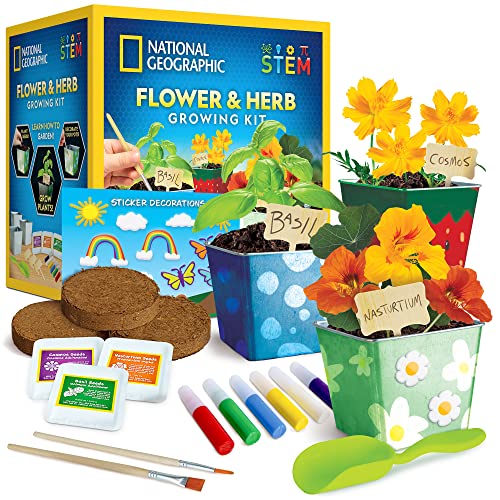
National Geographic’s kit provides three stainless steel pots and seeds for cosmos, nasturtium, and basil, plus decorations and a learning guide. Best for: kids who enjoy decorating and personalizing their space while gardening. Choose this if you want a creative, decorative garden project. Limitation: decor-focused elements may be less appealing to kids who crave more hands-on biology work.
DUYOYU Kids Plant Growing Kit With Growth Light

DUYOYU’s kit includes a mini greenhouse with upgraded irrigation and a grow light for consistent lighting. Best for: learners who need a controlled environment, especially in rooms with limited daylight. Better for: teaching light, water, and plant biology together. Caution: the included light setup may require monitoring to avoid overheating or overwatering in small spaces.
PLANTMEW Paint & Plant Flower Growing Kit

This all-in-one kit blends creativity with gardening. It includes a metal planter, paints, brushes, soil discs, a shovel, a watering bottle, and three easy-grow flower varieties (Zinnia, Marigold, Cosmos). Best for: kids who enjoy art and science in one experience. Choose this for a screen-free activity that blends color recognition with plant care. Limitation: color design and planting speed may appeal more to creative learners than to those seeking rapid vegetable production.
HopeTiger Root Viewer: Dual Growth Experience

The HopeTiger Root Viewer offers dual-growing options: traditional soil and hydroponic setups, with a transparent root viewer for an up-close look at root and shoot development. Best for: kids who want flexibility and a deeper look into how different growing methods work. Better for: comparing soil vs. hydroponic growth. Caution: hydroponic setups can require closer maintenance to prevent algae buildup in the viewer.
Chonsun Raised Garden Bed With Chalkboard

Chonsun’s wooden raised garden bed includes a DIY chalkboard for notes and drawings, offering a hands-on soil-based gardening experience. Best for: families wanting a larger, stable growing space outdoors. Choose this if you want to teach planning and recording garden progress. Limitation: larger footprint means it’s less suitable for small apartments or limited balconies.
Buying Guide: Key Considerations For Kid-Friendly Vegetable Gardens
- Age appropriateness: Choose kits with simple instructions and safe materials for younger children, and more advanced setups for older kids.
- Growth visibility: Transparent containers or dual-method options help kids see roots and growth, reinforcing biology concepts.
- Space and location: Consider indoor vs outdoor use, available sunlight, and whether the setup fits your space (tabletop, balcony, or yard).
- Maintenance level: Some kits require more daily care; select options matching your family’s routine and supervision level.
- Learning goals: If plant biology is the focus, look for kits highlighting root systems, seed varieties, and growth timelines.
- Creativity vs biology balance: Decide if the priority is decorative, artistic gardening or science-driven experiments.
Frequently Asked Questions
- What is the best age to start a vegetable garden for kids? – Many beginner kits suit ages 5–7, with more complex projects for older children up to 12 and beyond.
- Do these kits require adult supervision? – Most kits benefit from adult guidance for setup, watering schedules, and safety with tools and soil.
- Are transparent planters important for kids? – They help visualize root growth and the plant life cycle, enhancing learning.
- Can these kits grow real vegetables indoors? – Yes, several kits support growing edible vegetables like carrots, radishes, peas, and onions with appropriate light and care.
- Which kit offers the best value for classroom use? – Kits with all-in-one components (soil, seeds, tools) and durable containers are typically best for repeated classroom use.
- What maintenance is typically required? – Regular watering, light exposure management, and periodic observation notes or root checks are common needs.