The best compost temperature probes help you manage decomposition by delivering fast, reliable readings from the pile’s core to the surface. This guide highlights five top picks, explains who each is best for, and shows how to choose the right tool for your needs. Ideal buyers include home composters, seasoned gardeners managing backyard piles, and anyone who wants precise moisture and heat data to optimize decomposition.
Summary Table of Chosen Products
| Product | Length | Best For | Why It Stands Out |
|---|---|---|---|
| Compost Thermometer 20 Inch – STOWBERRY | 20 inches | Deep piles, large bins | Deep core readings with clear 2″ dial |
| Compost Soil Thermometer Waterproof – Wirezar (16″) | 16 inches | Outdoor piles, moist soils | Waterproof, rust-resistant stem |
| Garden Weasel Analog Dial Thermometer (36″) | 36 inches | Deep piles, minimal battery use | Long probe, no batteries |
| Tellegloww Compost Thermometer (39.4″) | 39.4 inches | Very deep piles | Extra-long stem, clear dial |
| Smart Choice Stainless Steel Soil Thermometer (5″) | 5 inches | Raised beds, containers | Compact but sturdy, easy to read |
Compost Thermometer 20 Inch – STOWBERRY
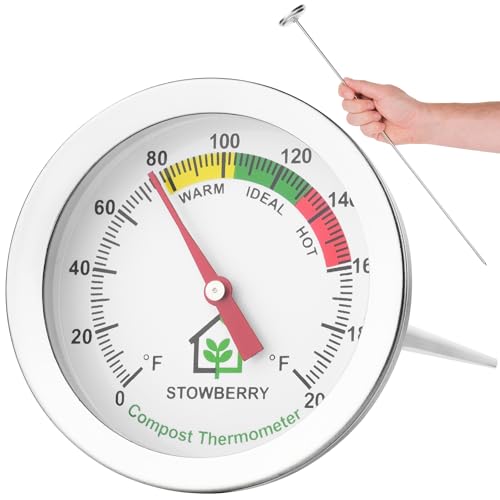
Key features: A 20-inch stainless steel probe provides deep-core readings for accurate temperature monitoring. The long probe is ideal for garden bins, tumblers, and large compost heaps. The easy-to-read 2-inch dial shows Fahrenheit readings and activity zones (Steady, Active, Hot) for quick interpretation.
Best for: Home composters managing sizable piles who need precise core data without frequent recalibration. The long probe improves accuracy for dense stacks where surface readings are insufficient.
Why selected: Its deep reach and clear dial make it a reliable standout for ongoing pile management. The 2-inch dial format facilitates fast readings, reducing guesswork during turning and aeration.
Caution: Very large, dense piles may require occasional repositioning of the probe to verify central temperatures.
Compost Soil Thermometer Waterproof – Wirezar (16″)

Key features: A 16-inch stainless steel stem provides a robust, waterproof design suitable for outdoor use. This thermometer measures soil and compost temperatures, helping monitor pile activity and soil readiness for planting.
Best for: Gardeners seeking a durable, weather-resistant probe that can stay outdoors and work well in moist environments.
Why selected: The waterproof, rust-resistant construction supports long-term use in compost piles and garden beds, offering reliable readings even in wet conditions.
Caution: The 16-inch stem is shorter than high-volume compost piles; use alternatives with longer probes if you have very deep piles.
Garden Weasel Analog Dial Thermometer – 36-Inch Probe

Key features: A durable 36-inch probe provides deep readings in large piles and garden beds. It uses an analog dial that displays Fahrenheit and Celsius, with no batteries required.
Best for: Users with very large compost heaps or bins who need long-reaching measurements and a dependable, battery-free option.
Why selected: Its “no batteries” design reduces maintenance, while the extension length helps ensure you can reach core temperatures in deep piles.
Caution: Analog dials can be slower to respond than digital models; allow extra time for stable readings in fluctuating weather.
Tellegloww Compost Thermometer – 39.4 Inch Stem

Key features: Extendable reach with a 39.4-inch stem for deep core readings. The 2-inch dial shows Fahrenheit and Celsius with a wide range. The thermometer is waterproof and designed to resist fogging, ensuring legible readings even in challenging conditions.
Best for: Serious composters with large piles who need consistent data from deep layers, including very active or very large heaps.
Why selected: The extra-long stem provides a distinct advantage for deep cores, and the dual-scale dial supports quick cross-checks across measurement units.
Caution: The extended length can be unwieldy in small, confined bins; consider a shorter option for compact setups.
Smart Choice Stainless Steel Soil Thermometer – 127mm Stem
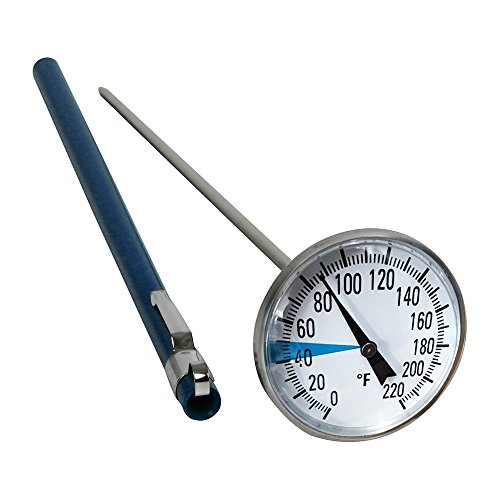
Key features: A 127mm stem with a 1.5-inch dial offers practical measurements for soil and compost in raised beds and garden soil. The device is designed for reliability in outdoor conditions with rugged stainless steel components.
Best for: Home gardeners using raised beds or container gardens seeking a compact, easy-to-read thermometer with solid durability.
Why selected: It balances a smaller form factor with sturdy construction, making it useful for everyday compost and soil temperature checks.
Caution: Smaller dials may take longer to read; ensure the dial is well within your line of sight during readings.
Buying Guide: How To Choose A Compost Temperature Probe
- Probe length matters: Longer probes reach deeper into large piles, giving core readings that surface-only probes can miss. Choose length based on pile height and bin type.
- Material and durability: Stainless steel probes resist rust and corrosion. Waterproof design helps in wet environments, reducing maintenance and replacement needs.
- Dial readability: Larger dials and dual Fahrenheit/Celsius scales speed interpretation. Analog dials don’t require batteries, but digital models may provide instant readings.
- Use case alignment: For raised beds or container gardening, 5-inch probes are often sufficient. For garden bins and tumbler systems, 16–39 inch probes are commonly better.
- Maintenance and longevity: Look for sealed, fog-resistant dials and corrosion-resistant stems. Clean after use to prolong life and accuracy.
- Cost versus accuracy: Higher-quality probes provide more stable readings and longer lifespans. For beginners, a mid-range option with a clear dial can be an effective starting point.
FAQ
- Why is compost temperature important? Temperature indicates the rate of microbial activity and decomposition. Maintaining the right range helps avoid overheating and ensures effective breakdown.
- How often should I check the pile temperature? Check at least once or twice a week, or more often during turning or weather changes to track activity.
- What temperature range is ideal for compost? Typical active compost ranges fall between 135°F and 160°F (57°C–71°C). Lower ranges indicate slower activity or moisture issues.
- Should I rely on a single reading? Take multiple readings from different pile locations to account for uneven heating and aeration.
- Can these probes be left in the pile? Many models are designed for outdoor use and can stay inserted, but check each unit’s guidance to avoid damage during winter or heavy weather.
- What if readings don’t match what I expect? Re-check with a second probe or from a different depth to confirm. Inconsistent readings may indicate hotspots, moisture imbalance, or insufficient aeration.