When establishing a new lawn from seed, choosing the right starter fertilizer can significantly improve germination, root development, and overall turf health. This guide highlights five top options designed for seeding new grass, sod, or overseeding projects. Each product features blends optimized for young roots, nutrient availability, and stress resilience, helping you achieve a dense, green lawn faster.
| Product | NPK Ratio | Coverage | Key Benefit |
|---|---|---|---|
| Scotts Turf Builder Starter Fertilizer for New Grass | 24-25-4 | Up to 5,000 sq ft | Boosts thickness and quick establishment |
| Scotts Turf Builder Triple Action Built For Seeding | — | Up to 1,000 sq ft | Prevents common weeds while seeding |
| Extreme Grass Growth Lawn Booster (Liquid) | — | Various (via hose-end) | Rapid nutrient delivery with humic acid |
| Lawn Synergy Starter Fertilizer 15-20-10 + Iron | 15-20-10 | 18 lbs bag | Fast germination and deep green color |
| Fertilome New Lawn Starter Fertilizer 9-13-7 | 9-13-7 | 20 lbs | Supports root and stem development for new lawns |
Notes: The table reflects key attributes that influence early lawn growth. Always follow label directions for application rates and safety guidelines on your specific soil type and climate.
Scotts Turf Builder Starter Fertilizer for New Grass

Grows new grass 70% thicker and 35% quicker versus unfed grass. This 24-25-4 blend provides essential nutrients for seedling development, helping seed establish faster and sod or plugs integrate more efficiently. It is designed specifically for use when planting seed and is suitable for large lawn projects up to 5,000 square feet. The formulation supports early root growth and overall turf resilience, delivering a robust foundation for a dense, healthy lawn.
Scotts Turf Builder Triple Action Built For Seeding

Designed for use when planting new grass, this product combines fertilizer with a pre-emergent weed preventer. It helps shield young grass from common weeds like dandelion and crabgrass for up to six weeks without harming new seedlings. The blend supports rapid development while providing ongoing nutrition to feed developing lawns, with coverage suitable for smaller seeding areas (around 1,000 square feet). It is ideal for young lawns where weed pressure is a concern during establishment.
Extreme Grass Growth Lawn Booster

This liquid, spray-on starter fertilizer uses a humic acid–enhanced formula to boost both vertical and lateral growth. It is suitable for new sod or seeding and is delivered through a hose-end sprayer for quick, uniform coverage. The product emphasizes higher nutrient availability and rapid greening, providing a practical option for homeowners who prefer a ready-to-use spray for larger areas or frequent touch-ups while establishing a lawn. It pairs well with starter seeds and bare patches needing quick recovery.
Lawn Synergy Starter Fertilizer 15-20-10 + Iron
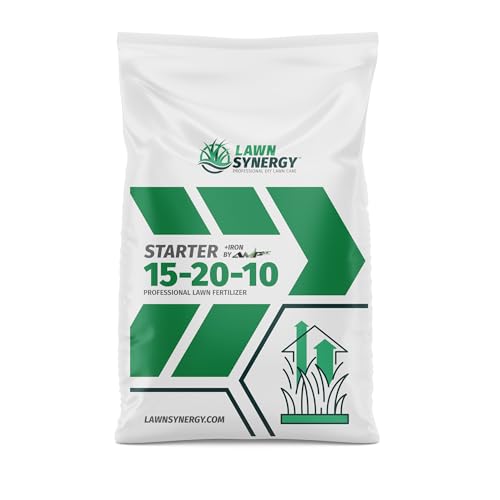
Specifically designed for new lawns and overseeding, this fertilizer delivers a balanced 15-20-10 NPK ratio with added iron for deep, vibrant green color. It includes an advanced nitrogen stabilizer to reduce nitrogen loss, helping fertilizer stay in the soil longer and promote root growth. AMP-XC biocatalyst technology supports better nutrient uptake and soil health, making it a strong choice for establishing robust turf in variable climates and soil conditions.
Fertilome New Lawn Starter Fertilizer 9-13-7

This 20-pound bag provides a balanced mix to support root development and maturity before vigorous growth. It is designed to help seed and sod establish roots quickly, creating a strong foundation for a healthy lawn. The formulation aims to deliver essential nutrients in the early growth stage, supporting uniform emergence and steady green-up as the lawn matures.
Buying Guide: Key Purchase Considerations
- NPK Ratios: Starter fertilizers typically feature higher phosphorus (P) for seedling root development, with balanced nitrogen (N) and potassium (K) to support overall growth. For seeding projects, look for blends in the mid-range phosphorus range (e.g., around 9-20-10, 15-20-10, or 24-25-4) and adjust based on soil tests.
- Weed Control vs. Fertilization: Some products combine weed prevention with fertilizer for seeding (e.g., pre-emergent herbicides). Consider weed pressure in your area and whether you need pre-emergent protection at seeding time; timing is critical to avoid harming seeds.
- Form: Granular fertilizers are easy to apply with spreaders and provide slow-release nutrients. Liquid or hose-end formulas offer quick nutrient delivery and can be convenient for spot-treating or larger, irregular areas.
- Soil Health Enhancers: Ingredients like humic acids or biocatalysts can improve nutrient uptake and soil microbial activity, potentially boosting germination and root development in challenging soils.
- Application Timing: Apply fertilizers when soil temperatures and moisture conditions are favorable for seed germination. Follow label directions for pre- and post-planting windows to maximize establishment without risking seed burn.
- Coverage and Price: Compare bags by coverage per bag and per square foot of lawn. For larger lawns, a higher-coverage granular option may be more cost-effective; for small, precise patches, a liquid starter can target issues quickly.
- Soil Testing: If possible, conduct a basic soil test to tailor fertilizer choice to your lawn’s needs (e.g., adjust phosphorus if it’s already abundant or deficient in your soil).
When selecting a starter fertilizer, align the product’s nutrient profile with your lawn’s stage of growth, local climate, and soil health. For seed-heavy projects, prioritizing root development and early vigor will typically yield the most consistent results across varied American soils.