Answering the most common buyer question: which hose-end sprayer best fits your needs for lawn care, fertilizing, and outdoor cleaning? This guide compares top options that attach directly to a standard garden hose. It highlights who each sprayer is best for, how they handle mixing and delivery, and practical limitations to consider. The selections below cover a range of uses—from uniform nutrient delivery to broad weed control—so you can pick the right tool for your outdoor tasks. A quick summary table follows to help you compare at a glance.
| Product | Best For | Key Benefit | Limitations |
|---|---|---|---|
| Chapin G390 Hose End Sprayer | Lawn care and general spraying | High-capacity 32 oz tank and easy fingertip control | May require frequent refills for large areas |
| Chapin G385 | Moderate spraying with quick-change options | Made in USA, 6 gallon spray per fill, universal fit | Smaller spray per fill than G390 |
| VENETIO 8-Dial Hose Attachment | Precise fertilization and watering | 16 oz refillable bottle, adjustable flow | Smaller bottle means more refills for large areas |
| OUTWAY 8 Pattern Nozzle | Versatile general spraying and cleaning | 8 spray patterns with built-in soap dispenser | Soap dispenser adds bulk and maintenance considerations |
| The Andersons 2-Pack | Budget-conscious multitaskers | Two bottles, 20:1 spray ratio for even coverage | Two-pack limits options to 32 oz total per purchase |
Chapin G390 Hose End Sprayer for Water Soluble Materials
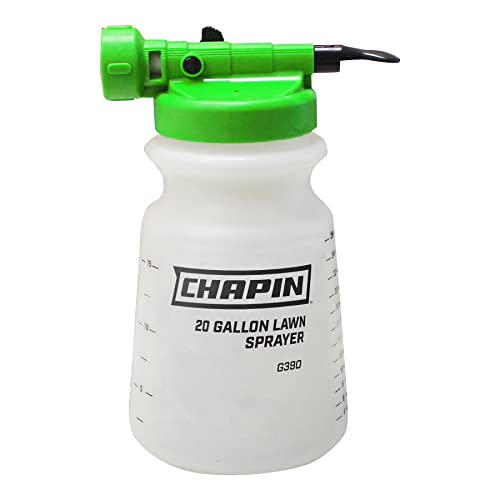
The Chapin G390 is designed for spraying water-soluble pesticides, lawn fertilizers, and insecticides. Its 32-ounce tank handles up to 20 gallons per fill, enabling efficient coverage on medium to large lawns. The universal hose attachment ensures compatibility with standard garden hoses, and it accepts optional quick-connect accessories for faster nozzle changes. The included fingertip on/off control lets you start and stop spraying without interrupting workflow. Best for: homeowners with moderate yard sizes who want reliable, repeatable chemical coverage in a single pass. Caution: larger area spraying may require multiple fills.
Chapin G385, Insecticide Hose End Sprayer
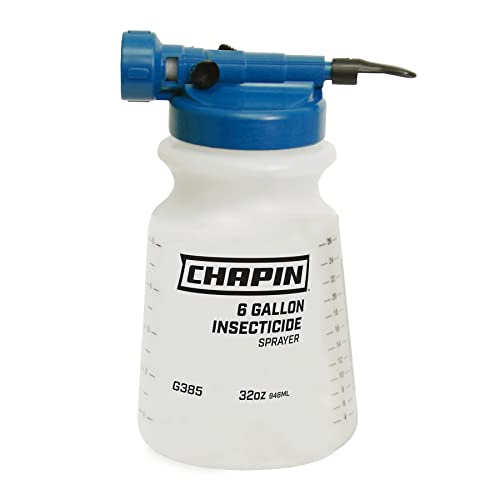
The Chapin G385 features a 32-ounce chemical tank and is built to spray up to six gallons per fill. It is Made in the USA and backed by Chapin’s support structure. The universal fit allows quick connection to a standard hose, with an optional quick-connect accessory for rapid nozzle changes. A removable fan nozzle helps provide a continuous water stream when needed. Best for: users with smaller spray requirements or those who value US-based manufacturing and support. Limitation: lower gallon-per-fill capacity than some larger models.
VENETIO 8-Dial Hose Attachment Spray Gun
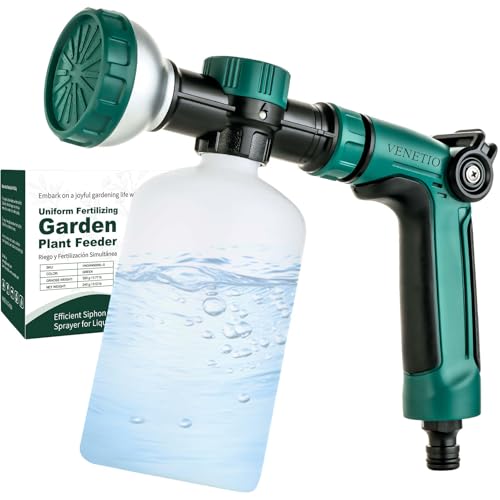
The VENETIO sprayer offers precise nutrient delivery with an integrated 16-ounce refillable bottle. It attaches to any outdoor hose and provides adjustable flow settings for tailored fertilization. Its spray options include a shower mode suitable for delicate plants, and its leak-proof, clog-resistant design supports efficient garden work. Best for: container gardens and small-to-medium beds where controlled feeding is essential. Caution: smaller 16-ounce bottle means more refills for larger areas.
OUTWAY 8 Spray Patterns Nozzle with Soap Dispenser

The OUTWAY spray nozzle features eight spouts for versatile watering, rinsing, and cleaning tasks. It includes a built-in soap dispenser, making it convenient for washing patios or vehicles without a separate foaming bucket. The nozzle offers multiple faucet ports to fit various hose connections. Best for: homeowners who need a single tool for multiple outdoor chores, including light cleaning and plant care. Caution: the integrated soap system requires occasional cleaning to prevent clogs.
The Andersons Refillable Multipurpose Hose-End Sprayer 32oz
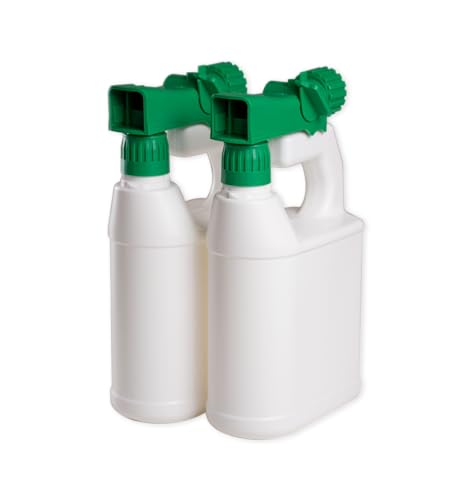
This 2-pack provides two 32-ounce bottles with a K1 spray head and a 20:1 ratio for wide, even coverage. Quick-to-fill and easy-to-use, it supports general lawn and garden spraying tasks. Best for: households needing extra capacity or budget-friendly multipacks for broad maintenance tasks. Limitation: the 20:1 ratio may be less suitable for extremely concentrated mixes that require more precise dilution control.
Buying Guide
What should I consider before buying a hose-end sprayer?
- Spray capacity: Choose based on yard size. Larger tanks reduce refills but add weight.
- Mixing ratio: Look for a model with a ratio that matches your chemicals and applications.
- Hose compatibility: Ensure universal fit or quick-connect options for easy swapping.
- Nozzle options: Removable or adjustable nozzles help tailor spray patterns to tasks.
- Additional features: Built-in soap dispensers, anti-siphon protection, and multiple spray patterns add versatility.
Which features maximize efficiency?
- Fingertip control: Quick start/stop helps avoid wasting product.
- Uniform coverage: A well-designed head with consistent spray ensures even distribution.
- Durability: Chemical-resistant tanks extend tool life when using pesticides or fertilizers.
How to select for different tasks?
- Lawn care and broad spraying: A larger capacity spray bottle with a steady stream is ideal (e.g., G390).
- Precise feeding: Choose models with adjustable flow and a defined dilution ratio (e.g., VENETIO 8-Dial).
- Cleaning and multi-purpose: Nozzles with multiple spray patterns and a soap dispenser (e.g., OUTWAY).
- Budget and quantity: A two-pack option can improve value (e.g., The Andersons 2-Pack).
Maintenance tips
- Rinse the tank after use to prevent residue buildup.
- Check seals and gaskets for wear and replace as needed.
- Store in a cool, dry place away from direct sunlight to preserve material integrity.
FAQ
- What is a hose-end sprayer used for? It applies lawn chemicals, fertilizers, or cleaners through a standard hose for convenient outdoor treatment.
- Can I use it with any chemical? Use water-soluble products and follow manufacturer dilution instructions to avoid clogging or damage.
- Do these sprayers require maintenance? Yes, rinse after use and inspect hoses and nozzles for clogs or leaks.
- Is a larger tank always better? Not always; consider your typical spraying area and the weight of a full tank.
- Are multi-pack sprayers worth it? For frequent tasks or multiple zones, a pack can save time and cost.
- What does 20:1 or 30:1 mean? It denotes dilution ratios of concentrate to water, affecting how much chemical is delivered per spray.