Finding an effective weed killer for lawns can be challenging, especially when you want results without harming your turf. This guide compares top-rated products designed to tackle dandelions, clover, crabgrass, and other common lawn weeds. Read on to see options that deliver fast, targeted control, along with factors to consider before you buy.
| Product | Brand | Weed Types Targeted | Form |
|---|---|---|---|
| Ortho WeedClear Weed Killer for Lawns with Comfort Wand | Ortho | 250+ listed weeds including dandelion, clover | 1 gal (concentrated spray) |
| Ortho WeedClear Lawn Weed Killer Ready-To-Use with Comfort Wand | Ortho | Dandelion, clover, chickweed and more | 1.33 gal (ready-to-use) |
| Ortho WeedClear Lawn Weed Killer Ready-To-Spray | Ortho | Crabgrass, dandelion, clover and others | 32 oz (ready-to-spray) |
| Roundup For Lawns Ready-To-Use | Roundup | 253+ weeds (including crabgrass, dandelion) | 1.33 gal (ready-to-use) |
| Spectracide Weed Stop For Lawns Plus Crabgrass Killer | Spectracide | 200+ weeds (dandelion, clover, crabgrass, yellow nutsedge) | 40 fl oz (concentrate) |
Choosing the right weed killer depends on your lawn type, weed spectrum, and how you want to apply the product. The following sections present five popular options, highlighting how they perform on common turfgrass varieties and their practical advantages for homeowners.
Ortho WeedClear Weed Killer For Lawns With Comfort Wand

This product is designed to kill more than 250 listed weeds, including dandelion and clover, down to the root while protecting the lawn when used as directed. It features a Comfort Wand for precise application, which helps minimize overspray and targets weeds directly in the turf. The formulation is described as fast-acting, delivering results with a single application in many cases. It’s suitable for multiple lawn grasses and emphasizes spot-treatment capability for weeds without harming the surrounding lawn when used correctly.
Ortho WeedClear Lawn Weed Killer Ready-To-Use With Comfort Wand
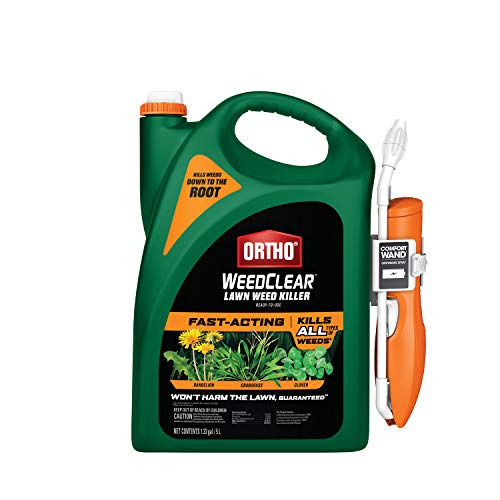
This ready-to-use product targets common lawn weeds like crabgrass, dandelion, clover, and chickweed, delivering root-level control with a single application. The Comfort Wand aids accuracy for spot treatments, and the formulation is designed to minimize risk to established lawn grasses when applied as directed. It works across a range of turf types, including cool-season grasses, making it a versatile option for many American lawns.
Ortho WeedClear Lawn Weed Killer Ready-To-Spray

This ready-to-spray option is designed to kill listed weeds down to the root with a single application, while maintaining safety for many lawn grasses when used as directed. It targets broadleaf and some grassy weeds including crabgrass and dandelion, providing a convenient broadcast or spot-treatment approach. The product emphasizes effectiveness in typical Northern and transitional climates where these weeds are common.
Roundup For Lawns Ready-To-Use

Roundup For Lawns₁ is a ready-to-use formula designed for northern grasses, focusing on weed elimination at the root with a claim of up to three months of weed control in some cases. It covers 253 types of weeds, including common offenders like dandelion, clover, and crabgrass. The product begins working immediately and is marketed as rainproof within a few hours, offering a quick return to a cleaner lawn. It’s suitable for many cool-season and warm-season grasses when applied as directed.
Spectracide Weed Stop For Lawns Plus Crabgrass Killer

Spectracide Weed Stop For Lawns Plus Crabgrass Killer is a versatile option that kills more than 470 weed types as listed on the label, while being designed not to harm the lawn when used as directed. The ready-to-use or concentrate options allow homeowners to tailor application methods. This product is notable for its broad spectrum and the emphasis on root-killing action, which helps prevent regrowth across many common lawn weed species.
Spectracide Weed Stop For Lawns Concentrate

Spectracide Weed Stop For Lawns Concentrate is designed to kill more than 200 weed types and is labeled as not harming the lawn when used as directed. It emphasizes killing weed roots and delivering nighttime or overnight visible results. The concentrate form allows you to customize mixing and coverage, making it a flexible option for larger lawns or those seeking a cost-per-application advantage.
Buying Guide
Key considerations when choosing a spot weed killer for lawns:
- Weed spectrum: Match the product’s listed weeds to the types you see most in your lawn, including broadleaf and grassy weeds such as dandelion, clover, crabgrass, and yellow nutsedge.
- Lawn type and tolerance: Check compatibility with your grass species (Bermuda, Kentucky bluegrass, fescues, Zoysiagrass, centipede, etc.) and whether the product is labeled for those grasses.
- Mode of application: Consider ready-to-use spray, ready-to-spray, or concentrated formulas. Comfort Wand and precision applicators help limit collateral damage to the turf.
- Speed of results: Some products claim visible results in hours, others emphasize long-term control. Assess how quickly you want to see improvement and whether spot treatment suffices.
- Weather and timing: Most products specify application windows and weather considerations. Avoid applying before rain unless the label permits re-entry after rainfall.
- Safety and environmental impact: Organic options exist, but all products require careful handling, proper PPE, and adherence to directions to protect people, pets, and pollinators.
- Coverage and cost efficiency: Evaluate the area you need to treat and the product’s coverage rate to estimate cost per square foot.
- Long-term effects: Some products offer extended weed control, while others focus on immediate knockdown. For lawns with persistent weed pressure, a combination approach over the season may be practical.
- Mode of action rotation: To prevent weed resistance, consider rotating products with different active ingredients if weed pressure remains high over time.
- Safety for beneficials: If you have nearby flower beds or pollinator habitats, choose products with lower risk to non-target plants when used as directed.
When selecting a product, rely on the label for exact weed lists, grass compatibility, mixing instructions, application rates, and safety precautions. For spot-treatment needs, prefer formulations that allow precise application to avoid stressing your lawn while delivering effective control.