Answering the common search for a soil softener for lawns, this guide highlights five effective options to address compacted soil, improve drainage, and boost turf health. Each product is suited to different lawn needs—from clay-heavy soils to organic-leaning amendments. Use these picks to choose the best solution for compacted soil, poor drainage, or water-logged patches, and to support a healthier root zone across most grass types.
| Product | Best For | Key Benefit |
|---|---|---|
| Liquid Soil Loosener – Simple Lawn Solutions | Compact soil, standing water | Concentrated liquid conditioner improves water movement |
| Farmer’s Secret Soil Revitalizer | Organic, soil microbial boost | Activated humic acids to stimulate soil life |
| Covington Liquid Lawn Aerator (32oz) | Clay soil, better nutrient uptake | Deep conditioner improves water movement and air flow |
| Soft Soil Liquid Aerator (GS Plant Foods) | Non-mechanical solution for compacted soil | Safe on all lawn types, improves drainage and aeration |
| Liquid Lawn Aerator (LawnStar) | Easy alternative to core aeration | Hyper-concentrated formula for deep conditioning |
Liquid Soil Loosener – Simple Lawn Solutions
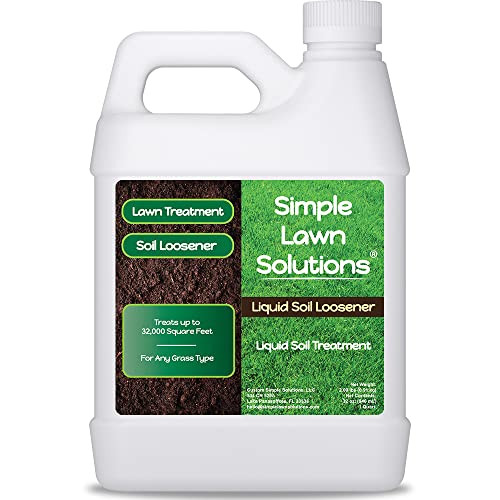
Best for: Lawns with compacted soil or standing water. This liquid soil conditioner can be used alone or with aeration equipment to soften soil, promote water infiltration, and enhance drainage. The 32-ounce bottle covers up to 32,000 square feet, making it suitable for medium to large yards.
Why selected: It provides a straightforward, easy-to-apply formula that directly targets soil density and water movement. It supports both initial soil loosening and ongoing drainage improvements when paired with fertilization programs.
Limitation: As a liquid conditioning product, it may require multiple applications for very dense clay soils or heavily saturated sites to maintain improved drainage.
Farmer’s Secret Soil Revitalizer

Best for: Soils needing an organic microbial boost and humic-acid enrichment. This organic, OMRI-listed liquid amendment supports microbial activity and overall soil health for diverse plantings beyond lawns.
Why selected: It emphasizes soil biology and organic input rather than purely physical loosening, making it a strong option for gardens that favor natural amendments and long-term soil vitality.
Caution: Results depend on existing soil biology and seasonal conditions; monthly application is suggested for best results, but landscape goals may vary.
Covington Liquid Lawn Aerator (32oz)

Best for: Lawns with heavy clay and compacted soil that need improved water movement and nutrient uptake without mechanical aeration tools.
Why selected: This liquid soil conditioner targets soil structure, promotes deeper root growth, and is noted for safety around pets and kids, with a formulation that feeds beneficial microbes while softening soil.
Limitation: While convenient, extremely compacted soils may still benefit from physical aeration in addition to liquid treatment for optimal results.
Soft Soil Liquid Aerator – GS Plant Foods
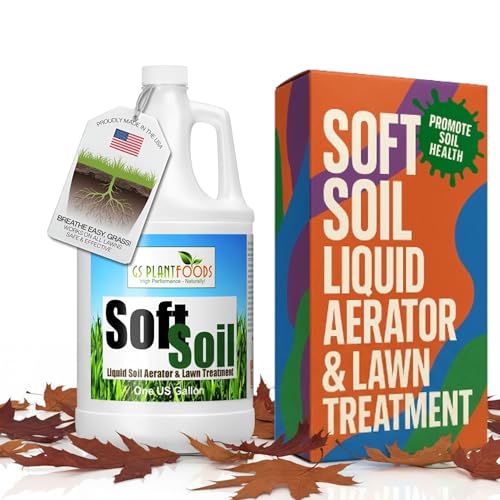
Best for: Homeowners seeking a non-mechanical solution to compacted soils while ensuring compatibility with various grass types.
Why selected: It emphasizes non-mechanical application and broad grass compatibility, focusing on improving air and water penetration through softened soil.
Caution: Non-mechanical solutions may require multiple treatments for persistent compaction or heavy clay soils.
Liquid Lawn Aerator (LawnStar)
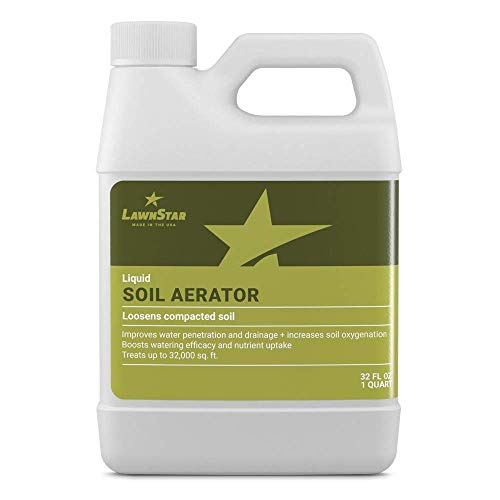
Best for: Gardeners wanting an easy-to-apply liquid alternative to core aeration with improved water penetration and soil oxygenation.
Why selected: The product is designed as a user-friendly alternative to physical aeration tools, emphasizing increased drainage and deep soil conditioning with a hyper-concentrated formula.
Limitation: It is an alternative method; for extremely dense soils, consider combining with mechanical methods if advised by lawn care standards in your area.
Advanced 16-4-8 Lawn Solutions

Best for: Lawns needing balanced nutrition along with soil conditioning properties. This liquid fertilizer provides key macronutrients to support green growth and turf health.
Why selected: It combines essential nutrients with a liquid delivery method that can work alongside soil softeners to support both soil condition and above-ground health.
Limitation: It is a fertilizer product; use as part of an integrated lawn care plan to avoid over-fertilization or nutrient runoff in sensitive areas.
Covington Liquid Lawn Aerator (1 Gallon)

Best for: Larger lawns needing a convenient liquid conditioning option that improves water movement and root absorption without mechanical tools.
Why selected: It reinforces the same core advantages of liquid aeration—simplified application and effective soil loosening—while offering a larger 1-gallon option for bigger yards.
Limitation: For very dense or severely compacted soils, physical aeration may still be beneficial alongside liquid treatments.
The Andersons HumiChar Organic Soil Amendment

Best for: Lawns seeking improved soil health with organic amendments and biochar-based delivery. OMRI-listed and compatible with fertilizer programs.
Why selected: This product blends humic acids with biochar for enhanced soil structure and nutrient retention, offering a long-term soil health approach that complements liquid soil softeners.
Limitation: Benefits may be gradual and most evident when used as part of a broader soil health plan rather than a single-use fix.
Buying Guide: Key Considerations For Choosing A Soil Softener
- Soil type and problem: Clay soils benefit most from products that improve structure and drainage, while sandy soils may require nutrient balance alongside moisture retention.
- Application method: Liquid conditioners are convenient and fast-acting but may require repeated applications; consider whether you prefer non-mechanical, non-toxic options or a more aggressive program with occasional core aeration.
- Target outcome: If the goal is rapid drainage, prioritize products that emphasize water movement and air penetration. For long-term soil health, organic amendments and biochar-based formulas offer lasting benefits.
- Safety and compatibility: Check for pet- and kid-safe formulations and compatibility with existing lawn-care programs, especially if using other fertilizers or soil amendments.
- Coverage and cost: Compare square feet coverage per bottle and factor in application frequency to estimate total cost of ownership.
FAQ
- Q: Do soil softeners replace aeration?
- Q: How often should I apply these products?
- Q: Are these safe for pets and children?
- Q: Can I combine a soil softener with fertilizer?
- Q: Which product is best for clay soils?
- Q: Is organic soil revitalizer better than synthetic options?
A: They can reduce the need for some mechanical aeration by loosening the soil, but very dense or heavily compacted soils may still benefit from core or mechanical aeration.
A: Follow manufacturer guidelines; many liquid conditioners are designed for seasonal or periodic use, with monthly applications during the growing season often recommended for organic or microbial products.
A: Several products emphasize safety around pets and kids; always read the label for specific precautions and waiting periods after application.
A: Yes, many products are designed to work with fertilizer programs, but ensure compatibility and avoid over-application of nutrients in a single cycle.
A: Liquid aerators and soil conditioners that improve water movement and structure, such as Covington and similar formulations, are commonly recommended for challenging clay soils.
A: Organic products support soil biology and long-term health, while synthetics may deliver quicker visible results; the best choice depends on your goals and soil conditions.