Direct answer: selecting a low-nutrient, well-draining soil mix is essential for healthy carnivorous plants. The best options balance moisture retention with airflow, preventing root rot while mimicking bog-like conditions. This guide highlights top soil blends ideal for Venus Flytraps, Sundews, Pitcher Plants, and Butterworts, helping you choose the right mix for your collection.
Who should consider these products? Beginners seeking easy-to-maintain options, hobbyists growing multiple species, and collectors aiming to minimize fertilizer burn will benefit. The following picks are chosen for versatility, moisture control, and low-nutrient design. A quick snapshot helps compare suitability at a glance.
| Product | |||
|---|---|---|---|
| Perfect Plants Carnivorous Plant Soil — 4 Qts | Organic Premium Mix | Venus Flytraps and Pitcher Plants | Consistent long-term acidity and moisture control |
| Carnivorous Plant Soil Mix — 1 Qt (Doter) | All natural peat-perlite-sand mix | Small repots and young plants | Airflow and water movement for root health |
| BOG BOSS Premium Carnivorous Plant Soil — 1 Qt | Nutrient-free, specialized blend | Venus Flytraps and Sundews | Excellent drainage and moisture balance |
| Kapecute Carnivorous Plant Soil Mix — 2 Qt | Peat and perlite with sphagnum debris | Venus Fly Traps and Pitcher Plants | Natural composition with enhanced aeration |
| Duspro Carnivorous Plant Soil Mix — 1.5 Qt | Forest moss, peat moss, perlite | Sundews and Pitcher Plants | Moisture retention without nutrients |
Perfect Plants Carnivorous Plant Soil — 4 Qts
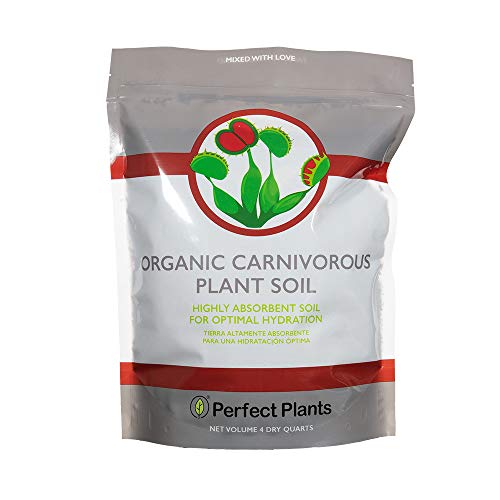
Best for collectors seeking a ready-to-use, organic base mix that supports a wide range of carnivorous species. The formulation emphasizes ideal acidity and long-term growing medium stability. Best for growers who want a consistent blend from a trusted producer in the USA.
Who it’s for: beginners and seasoned hobbyists who want a dependable medium that minimizes fertilizer risk while providing reliable moisture management. Why selected: it combines a balanced organic base with moisture-control features suitable for Venus Flytraps, Pitcher Plants, Sundews, and Bladderworts.
Caution: verify pot size and repotting frequency to maintain adequate airflow and avoid compacting the soil over time.
Perfect Plants Carnivorous Plant Soil — 1 qt
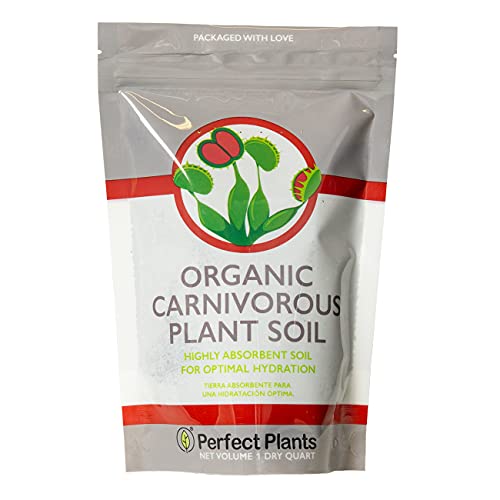
This compact option mirrors the larger mix and is ideal for mini collections or single-plant setups. It emphasizes persistent moisture control and acidity suitable for a range of carnivorous plants. Best for hobbyists expanding from starter pots or managing limited space.
Who it’s for: growers building a small but reliable carnivorous plant collection. Why selected: the formulation mirrors the larger bag, offering the same chemistry in a smaller package for targeted use.
Caution: it may require more frequent monitoring of moisture in smaller pots to prevent drying out or waterlogging.
BOG BOSS Premium Carnivorous Plant Soil — 1 Qt

Best for carnivorous plants requiring a nutrient-free, drainage-optimized medium. This mix emphasizes moisture control and healthy root development without nutrient overload. Suitable for sensitive species that thrive with minimal fertilization.
Who it’s for: experienced growers managing diverse bog-adapted species. Why selected: its nutrient-free profile reduces the risk of fertilizer burn, aligning with natural carnivorous plant care principles.
Caution: not ideal for plants that benefit from occasional nutrient inputs; use as a strict low-nutrient medium.
Kapecute Carnivorous Plant Soil Mix — 2 Qt

Generated for versatility, this mix blends peat, perlite, and sphagnum debris to deliver moisture retention with adequate aeration. Best for Venus Fly Traps, Pitcher Plants, and Sundews requiring a breathable, low-nutrient base.
Who it’s for: gardeners who appreciate hand-selected debris and a natural-feeling blend. Why selected: the mix emphasizes aeration and moisture movement, reducing root rot risk in potting scenarios.
Caution: the minimal nutrient content means occasional monitoring for plant growth pace and watering needs is recommended.
Duspro Carnivorous Plant Soil Mix — 1.5 Qt
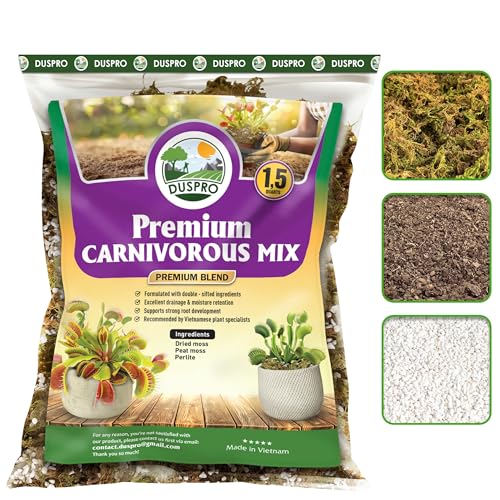
Best for Sundews and Pitcher Plants requiring a premium mix of forest moss, peat moss, and perlite. The blend prioritizes moisture handling and moss-based structure to support robust root networks without added nutrients.
Who it’s for: pet-friendly carnivorous plant enthusiasts seeking a moss-inclusive formula. Why selected: it explicitly notes nutrient-free components and forest moss inclusion for natural bog-like characteristics.
Caution: rainforest-like moss content can clump if overwatered; ensure containers provide adequate drainage.
Buying Guide
What to look for in carnivorous plant soil
- Low nutrient content: Carnivorous plants thrive in nutrient-poor media to prevent fertilizer burn.
- Excellent drainage and aeration: Avoid overly compact mixes to prevent root rot.
- Moisture retention with airflow: Balance is key; bog-like consistency helps but should not be waterlogged.
- Material composition: Peat, perlite, sphagnum moss, and sand are common; ensure no synthetic additives.
- Compatibility: Choose blends noted as suitable for Venus Flytraps, Sundews, Pitcher Plants, and Butterworts.
How to choose by plant type
- Venus Flytraps: Prefer consistently moist, well-draining mixes with acidic pH and low nutrients.
- Sundews: Appreciate moisture retention; avoid heavy compost blends.
- Pitcher Plants: Benefit from airy substrates that maintain steady moisture without compacting.
- Butterworts: Do well in lighter, well-drained media that permits good gas exchange.
How to use and maintenance tips
- Repotting frequency depends on pot size and plant growth; monitor roots for crowding.
- Water with rainwater or distilled water to avoid mineral buildup in the soil.
- Avoid adding nutrients or fertilizers to these soils; they are designed for low-nutrient environments.
Practical buying considerations
- Package size: Choose according to collection size and repotting plans.
- Availability: Some blends have multiple packaging options; select the one that fits your needs.
- Geography: Local availability may influence shipping times and freshness of the mix.
FAQ
- What is the best soil for Venus Flytraps? A low-nutrient, well-draining mix such as peat-based blends with perlite and sphagnum components is commonly recommended.
- Can I reuse carnivorous plant soil? Reuse is generally discouraged; older soil can accumulate minerals and reduce moisture balance.
- Do these soils need fertilizers? No, carnivorous plants typically require little to no fertilizers in these media.
- How often should I repot? Repotting frequency depends on pot size and plant growth; signs include root crowding or soil compaction.
- Is one mix better than another? Each blend has trade-offs; choose based on moisture retention, drainage, and plant species in your care.
- Should I use rainwater? Yes, rainwater is commonly recommended to avoid mineral buildup in carnivorous plant soil.