Answering the question for small-garden buyers: these compact rototillers are ideal for tight spaces, raised beds, and light soil preparation. Cordless models offer portability for backyards without outlets, while lightweight corded options excel in efficiency for quick jobs. This guide highlights five top picks, explains who benefits most from each, and helps you choose the right tool for looser soil, aeration, or bed preparation. Use the quick comparison table to compare runtimes, tilling width, and depth at a glance.
| Product | Best For | Key Strength | Limitations |
|---|---|---|---|
| Saker 22V Cordless | Small gardens and tight spaces | Cordless convenience, 9″ x 6.3″ tilling | Battery life depends on use |
| Alloyman 20V Cordless | Hard-to-reach spots | Comfortable, adjustable handle, 9″ x 6″ | Battery capacity may limit longer sessions |
| Muylux 20V Cordless | Beginner to mid-level gardeners | Lightweight, ergonomic grip | Low RPM compared to some corded models |
| POGGT 21V Cordless | Bed prep and seedbed refresh | Detachable tines, foldable shaft | Runtime varies with battery |
| GELIDALITE 20V Cordless | Versatile toolkit users | DeWalt 20V MAX compatibility, 9″ x 7″ | Battery not included |
Saker 22V Cordless Garden Tiller Cultivator

The Saker tiller combines cordless freedom with a compact 9-inch tilling width and 6.3-inch depth. It operates at 360 RPM and uses 4 steel tines for soil preparation, aeration, and light weeding. An adjustable secondary handle supports comfortable use for gardeners of varying heights.
Best for: small gardens, raised beds, and tight spaces where a cord is impractical. This model is ideal for users who want uninterrupted movement without proximity to outlets.
Caution: battery life will vary with soil hardness and desired depth; plan longer sessions if soil is dense. The product data emphasizes portability, so plan for recharge time between sessions.
Alloyman 20V Cordless Tiller Cultivator
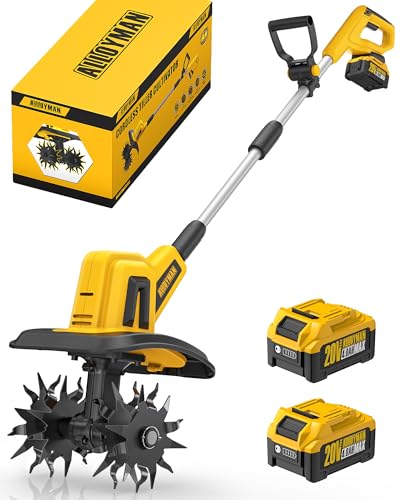
Alloyman offers a cordless design with four steel tines and a 9″ tilling width, up to 6″ depth, and 360 RPM. The auxiliary handle is adjustable, and the overall tool is crafted for easy handling in small spaces or around delicate plantings.
Best for: gardeners who want flexible reach and a lightweight tool for quick soil turning or bed prep without an extension cord.
Caution: battery runtime may be shorter if you tackle tougher soil or deeper tilling; consider extra batteries for longer sessions.
Sun Joe Corded Electric Garden Tiller TJ603E

The Sun Joe TJ603E is a corded 12-amp tiller with a 16-inch tilling width and 3-position wheel depth adjustment. Its six steel tines deliver durable performance for lawn and garden prep, with a foldable handle for storage and transport. It suits medium-sized beds and season-long tilling tasks that require reliable power supply.
Best for: homeowners who want consistent power and deeper tilling in moderate-sized spaces without battery concerns.
Caution: needs a nearby outlet; cord management is essential to prevent snagging while working.
Sun Joe Corded Electric Garden Tiller TJ604E

This Sun Joe unit offers a 16-inch tilling width with a 13.5-amp motor, designed for efficient soil turning and bed preparation. The six steel-tined design provides robust performance, and the folding handle makes storage straightforward for homeowners with limited space.
Best for: gardeners who need a robust, higher-power option for larger small beds or edging responsibilities.
Caution: corded design still requires careful cable management and access to electricity.
Muylux 20V Cordless Tiller Cultivator

Muylux brings a lightweight cordless option with an ergonomic grip, designed for 4-inch soil depth and manageable tilling. It’s well-suited for pre-bed soil loosening, aeration, and small-scale cultivation without cords getting in the way.
Best for: gardeners who prioritize comfort and easy handling, especially in raised beds or small plots.
Caution: shallower tilling depth means it’s less ideal for compact soils needing deeper mixing.
POGGT 21V Cordless Tiller
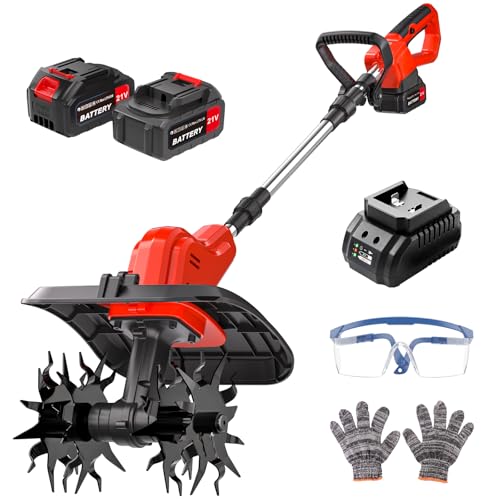
POGGT includes two 4.0Ah batteries and a real-time power display, offering up to 60 minutes of runtime in light-duty use. It has 11.8-inch tilling width and 6.6-inch depth, with detachable tines and a foldable shaft for storage. A dual safety switch adds a layer of security during operation.
Best for: gardeners needing longer runtimes and easy storage in a small shed or garage.
Caution: heavier battery packs can affect balance; ensure you maintain a stable stance while tiling.
GELIDALITE 20V Cordless Garden Tiller

GELIDALITE uses a 300W peak motor and four hardened steel blades to till a 9″ wide path up to 7″ deep. It’s compatible with DeWalt 20V MAX batteries, allowing users to leverage existing tool batteries. An integrated battery gauge helps monitor runtime, with 24 minutes (4.0Ah) or 36 minutes (6.0Ah) claimed for real-world tasks.
Best for: buyers with existing 20V MAX batteries seeking a versatile tool without buying new packs.
Caution: battery compatibility means buyers should confirm their specific DeWalt 20V MAX battery model is supported.
MZK 20V Cordless Tiller Cultivator

MZK delivers a cordless 8-inch tilling width with a compact design and 360 RPM. The kit includes two batteries and a charger, offering ready-to-go flexibility for small plots and raised beds. The ergonomics emphasize ease of use for gardeners of all experience levels.
Best for: beginners and casual gardeners who want a light, easy-to-handle tool with spare batteries.
Caution: smaller tilling width may require more passes in dense soil or large beds.
Buying Guide
What type of tiller should I choose for a small garden? For tight spaces, cordless models excel due to mobility and lack of cords. If you have reliable access to electricity and want continuous power, corded models offer steady performance for modest beds. For raised beds or flower borders, a lighter-weight tiller with an ergonomic handle reduces fatigue.
What tilling width and depth do I need? Typical small plots use 9″ to 11″ widths with 4″ to 7″ depths. Choose a model with adjustable depth or multiple depth settings if you plan to aerate soil or break up compacted layers. Deeper tilling is helpful for new beds but may be harder to manage in dense soils.
How important is battery life? For cordless tools, runtime depends on soil condition and depth. Pick models with 2 batteries or extra packs if you have longer sessions. Battery gauge indicators help you plan work blocks without interruptions.
What about maintenance and storage? Look for folding handles and detachable tines for easier cleaning and compact storage. Rust-resistant steel tines extend tool life and reduce maintenance needs in damp soil.
Safety tips: always switch to off and disconnect power before adjusting tines. Use proper protective gear and maintain a stable stance, especially on uneven ground or slopes.
FAQ
- What is the typical tilling depth I should expect from a small rototiller? Depths commonly range from 4″ to 7″ for compact models, depending on soil and tine configuration.
- Are cordless tillers suitable for hard-packed soil? They can work, but may require multiple passes or a combination of nicking and roto-work for best results.
- Can I use a DeWalt battery in GELIDALITE tillers? Yes, GELIDALITE lists compatibility with DeWalt 20V MAX batteries, but check model-specific compatibility before use.
- Do I need to lubricate the tines? Routine cleaning after use and light lubrication of moving parts can extend life; avoid over-lubrication near soil.
- Is it better to choose a 9″ tiller or a larger width for a small yard? A 9″ tiller is typically more maneuverable in raised beds and tight spaces, while larger widths speed up prep for bigger patches.
- Should I buy extra batteries? For frequent projects, extra batteries help maintain momentum during longer sessions or when soil is tough.