Choosing the right shade structure can protect delicate seedlings, extend the growing season, and keep vegetables thriving during peak sun. This guide highlights five reliable shade structures and accessories that balance light, airflow, and durability. Each option offers a practical setup for raised beds, greenhouses, or outdoor plantings, with emphasis on UV protection, ease of assembly, and long-term use. Read on to compare features and decide which system best fits your garden’s size, climate, and crop mix.
Summary Table Of Chosen Products
| Product | Key Benefit | Best For |
|---|---|---|
| Upgraded Garden Shade Cloth Kit (FOTSHARER) | Complete kit with hoops, connectors, and gloves | Raised beds and container gardens |
| Garden Hoops Grow Tunnel (Xuwzenkl) | Fiberglass, rust-proof frame for quick tunnels | Season extension and seedling protection |
| Tigvio 9.8×18.7FT Shade Cloth | High-quality HDPE with 50–60% shading | Greenhouses and open patios |
| HOLAA 90% Shade Cloth | High shade rate with reinforced edges | Broad outdoor shading and wind resilience |
| Winemana 40% Black Shade Cloth | Durable mesh with excellent airflow | Greenhouses and pergolas |
Upgraded Garden Shade Cloth Kit
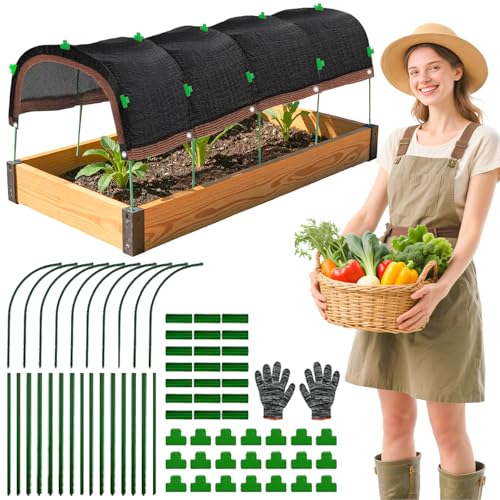
The Upgraded Garden Shade Cloth Kit from FOTSHARER provides a complete shading solution for outdoor plants. The set includes a 4.9 x 6.5 ft shade cloth, 15 straight tubes, 21 connectors, 10 curved tubes, 21 gardening clips, and gloves. This kit is designed to create a cool, shaded retreat for plants, helping protect them from scorching sun. It is ideal for raised beds and containers where managing light and heat improves germination rates and overall plant health.
Materials and design focus on durability: the cloth is made from HDPE with a 75% shading rate, offering solid sun protection while maintaining airflow. The shade cloth features reinforced grommets and seam stitching to resist tears, and the included garden hoops offer flexible configuration options for multiple bed shapes. Users can assemble the hoops into various layouts to fit their planting beds, enabling a custom shade solution that adapts to growing needs. The kit’s gloves and clips simplify installation and future adjustments as plants grow or weather shifts.
Garden Hoops Grow Tunnel (Xuwzenkl)

These garden hoops from Xuwzenkl use a rustproof fiberglass frame designed to be flexible and durable. The kit serves as a mini greenhouse or tunnel for raised beds, seed starting, and row covers. Fiberglass construction prevents rust and reduces soil contamination risk, helping maintain soil health over time. The hoops are coated to minimize splinters, improving handling comfort for gardeners. Combine with plant covers, shade cloth, or netting to create a controlled microclimate that accelerates seed germination and protects young plants from frost or pests.
The system emphasizes long-term use and ease of customization. Fiberglass frames are lightweight yet sturdy, making installation straightforward in yards of varying soil types. When paired with a shade cloth or netting, these hoops provide a portable, scalable solution for gardeners who want to protect crops from wind, hail, or intense sun without building a permanent structure. The kit’s modular approach makes it suitable for seasonal adjustments and different crop layouts across multiple beds.
Greenhouse Hoops Grow Tunnel (WYRJXYB)

The WYRJXYB set provides a 6-pack of long fiberglass hoops designed to form a robust grow tunnel for raised beds or greenhouses. The kit is tailored for DIY installations and works well with shade cloths, netting, or row covers. The 8-foot length per hoop offers substantial height and stability, letting gardeners create larger protective structures for tomatoes, peppers, and leafy greens. The design supports multiple configurations, enabling a versatile canopy that shields crops from sun while preserving airflow and preventing overheating.
Installation is straightforward: insert hoops into the soil, connect with included connectors, and secure with clips or stakes. The modular approach makes it adaptable for different bed widths and shapes, so you can customize the tunnel to your garden’s footprint. The rust-free fiberglass construction ensures longevity even with regular outdoor exposure, and the included hardware makes it easier to assemble without specialized tools.
Tigvio Shade Cloth, 9.8×18.7FT

The Tigvio shade cloth is a large, breathable option designed for greenhouses, pergolas, and gardens. With a shading rate of 50–60%, it provides significant relief from direct sun while maintaining air circulation—an important factor for plant health and pollinator activity. The HDPE fabric is UV-stabilized to resist sun damage and features reinforced edges for durability against wind and wear. This shade cloth works well as a primary canopy over wide beds or as a secondary layer over a more substantial frame.
Its design supports easy mounting with reinforced grommets and a sturdy weave that resists tearing. The material balances light diffusion with visibility, ensuring that plants receive enough light for photosynthesis without overheating. For gardeners seeking a larger, semi-permanent shade option, Tigvio’s cloth can be paired with a simple frame or existing pergola to extend the growing season and protect crops through peak sun months.
Winemana 40% Shade Cloth

This Winemana shade cloth delivers a balanced 40% shading rate with high airflow. It is constructed from high-density polyethylene, providing light diffusion while reducing heat build-up. The fabric is designed for durability and long service life, featuring a taped edge and reinforced corners to resist tearing and stretching. The universal design works well for greenhouses, pergolas, and open patios where you need reliable shading without sacrificing visibility or wind tolerance.
Key advantages include good tensile strength, resistance to UV degradation, and reinforced corners with grommets for secure anchoring. This cloth is suitable for gardeners who want a cost-effective, versatile shade solution that can be draped over frames or used as a stand-alone cover for temporary shielding during hot spells or windy days. Its breathable construction supports plant health by maintaining air movement and reducing microclimates that foster disease in stagnant, overly humid spaces.
Buying Guide
- Shade rate: Higher shading (60–75%) blocks more sun, ideal for heat-prone zones but may reduce photosynthesis in some crops. Lower rates (40–50%) work for crops needing more light while temperature remains manageable.
- Material: HDPE is common for shade cloths due to durability and UV resistance. Fiberglass frames offer rust-free longevity but weigh more; consider frame material in relation to bed size and soil conditions.
- Ventilation: Look for breathable fabrics and frames that promote air movement to prevent humidity buildup and reduce pest pressure.
- Durability: Reinforced seams, grommets, and edge binding extend life, especially in windy areas. Tear resistance matters for garden edges and frequent adjustments.
- Ease of installation: Modular hoops and clip systems can simplify setup, removal, and storage, particularly for seasonal gardeners or those with limited space.
- Compatibility: Check dimensions to match your raised beds, greenhouses, or patios. Some kits are designed for large spans, others for compact plots.
- Maintenance: Look for fade resistance and washability, especially if you use covers repeatedly across seasons.
These options collectively cover a range of garden sizes and climates. When selecting, consider how you will use the shade: as a temporary resource during heat waves, a seasonal covering for seedlings, or a semi-permanent structure to extend the growing season. The best choice balances shading needs, airflow, frame durability, and ease of use for ongoing garden maintenance.