Maintaining thriving plants while juggling travel, work, and family demands can be challenging. A reliable self-watering system helps keep soil consistently moist, reduces over- or under-watering, and minimizes daily maintenance. Below are five top options that balance capacity, intelligent features, and ease of use for American households. Each selection prioritizes quiet operation, durable components, and clear setup guidance to support a healthy indoor or outdoor garden.
| Product | Brand | Key Feature |
|---|---|---|
| Automatic Plant Waterer Indoor Self Watering System for 15 Potted Plants | beday | 15-pot capacity with programmable timer and humidity-based hydration |
| RAINPOINT Large Display Automatic Plant Waterer | RAINPOINT | Cycle & Soak mode; adjustable watering range; easy program |
| Blumat Classic Self-Watering Stakes – 3 Pack | Blumat | Ceramic cone siphon mechanism for steady, passive hydration |
| Spider Farmer Auto Watering System – 4-Pack | Spider Farmer | Gravity-fed, 13-gallon reservoir; no electricity required |
| 4Pcs Self Watering System for Plants – 30 Days | Azureblue | Vacation-ready, adjustable flow up to 250 ml/h |
Each entry below highlights how these systems manage water delivery, user setup, and long-term reliability. Consider plant variety, pot sizes, and the level of automation you prefer when choosing the best fit for your home or balcony garden.
Beday Automatic Plant Waterer (15 Pots)

The Beday system offers Butler-grade watering that automates precise hydration for up to 15 potted plants. It is designed to support constant vitality across a diverse collection, ensuring each plant receives adequate moisture even when you’re away. The setup is straightforward: program the schedule to align with your plants’ daily needs, and the system will manage watering automatically in the days ahead. The kit emphasizes strong water pressure and stability to reach pots located farther from the main source, which helps maintain uniform growth across a larger planter layout.
Key benefits include a hands-off experience for travelers and busy households, reduced risk of over-watering due to scheduled delivery, and reliable performance with a single setup. The system aims to create a lush indoor or outdoor space that rewards regular, consistent hydration without daily manual checks.
RAINPOINT Automatic Plant Waterer (Up To 20 Pots)
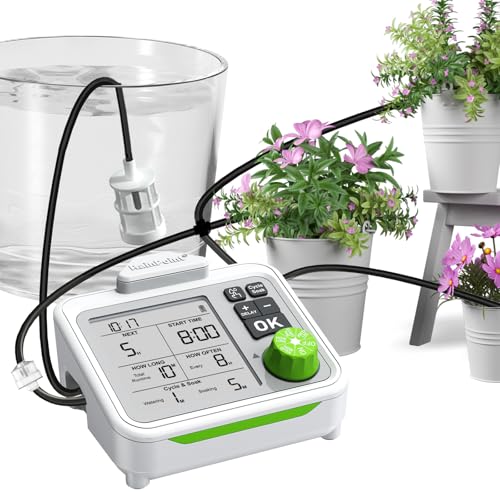
RAINPOINT’s large-display unit supports up to 20 plants with a Cycle & Soak setting that divides irrigation into multiple shorter runs with soak periods. This approach improves soil saturation while conserving water, potentially reducing consumption by up to 30% and boosting plant health. The system provides broad programming options—from every 8 hours to once every 30 days, with water durations from 20 seconds to 20 minutes—so you can tailor it to different plant types and seasonal needs. A manual mode and a 24/48/72-hour delay help prevent overwatering during rainy spells or when soils are already moist.
Its user-friendly interface and reservoir-driven design make it a strong choice for apartment balconies, offices, or sunrooms where multiple plant stations require consistent watering without electrical dependence.
Blumat Classic Self-Watering Stakes – 3 Pack

The Blumat stakes provide a simple, passive irrigation solution. As a classic self-watering planter insert, these Austrian-engineered stakes use a siphon mechanism and ceramic cones to draw water from the reservoir and release it steadily to the plant roots. This design supports both indoor and outdoor plants and excels for gardeners who prefer a low-maintenance, plug-and-play approach. The kit’s slow-release principle helps prevent overwatering and supports consistent root hydration, which is particularly beneficial for potted arrangements where root zones are limited.
Pros include compatibility with a wide range of pot sizes and plant types, quiet operation, and dependable hydration with minimal setup. Blumat stakes work best when paired with a stable water source and regular soil moisture checks during initial use to calibrate flow.
Spider Farmer Auto Watering System – 4 Pack

Spider Farmer’s gravity-fed system uses a 13-gallon reservoir to deliver water to each pot via wick lines, eliminating electricity needs and daily checks. This setup offers precise moisture control to prevent both drought stress and waterlogging. The 4-pack configuration is ideal for larger grow tents or multi-pot arrangements, enabling synchronized watering across different zones. With no power requirements, the system provides a reliable solution for extended trips or remote garden areas where electrical access may be limited.
Highlights include long-lasting moisture delivery, simple maintenance, and the peace of mind that comes with a steady, gravity-driven water supply. The wick-based approach helps prevent overwatering by distributing moisture just as plants demand it.
Azureblue 4Pcs Self Watering System – 30 Days

Azureblue’s four-pack vacation-friendly system emphasizes ease of use for travelers and busy households. It offers adjustable water flow with a wide range of settings up to 250 ml/h and claims the kit can sustain watering for up to 29–30 days when set to the lowest flow. The device includes a simple “fill, set, and insert” workflow, making it accessible for casual gardeners. The system is designed for both indoor and outdoor pots, enabling you to cover a balcony herb bed or a small patio garden without constant supervision.
Potential considerations include ensuring the water flow is tuned to plant demands and monitoring for soil moisture to prevent waste. It is well-suited for light to moderate watering needs and for households seeking a straightforward, travel-ready option.
Buying Guide: Key Considerations For Choosing A Self-Watering System
- Capacity and scale: Match reservoir size and pot count to your space. Larger systems are ideal for patios or multi-plant setups, while compact units suit desks and small balconies.
- Water delivery method: Gravity-fed, siphon-based, or timer-driven systems each offer different reliability profiles and water usage patterns. Consider your climate and watering frequency needs.
- Control and programmability: Look for clear displays, intuitive programming, and flexible timing intervals. Some units include manual and delay options for rainy periods.
- Soil moisture awareness: Systems with sensors or moisture monitoring help prevent over-watering and support drought tolerance.
- Durability and materials: Weatherproof components, IP-rated housings, and corrosion-resistant materials increase longevity for outdoor use.
- Power requirements: Solar, USB, or battery options affect placement and maintenance. Solar-plus-USB hybrids offer year-round reliability.
- Installation and maintenance: Choose systems with minimal assembly, easily accessible parts, and straightforward refilling procedures to encourage regular use.
- Compatibility: Verify that the system works with your pots, soil types, and plant species. Some designs are optimized for 4–6 inch pots, others for larger containers.
- Travel readiness: If you travel frequently, prioritize features like remote monitoring, quick setup, and dependable long-run operation.
- Return policy and warranty: A solid warranty helps cover potential leaks or component failures, especially for outdoor deployments.
In conclusion, the best self-watering system depends on your garden size, plant diversity, and travel frequency. Whether you choose a gravity-driven, passive option, a machine-assisted timer setup, or a scalable multi-pot solution, these selections offer robust hydration control, reduced manual effort, and consistent plant health across seasons.