Looking to grow sprouts and microgreens at home with minimal effort? This guide highlights five top-rated seed blends that are easy to grow, organic when possible, and ideal for different living spaces. Each option is suited to a specific type of grower—whether you’re a busy urban dweller, a beginner, or a kitchen-shelf sprouter. Use the quick comparison below to pick the one that fits your space and taste preferences.
| Product | Best For | Type | Notes |
|---|---|---|---|
| Seedboy Organic Non-GMO Sprouting Seeds, Fresh Salad Blend | Health-conscious cooks who want a ready-to-grow mix | Organic, USA-grown | Includes alfalfa, broccoli, radish, mung bean, lentil; jar sprouting option |
| Nature Jim’s Sprouts Organic Salad Mix | Beginner to intermediate indoor growers | Organic, non-GMO | Fast 5-day readiness; versatile for indoor/outdoor use |
| Todd’s Seeds Broccoli & Friends Sprouting Mix | Balanced four-seed blend for delis and sandwiches | Non-GMO | Simple steps; 5-day readiness; USA-grown |
| Organo Republic Broccoli Sprouting & Microgreens Seeds | High-volume sprouting in various systems | Non-GMO, heirloom | Very large pack; supports many trays |
| Microgreen Seeds Variety Pack – 10 Heirloom Types | Diverse flavor and color in one pack | Non-GMO, heirloom | 10 varieties; indoor-friendly |
The table above outlines five popular options that cover a range of growing styles, from small-space countertop setups to larger batch sprouting. The selections emphasize non-GMO or organic seeds and provide clear guidance on who benefits most from each blend.
Seedboy Organic Non-GMO Sprouting Seeds, Fresh Salad Blend

Best for health-minded cooks who want a balanced, ready-to-sprout mix. This US-grown blend combines alfalfa, broccoli, radish, mung bean, and lentil seeds to deliver a mild yet crunchy harvest in days. The seeds are certified organic by OTCO and undergo quality testing for purity. Suitable for sprouting in jars or small trays, making it a strong all-around choice for beginners and seasoned sprouters alike.
Who it’s best for: busy individuals seeking convenient, nutrient-rich greens without a garden. Why selected: it offers a complete flavor profile and reliable germination with organic, USA-sourced seeds. Caution: jar sprouting requires separate equipment (sprouting jar not included in package).
Nature Jim’s Sprouts Organic Salad Mix
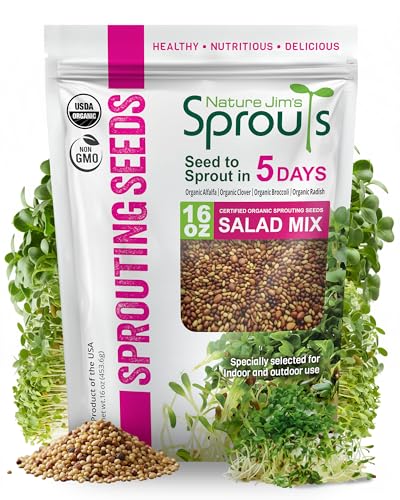
Best for new and intermediate growers who want quick-to-harvest microgreens with strong organic credentials. The mix includes broccoli, alfalfa, radish, and clover, offering a balanced flavor that works well on salads or sandwiches. Seeds are organic and non-GMO, with a stated five-day growth window, which helps indoor gardeners plan harvests efficiently.
Who it’s best for: first-time sprouters and small-space growers seeking reliability and speed. Why selected: clear growth timeline and organic, non-GMO seeds. Caution: the blend’s flavor notes may vary with growing conditions, so slight flavor shifts are possible if environmental factors differ.
Todd’s Seeds Broccoli & Friends Sprouting Mix

Best for deli-style, balanced sprouts. This four-seed blend—broccoli, alfalfa, radish, and clover—delivers a mild, crunchy mix suitable for sandwiches and salads. Grown in the USA and non-GMO, it’s designed to be easy for beginners to produce consistent results. A good choice for those who want a steady, meat-free crunch in meals.
Who it’s best for: home cooks who favor a classic deli-style sprout. Why selected: four-seed balance reduces overpowering flavors. Caution: thorough drainage and proper rinsing are essential to maintain crispness and prevent soggy sprouts.
Organo Republic Broccoli Sprouting & Microgreens Seeds

Best for high-volume, multi-system sprouting. This 1-pound bag contains non-GMO, heirloom broccoli seeds intended for soil, coconut coir, aeroponic, and hydroponic setups. It emphasizes a high seed count (large batch potential) and includes guides to help growers achieve high germination rates across trays. Ideal for those expanding beyond small jars.
Who it’s best for: growers planning to produce multiple trays or those exploring different growing methods. Why selected: large pack size and broad compatibility. Caution: success depends on a suitable growing system and proper drainage to avoid root rot or mold in denser setups.
Microgreen Seeds Variety Pack – 10 Heirloom Types

Best for flavor variety and color diversity. This pack includes ten heirloom microgreen seeds—broccoli, pea, sunflower, radish, kale, arugula, beet, cabbage, buckwheat, and alfalfa—providing a broad tasting palette. Seeds are non-GMO and easy to grow indoors with simple tray setups. Great for growers who want to experiment with different microgreens across seasons.
Who it’s best for: cooks who want a seasonal, varied microgreen supply. Why selected: broad variety in one package simplifies planning. Caution: some varieties may require slightly different light, water, or harvest windows; follow the included guidelines for best results.
Buying Guide
What seed type should you choose?
Organic or non-GMO seeds are common, with organic preferred for health-conscious buyers. If you want the widest flavor range, a mixed or variety pack can simplify selection and flavor testing.
What growing space do you have?
Small apartments benefit from jar sprouters and single-tray kits. Large kitchens or hobbyist setups can take advantage of larger seed packs and multi-tray systems. Look for blends designed for quick harvest if time is a factor.
What is your target harvest time?
Some blends claim harvest in as few as five days, which suits weekly meal prep. Others emphasize ongoing production across trays, ideal for daily salads.
What nutrients and flavor profiles do you want?
Alfalfa provides a classic mild flavor; broccoli and radish seeds add peppery and sulfur notes. A diverse mix yields different textures and crunch for sandwiches and bowls.
Are there any limitations to consider?
Some blends require specific sprouting equipment (jars, drains) and careful drainage to maintain crispness. Very large packs are cost-efficient but may be less practical for casual hobbyists.
FAQ
- Q: How long do sprouts take to grow from these seed blends?
A: Most blends yield harvestable sprouts within 5–14 days, depending on the variety and growing conditions. - Q: Are these seeds safe for indoor sprouting?
A: Yes. The listed seeds are designed for indoor sprouting and microgreens under typical home conditions. - Q: Do these blends require special lighting?
A: Basic indoor sprouting usually needs indirect light or gentle grow lights; check each product’s guidance for best results. - Q: Can I reuse sprouting jars or trays?
A: Yes. Clean and dry them between batches to prevent mold and ensure consistent germination. - Q: Is a larger seed pack better value?
A: Larger packs often provide better cost-per-tray yield, but suitability depends on your growing space and time to use the seeds. - Q: Are these seeds already pre-washed?
A: Seed quality varies by brand; follow the product’s preparation instructions to ensure clean sprouts.