Looking for raised planters that fit a deck and deliver easy maintenance? This guide highlights five top choices that balance durability, height, mobility, and watering features. Ideal buyers include balcony gardeners needing elevation and mobility, deck owners seeking low-maintenance irrigation, and herb lovers who want convenient access. Below you’ll find concise comparisons, who each product suits best, and practical limitations to consider before buying.
Summary Table — Selected Raised Planters For Deck
| Product | Best For | Key Feature | Limitations |
|---|---|---|---|
| Keter Urban Bloomer | Budding herb garden on a compact deck | Built-in water gauge and adjustable drainage | Smaller footprint may limit deep root crops |
| LEETOLLA Elevate 32” | Mobility with heavy soil loads | Two wheels with ergonomic handle, dual drainage | Metal construction may get hot in sun |
| Best Choice 48x24x30 | Spacious raised bed for veggies | All-wood design with bed liner | Wood requires occasional maintenance |
| DIIYIV Galvanized 48x18x30 | Two-piece assembly with sturdy legs | Safe corner padding and easy assembly | Two-piece set may require alignment during setup |
| LINEX 56.7” With Trellis | Climbing plants and vines on decks | Trellis plus self-watering reservoir | Longer footprint may crowd smaller decks |
Keter Urban Bloomer Raised Garden Bed

The Keter Urban Bloomer is a compact raised planter with a built-in water gauge and an adjustable drainage system. Designed for small herb or salad gardens, it suits deck spaces where height and visibility matter. The gauge indicates when moisture is needed, helping novice gardeners avoid under- or over-watering. Best for: first-time deck herb planters or anyone who wants a self-checking moisture indicator. Caution: the unit’s footprint is modest, so deep-root crops won’t thrive as well as in larger beds.
LEETOLLA Raised Garden Bed With Wheels

The LEETOLLA Elevate bed emphasizes mobility and load capacity, offering 400 pounds of soil support and two all-terrain wheels with an ergonomic handle. Its sturdy powder-coated iron construction helps resist rust, and the dual drainage system drains faster for better soil health. Best for: deck gardeners who frequently rearrange sun exposure or need to move the bed seasonally. Limitation: metal surfaces can heat up in direct sun, potentially affecting nearby plants or user comfort.
Best Choice Products Raised Garden Bed
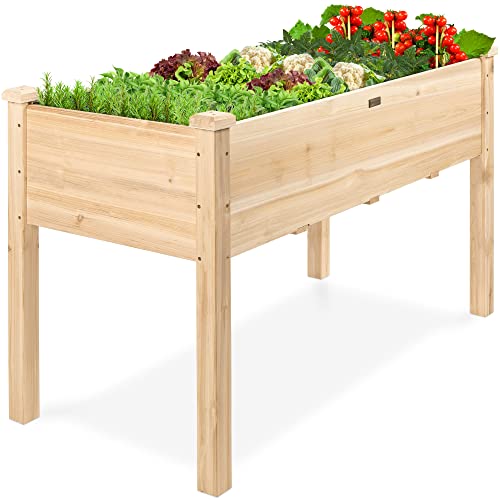
The Best Choice Products raised bed offers a large 48 x 24 x 30-inch footprint with all-wood construction. The bed is deep enough to support a robust plant mix and includes a bed liner for added moisture resistance. Best for: deck owners who want a natural wood aesthetic and ample planting space. Caution: wood requires weatherproofing and periodic maintenance to prevent wear over time.
DIIYIV Galvanized Raised Garden Bed With Legs

This galvanized bed stands on legs with a 48 x 18 x 30-inch footprint and a 300-pound capacity. Pads on the corners reduce accidental injuries, and the sturdy steel plates minimize sharp edges. Best for: users who want a two-piece setup that’s easy to assemble and provides elevated access. Limitation: the two-piece design can require careful alignment during setup to ensure stability.
LINEX Raised Garden Bed With Trellis

The LINEX planter combines a 6.1-gallon bed with a 43.6″ trellis, perfect for tomatoes or climbing flowers. It features a self-watering reservoir and four drainage holes to prevent root rot, along with durable PP material and a metal trellis frame. Best for: decks where space allows trailing vines or climbing plants. Caution: longer footprint may limit placement on smaller decks or tight patios.
OYEAL Raised Garden Bed With Trellis

The OYEAL 32″ tall planter features four garden boxes, a trellis for climbing plants, and legs for elevated access. Its efficient drainage system and removable tray help prevent overwatering and keep outdoor spaces clean. Best for: balcony or deck gardeners who want a multi-box solution with a climbing plant option. Limitation: some users may prefer a wider base for heavy, dense beds to maximize stability in windy areas.
Buying Guide: Key Considerations For Deck Raised Planters
- Purpose and plants: Choose based on whether you primarily grow herbs, vegetables, or climbing plants. Trellises are ideal for tomatoes and vines, while deep beds suit root crops.
- Height and ergonomics: Taller beds reduce bending and are easier on the back. Consider whether you need wheels for mobility or a solid stand for stability.
- Material and durability: Metal planters resist weathering but can heat up; wood offers a natural look but requires maintenance; galvanized options minimize rust risk.
- Drainage and irrigation: Bed designs with built-in drainage or self-watering reservoirs reduce maintenance and prevent root rot. Ensure drainage won’t leak onto decks.
- Assembly and footprint: Some models come in multiple pieces or require alignment. Check deck dimensions to ensure the planter fits without crowding.
- Mobility vs. stability: Wheels are convenient for sun exposure shifts but may compromise stability on windy days or uneven decks.
Frequently Asked Questions
- What height is best for deck gardening? A height around 28–36 inches reduces bending and suits most adults for comfortable planting and harvesting.
- Do raised planters need liners? Liners help manage soil moisture and prevent wood or metal from contacting wet soil directly, extending bed life in some materials.
- Can I use these planters for heavy crops? Beds with higher load capacity (e.g., 400 lbs) are better for tomatoes, zucchini, and larger herbs when filled with soil.
- Are self-watering systems worth it for decks? Yes, they reduce watering frequency and help maintain consistent moisture, particularly in hot environments.
- Do I need to seal wooden planters? Sealing or treating wood helps resist moisture and decay. Reapplication may be needed every season or two depending on climate.
- How should I position planters on a deck? Place planters where they receive adequate sunlight, allow for drainage, and enable easy access for watering and harvesting.