Answering your search for reliable pumice stones and lava rocks for fire pits, this guide highlights the best options for gas-powered pits, fireplaces, and decorative landscapes. Designed for American buyers, these selections emphasize heat resistance, safe handling, and flame enhancement. Ideal buyers include homeowners adding gas fire features, landscapers finishing outdoor spaces, and anyone seeking low-maintenance fire alternatives. The table below compares five top picks to help you decide quickly.
| Product | Size/Weight | Best For | |
|---|---|---|---|
| 5 lbs | Gas fire pits, fireplaces | Lightweight, heat resistant, enhances flame performance | |
| 5 lbs | Small to medium pits, decorative pits | Porous surface for even gas dispersion | |
| 15 lbs | Large pits, landscapes | Premium, durable lava rocks with heat resistance | |
| 10 lbs | Gas fire pits, fire tables | Explosion-proof safety and even dispersion | |
| 10 lbs | Outdoor and indoor use | Natural lava rock with high temperature tolerance |
Note: All products listed are natural lava rocks or pumice stones designed to improve flame aesthetics and heat distribution in gas-powered fire features. The selection prioritizes items that are lightweight, durable, and easy to place as a base layer or decorative layer under fire glass or faux logs.
Skyflame 5LB Natural Pumice Stone for Fire Pits

Best for: Homeowners seeking a lightweight base for gas fire pits and fireplaces. The pumice stone is handpicked and bagged with no artificial color, offering natural heat resistance and minimal pollution. Use as a base layer under decorative elements or to replace traditional wood sets, creating a unique look.
Why chosen: Its natural, inert composition supports safe gas dispersion and flame enhancement. The stones are easy to pour directly into the pit, reducing setup time.
Caution: The pumice itself does not burn; ensure the gas supply is correctly managed and turn off gas before handling the stones to inspect for damage.
Skyflame 1″-2″ Natural Volcanic Lava Rock

Best for: Smaller gas pits or indoor/outdoor fire bowls where a compact stone profile is preferred. The 1″-2″ stones provide a balanced look with strong heat resistance.
Why chosen: This size range optimizes gas dispersion for a uniform flame pattern and reduces excessive heat pockets. It’s a practical upgrade from larger chunks in compact spaces.
Caution: Stones vary slightly in size due to natural formation; sort for even coverage before lighting to avoid gaps that affect flame performance.
Gantessa 15LB Natural Lava Rock

Best for: Large outdoor pits and landscaping projects where a substantial lava rock layer is desired. The bag contains hand-picked stones noted for durability and heat resistance.
Why chosen: The 15 lb quantity provides a cost-effective option for larger installations, delivering a sturdy base that supports even gas dispersion.
Caution: Ensure rocks are dry before use and dry heat them evenly to prevent cracking from uneven expansion.
GASPRO 10 lb Large Lava Rocks
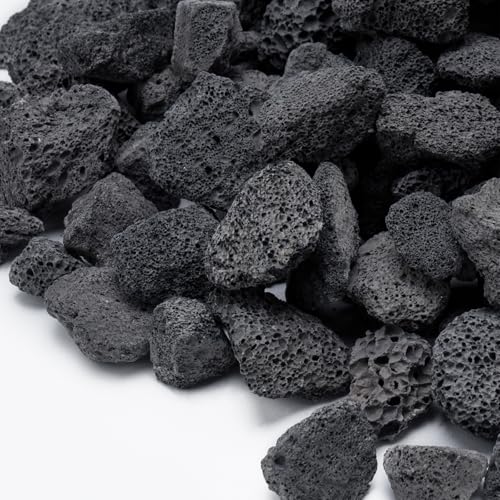
Best for: Gas fire pits and fireplaces that require a resilient, explosion-proof base. The rocks resist cracking or popping when exposed to high temperatures.
Why chosen: The safety-focused treatment and uniform 1–3 inch sizing help create stable burning performance and a neat aesthetic, especially when used with fire glass or logs.
Caution: Always keep rocks completely dry prior to ignition to avoid pressure buildup and cracking during startup.
Skyflame 10LB Lava Rocks

Best for: Decks, patios, and larger outdoor spaces needing a robust lava rock cover. Natural lava rocks are hand-picked and bagged, offering high-temperature resilience.
Why chosen: The 10 lb bag provides a convenient mid-size option that’s easy to handle and arrange around gas flame features for a natural look.
Caution: Overloading a pit with rocks can impact flame distribution; space rocks to ensure even gas burn.
Buying Guide: How To Choose The Right Pumice Stone Or Lava Rock For Your Fire Pit
- Purpose and space: For small pits, choose 1″-2″ stones to avoid crowding. For larger installations, 2″-3″ rocks or bigger lumps provide better coverage and flame diffusion.
- Heat resistance: Look for natural lava rock or pumice labeled as heat resistant. These materials withstand high temperatures without cracking under standard gas flames.
- Weight and handling: Lighter bags (5-10 lbs) are easier to manage and adjust. Heavier bags (15 lbs) are cost-effective for expansive setups but require more storage space.
- Safety: Ensure stones are completely dry before ignition. Do not place damp rocks in hot pits to prevent cracking or popping.
- Maintenance: Choose natural, color-free materials to avoid staining or color transfer. Stones require minimal maintenance beyond occasional rearrangement.
- Aesthetic: Consider whether you want a uniform look or a mixed base with fire glass or faux logs. Pumice stones give a soft, natural texture; lava rocks offer a rugged, volcanic aesthetic.
Frequently Asked Questions
- Can pumice stones be used in all gas fire pits?
– Yes, when specified for gas fireplaces and pits, pumice stones can help diffuse gas and enhance flame appearance. Always follow manufacturer recommendations. - Do pumice stones catch fire?
– No. Pumice stones are non-combustible and serve as a heat-resistant base or decorative layer. - What size is best for a small fire pit?
– For compact pits, 1″-2″ stones are typically best to avoid crowding while enabling even heat distribution. - Should I mix lava rocks with fire glass?
– Yes, mixing lava rocks with fire glass can create a layered, modern look and improve flame dispersion. Ensure proper placement to avoid blocking gas flow. - How often should I replace lava rocks?
– Lava rocks are durable but may crack over time if exposed to rapid heating or moisture. Inspect for cracks and replace as needed to maintain performance. - Are there safety benefits to lava rocks versus plain stones?
– Lava rocks may offer improved heat distribution and durability, but both options must be kept dry and properly sized for safe operation.