Answering the search intent plainly: for rough-cut mowing, a tow-behind (pull-behind) mower is often the best option when you need to clear saplings, tall grass, and heavy debris along fences, edges, or wide strips. These machines are designed for durability, not finish lawns, and are best suited for property owners who routinely encounter rough terrain or unpaved areas. Below are five top picks that balance power, maneuverability, and ease of use, with notes on who each model is best for and where to watch for potential limitations.
| Product | Best For | Why It Stands Out |
|---|---|---|
| Swisher RC11544CL | Rough-cut mowing near edges | Remote blade engagement from towing vehicle; offset hitch for flexible side towing |
| Swisher RC15544BS | Heavier brush and saplings | 12V electric-start, stump jumper with dual blades for up to 3″ saplings |
| Swisher WRC11524BS | Compact rough-cut tasks | Self-propelled deck, reverse, multiple height settings |
| Swisher WRC11524BSC | Hard-to-reach tight spaces | Casters for maneuverability, adjustable handlebar |
| WORVISTA ATV Pasture Drag Harrow | Soil leveling and material distribution | Chain harrow for landscape leveling and rough ground prep |
Swisher RC11544CL — 11.5 HP Tow-Behind Rough Cut

The RC11544CL is designed for rough-cut mowing, not for finish work. It is best for property owners who need to clear overgrowth along fence lines and field edges. The mower uses a remote operator control console to engage blades from the towing vehicle, avoiding the need for a walk-around start. Its offset hitch provides left or right-side towing to access tight areas.
Who it’s best for: homeowners with regular rough-cut chores around perimeters and narrow corridors that require flexible towing angles. Why chosen: it combines remote blade engagement with edge-to-edge reach thanks to the offset hitch. Caution: it is not intended for pristine lawn finishes or fine turf.
Swisher RC15544BS — 15.5 HP Tow-Behind Rough Cut

Designed for rough-cut mowing with a 15.5 HP Briggs & Stratton electric-start engine, this model offers strong, reliable performance for tougher jobs. It features a stump jumper with two swinging blades capable of handling saplings up to about 3 inches in diameter. It is best for larger properties where more power and quick blade engagement are beneficial. Caution: heavier machines may require more towing capacity and maintenance considerations.
Who it’s best for: owners facing thick brush and small trees in wide swaths. Why chosen: higher horsepower and electric-start convenience reduce fatigue during extended sessions. Choose this if you need additional cutting power and smoother operation in stubborn growth; avoid if your terrain is uneven or you lack a capable towing vehicle.
Swisher WRC11524BS — 11.5 HP Walk-Behind Rough Cut

This compact rough-cut mower offers a 24-inch deck and self-propelled movement, suitable for patches where a tow-behind option is impractical. It clears saplings up to about 1.5 inches with a 4-speed transmission that includes reverse for fine-tuned maneuvering in tight spaces. Best for smaller lots or tricky yards where a walk-behind unit provides better control. Caution: limited width and power compared to tow-behind models.
Who it’s best for: owners who need precise control in tight spots and don’t have a suitable hitch setup. Why chosen: it provides reliable rough-cut performance in a compact footprint. Choose this if you prioritize maneuverability over raw cutting width; avoid if you require more aggressive sapling clearance.
Swisher WRC11524BSC — 24 in. Walk-Behind With Casters

This model adds adjustable-height handlebars and solid front caster tires for flat-free performance and improved maneuverability. It’s designed to navigate tight spaces while maintaining rough-cut capability. Best for users who need stable control when negotiating irregular ground and compact corridors. Caution: caster wheels can simplify movement but may require adjustments on uneven terrain.
Who it’s best for: buyers who want greater reach and comfort in narrow passages. Why chosen: casters and adjustable handlebar enhance ease of use in constrained layouts. Choose this if you frequently work in tight areas; avoid if you primarily cut wide, open fields.
WORVISTA ATV Pasture Drag Harrow
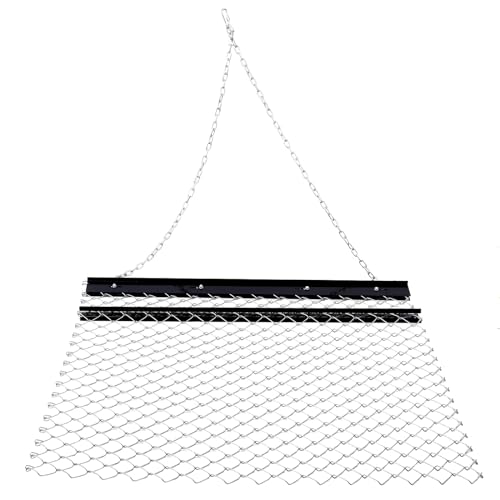
The WORVISTA drag harrow is a pull-behind accessory rather than a mower, but it serves as a complementary tool for rough-cut preparation. It distributes material and levels surfaces, which can improve subsequent mowing results by reducing clumps and creating a more even base. Best for larger properties where initial leveling is desired before mowing. Caution: not a mowing device on its own.
KWCWB 2-Stroke Hand Push Gasoline Lawn Mower

This 2-stroke gasoline mower offers versatility with multiple cutting tools and is suitable for uneven ground and varied terrains. It can be used for light rough-cut mowing in smaller areas and is intended for users who want a handheld option in addition to tow-behind capabilities. Caution: not designed for heavy sapling clearance or large scale rough-cut tasks.
Buying Guide: Rough-Cut Tow-Behind Mower Essentials
- What to consider when choosing tow-behind rough-cut mowers: deck width, power, ease of blade engagement, and towing compatibility with your vehicle.
- Power and cutting capability: more horsepower and dual blades handle thicker brush and larger saplings, but weigh tradeoffs in towing effort and fuel use.
- Deck width vs. maneuverability: wider decks cover more ground but require more space to maneuver; smaller decks excel in tight spots.
- Terrain compatibility: consider stump jumpers or heavy-duty blades for saplings and a robust drive system for hills or uneven ground.
- Maintenance and safety: ensure proper blade maintenance, secure hitch connections, and operator presence controls for safe towing.
- Complementary tools: a drag harrow or leveling accessory can improve rough-cut results by preparing the surface before mowing.
Frequently Asked Questions
- What is a rough-cut mower best used for?
– It is designed to clear tall grass, brush, and saplings, not for finishing lawns or fine turf. - Can I tow a rough-cut mower with any vehicle?
– Tow requirements vary by model; check the hitch type and vehicle capacity to ensure safe operation. - Are electric-start models easier to use?
– Yes, electric-start variants offer quick blade engagement, which can reduce manual effort during longer sessions. - Do any of these mowers handle saplings well?
– Models with stump jumpers and dual blades are built for thicker vegetation, up to several inches in diameter depending on model. - What maintenance should I plan for tow-behind mowers?
– Regular blade checks, belt inspections, fuel or battery care, and hitch alignment are essential for performance and safety.