Looking for a prefab lean-to greenhouse that saves space and boosts growing efficiency? This guide compares five top prefabs designed to lean against a wall or structure, making them ideal for smaller yards, patios, or garage gaps. Each option suits different gardeners: wall-adjacent setups for compact spaces, and larger units for extended growing seasons. Below you’ll find concise, decision-friendly comparisons, plus a buying guide to help you choose.
| Product | Best For | Key Benefit | Limitations |
|---|---|---|---|
| Ohuhu Lean-To 79x39x83 with 3-Tier Shelves | Small yards and wall-adjacent spaces | Walk-in design with a robust 3-tier rack | Moderate footprint; needs wall support |
| Palram Canopia Hybrid Lean-To 4×8 | Budgets seeking durable, long-lasting frame | Twin-wall polycarbonate for UV protection and light transmission | Higher upfront cost |
| EAGLE PEAK 10×5 Lean-To Walk-In | Season extension with flexible placement | Sturdy steel frame and wind-ready design | Requires more space than compact models |
| SPECILITE 79x40x83 Lean-To | Budget-conscious buyers needing stability | Reinforced steel frame with PE cover and accessories | Assembly may be intermediate level |
| Outsunny 7x4x7 Lean-To | Beginner-friendly lean-to option | Clear PE cover and two roll-up doors for airflow | Smaller footprint; lighter-duty frame |
Ohuhu Lean-To With 3-Tier Shelves

The Ohuhu lean-to is designed to sit against a wall, optimizing space by turning unused exterior walls into productive growing areas. Its 6.56×3.28×7.05 ft footprint fits narrow patios or garage sides. The included 3-tier rack (35.4×12.2×25.9 inch) supports up to 22 pounds per tier, ideal for pots, seed trays, and garden tools, with quick, tool-free assembly. Structural upgrades add extra top support bars to improve weight-bearing and resist snow or wind loads better than basic models.
Best for gardeners who want a compact, walk-in design that maximizes wall space while providing organized shelving. Choose this if you’re placing the unit against a sturdy exterior surface and want easy assembly with added frame strength. A potential limitation is its mid-sized footprint, which may still feel tight in very small spaces.
Palram – Canopia Hybrid Lean-To 4′ x 8′

The Palram hybrid lean-to combines twin-wall polycarbonate roof panels with crystal-clear wall panels, delivering strong sun protection while preserving high light transmission. The aluminum frame is powder-coated for corrosion resistance, and the galvanized steel base adds stability. It includes sliding-panel assembly for homeowner installation and a pre-drilled base for anchoring. This unit stands out for UV protection and longevity, making it well suited for gardeners who want low-maintenance, year-round use and clear viewing of plant growth.
Best for homeowners seeking a durable, lifetime-oriented structure with excellent light management. It’s less ideal for tight budgets due to higher upfront costs, but the long-term durability can offset that investment. May require a solid wall or anchored base for optimal performance.
EAGLE PEAK 10×5 Lean-To Walk-In Greenhouse

This model emphasizes easy setup and resilience. It features a pre-assembled frame designed for one-person assembly, reducing setup time. The steel frame is powder-coated to resist rust, and the kit includes wind ropes and stakes for enhanced stability in tougher conditions. A high-quality PE cover helps regulate humidity and sunlight, supporting plant growth throughout seasons. Consider this option if you want a larger lean-to with straightforward installation and reliable protection from the elements.
Best for gardeners wanting a larger lean-to footprint with straightforward setup and solid wind resistance. Avoid if you need a very compact unit due to space constraints or if you prefer glass for aesthetics and insulation, as PE covers may offer less insulation than glass.
SPECILITE 79” x 40” x 83” Lean To
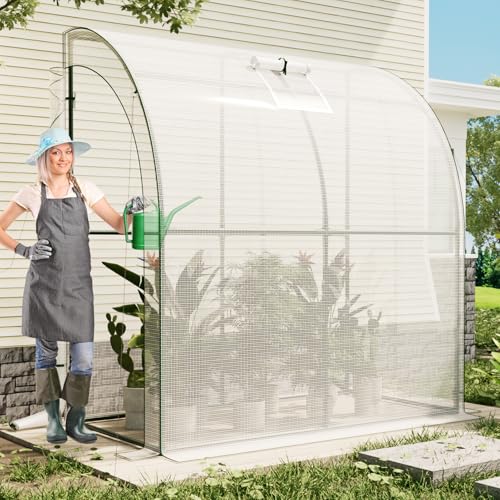
The SPECILITE unit balances affordability with stability through a reinforced steel frame and a heavy PE cover. The design includes a roll-up zipper door and mesh window for ventilation, plus anchor stakes and wind ropes for secure ground attachment. This option is suitable for gardeners who want a sturdy, weather-resistant lean-to without premium pricing, and who don’t mind a slightly more involved assembly process.
Best for budget-conscious buyers seeking reliable wind resistance and anchor-ready setup. Choose this if you want included accessories to secure the structure. Note that assembly might require more time and careful alignment than some plug-and-play models.
Outsunny Lean-To 56.3″ x 18.1″ x 59.4″

This compact green house offers three-tier shelving with a UV-resistant PE cover. It’s designed to fit tight spaces while still providing a walk-in experience and two roll-up doors for accessible ventilation. The cover’s durability helps protect plants from sun and weather, while the shelves organize seedlings and potted plants efficiently. Best for balcony or patio setups where space is at a premium.
Best for beginners or those with extremely limited space. If you need deeper soil beds or larger plant capacity, this model’s smaller footprint may be limiting.
Outsunny 7x4x7 Lean-To

This lean-to is a practical, introductory option for outdoor gardeners. It features a walk-in design with a PE cover that offers weather protection and heat retention, plus a lean-to structure that can mount against a wall. It’s a fit for gardeners seeking to extend the season in a manageable footprint, with stability enhancements like ropes and stakes included for wind resilience. The unit is simpler to assemble but has a smaller space for plants compared with larger models.
Best for first-time greenhouse buyers or users with minimal space who still want a functional lean-to. Avoid if you need a large plant nursery or thick-walled panels for extreme weather.
Buying Guide: Key Considerations for Prefab Lean-To Greenhouses
- Space and placement: Measure the wall or structure you plan to lean the greenhouse against. Ensure enough width for doors, access, and plant rows.
- Frame material and durability: Aluminum frames are lightweight and corrosion-resistant; steel frames offer higher strength and wind resistance but can be heavier or rust-prone if not coated.
- Cover material and insulation: Polyethylene covers are budget-friendly and can be UV-resistant; polycarbonate panels provide better light diffusion and insulation but at a higher cost.
- Ventilation and airflow: Look for models with roll-up doors or mesh windows to balance humidity and prevent mold.
- Foundation and anchoring: Many lean-to units require wall mounting or ground anchors; ensure anchors are included or plan for a compatible base.
- Ease of assembly: Some models are designed for one-person setup, while others may require extra hands and time for precise alignment.
- Maintenance and durability: Check for warranties or stated longevity, especially for coatings and seals that resist weathering.
- Plant needs and capacity: Assess shelf spacing, total rack capacity, and whether the footprint accommodates your preferred plant layout.
Frequently Asked Questions
- What is a lean-to greenhouse?
A lean-to greenhouse is a greenhouse designed to attach to an exterior wall or structure, saving space and using the wall as part of the frame. - Which material lasts longest for the frame and cover?
Aluminum frames with polycarbonate or PE covers tend to resist corrosion and UV degradation well, offering a balance of durability and light transmission. - Do I need a foundation for a lean-to greenhouse?
Some models require wall mounting or anchored bases for stability, especially in windy areas. Always follow the manufacturer’s anchoring instructions. - Is a larger footprint always better?
Not necessarily. A larger footprint suits growers with more space and higher plant capacity; smaller units excel in compact spaces and easier ventilation control. - What maintenance should I expect?
Regular checks on seals, door zippers, and frame connections help extend life. Clean panels to maximize light transmission and inspect anchors after storms. - Can these be installed indoors?
Some models can be installed indoors or in garages if there is a suitable support surface and adequate ventilation, but outdoor conditions generally influence performance.