Answering the common buying question: which poly film best protects crops while ensuring ample light transmission? This guide highlights five durable greenhouse film options that balance UV resistance, light diffusion, and tear strength. Best for hobby gardeners, small farms, and hoop houses, these films help maintain warm temperatures, reduce water damage, and extend growing seasons. Each entry notes the film’s ideal user, key benefit, and a practical limitation to consider when planning installations.
Overview table: Selected products
- Product: 10 X 50FT Greenhouse Plastic Sheeting – Brand: Chicarry – 6 mil – 10×50 ft – UV resistant
- Product: chicarry Greenhouse Plastic Sheeting, 12x25ft – Brand: Chicarry – 6 mil – 12×25 ft – UV resistant
- Product: 6 Mil Plastic Sheeting, 12×25 FT – Brand: PROMORE – 6 mil – 12×25 ft – UV resistant
- Product: LSGCQ 6 mil Greenhouse Plastic Film – Brand: LSGCQ – 25×40 ft – 6 mil – UV resistant
- Product: VEVOR Greenhouse Plastic Sheeting 8×25 ft – Brand: VEVOR – 6 mil – 8×25 ft – UV resistant
Best Overall: 10 X 50FT Greenhouse Film By Chicarry

The 10×50 ft film uses 6 mil thick polyethylene with 5-layer co-extrusion for strength and flexibility. Its UV resistance helps protect plants during sunny periods, while the anti-drip hydrophobic surface minimizes water droplets that can burn leaves. Best for larger hoop houses or long-term coverings where durability matters. Limitations: the film may appear hazier than ultra-clear options due to the anti-drip layer.
Best for: Gardeners with large frame greenhouses or seasonal hoop houses seeking long-lasting coverage and strong UV protection. Choose this if you need a longer run length in a single sheet.
Best Budget Heavy-Duty Film: chicarry 12x25Ft

This 12×25 ft film shares the same 6 mil thickness and 5-layer co-extrusion for strength and weather resilience. It emphasizes high light transmittance and uniform diffusion to keep crops warm in cooler periods. Best for mid-sized greenhouses or garden farms prioritizing steady light distribution. Caution: film may appear hazier due to anti-drip coating, which can reduce clarity slightly.
Best for Light Diffusion: PROMORE 12×25 Ft Film

Promote even plant lighting with a 6 mil clear LDPE film designed for even light diffusion (>90%). It maintains warmth and reduces hot spots, helping with consistent growth. Best for small to medium greenhouses where uniform light is essential. Limitation: diffusion-focused films can be slightly less transparent than ultra-clear options, impacting maximum brightness on overcast days.
Best Coverage: LSGCQ 25×40 Ft 6 Mil Film

This 25×40 ft cover is designed for larger hoop houses, combining 6 mil thickness with durability and weather resistance. Its packaging notes high strength and toughness, maintaining a stable microclimate inside the greenhouse. Best for mid-to-large sized farms or extensive hoop houses. Limitation: large dimensions may require multiple sheets for full coverage, increasing seam considerations.
Best Value: VEVOR 8×25 Ft Film

VEVOR offers an 8×25 ft option with 6 mil thickness and UV resistance, tailored for smaller or medium hoop houses. It unfolds easily and helps maintain warm conditions while shielding crops from excessive sun exposure. Best for hobby growers seeking manageable dimensions. Limitation: shorter length may require more pieces to cover large installations, potentially increasing seams and maintenance.
Alternatives: Inslat 10′ x 26′ Film
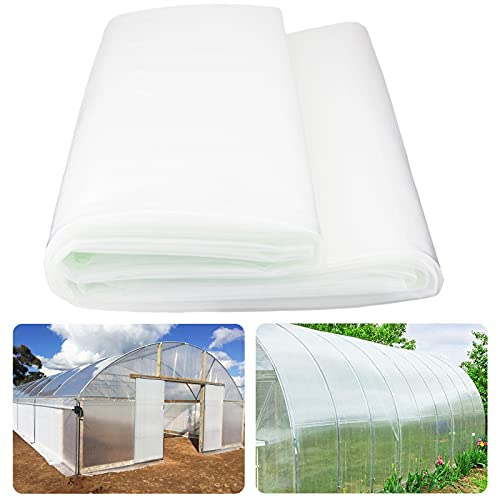
Inslat provides a 6 mil option with anti-drip and anti-aging features. It supports optimum light transmission and temperature uniformity, suitable for varied climates. Best for growers wanting a reliable 6 mil cover with long-term use. Limitation: as with similar anti-drip films, appearance may be hazier than ultra-clear options.
Buying Guide: Key Considerations For Choosing Poly Film For Greenhouses
- Film Thickness: Commonly 6 mil for durability; thicker films offer longer life but can be more expensive and less translucent.
- UV Resistance: Essential for outdoor use to slow degradation from sunlight and extend cover life.
- Light Transmission: Higher transmission supports plant growth; consider light diffusion to reduce hot spots.
- Size And Fit: Measure greenhouse dimensions carefully; large areas may require multiple sheets with proper seam sealing.
- Water Management: Anti-drip or hydrophobic coatings reduce droplet formation that can burn leaves. Consider haziness vs. clarity trade-offs.
- Durability Under Weather: Evaluate tear resistance, wind resistance, and ability to withstand temperature fluctuations.
- Cost vs. Longevity: Balance upfront cost with expected lifespan to determine best value.
- Ease Of Installation: Sheet size and weight affect handling; pre-cut options may simplify setup for beginners.
Frequently Asked Questions
- What thickness is best for greenhouse film? – Commonly 6 mil provides good durability and cost; thicker options (8–10 mil) offer longer life in harsh climates but cost more.
- Does UV resistance matter if the greenhouse is indoors? – Yes, for any outdoor exposure, UV resistance slows degradation and extends film life.
- What is light diffusion and why is it important? – Diffusion spreads light evenly to reduce hot spots and support uniform plant growth.
- Should I buy one large sheet or multiple smaller sheets? – One large sheet minimizes seams; multiple sheets can be easier to handle but require careful sealing.
- Are anti-drip coatings necessary? – They help prevent water from collecting and dripping onto plants, improving clarity and reducing leaf burn in sun.
- Can these films be reused after removal? – Many 6 mil films can be reused if removed carefully, but durability varies by climate and handling.