When you’re stabilizing a gravel driveway, choose a high-load, permeable plastic mesh that keeps gravel in place while letting water drain. This article highlights five top geocell and grid systems that suit light to heavy-use driveways, parking pads, and paths. Each product section explains who it’s best for, why it was selected, and any limitations to consider.
- Sumloty Gravel Grid 4×33 FT-2″ Depth HDPE Geo Grid
- Strol PebbleLock Interlocking Permeable Paver Grid
- Sunnyglade 2″ Thick Ground Grid 40 x 4 FT
- VIVOSUN 2” Depth Ground Grid, 9×17 ft
- VEVOR Ground Grid 27 ft x 4 ft
Summary table
| Product | Best For | Key Benefit |
|---|---|---|
| Sumloty Gravel Grid | Medium to heavy traffic driveways | Modular 4×11 ft sections with high load capacity |
| Strol PebbleLock | Residential parking pads and patios | Interlocking, high load and permeable design |
| Sunnyglade Geo Grid | Sloped or uneven ground, DIY patios | 2″ depth with foldable, multi-purpose use |
| VIVOSUN Ground Grid (2″) | Gardens, paths, light-traffic driveways | Three-dimensional honeycomb for even load distribution |
| VEVOR Ground Grid | Slopes and soft surfaces needing erosion control | Cuttable HDPE with 1885 lbs/ft² capacity |
Sumloty Gravel Grid 4×33 FT-2in HDPE Geo Grid

Best for: Driveways and shed bases that require solid load support. This modular system spans 132 square feet when assembled from four 4×11 ft sections, creating a stable surface for gravel without migration.
Why selected: It offers a high tensile strength of over 1885 lbs per square foot when filled, suitable for moderate-to-heavy vehicle use. The HDPE material resists UV aging and extreme temperatures, while the honeycomb design enhances water drainage to reduce erosion and standing water.
Limitation: The setup relies on U-shaped stakes and connectors (included with system) for stability; soil conditions with poor anchorage may need additional securing methods.
Strol PebbleLock Interlocking Permeable Paver Grid

Best for: Residential driveways, parking pads, and patios where interlocking strength adds stability. The honeycomb cells lock gravel securely and distribute loads effectively for long-lasting surfaces.
Why selected: The system supports up to 122,889.6 lbs per square foot theoretically, making it a robust option for high-traffic areas. It also supports permeable drainage, helping to avoid pooling and erosion in landscapes prone to water runoff.
Limitation: Designed for gravel stabilization; for extremely soft soils or severe grade changes, additional site prep may be needed to optimize performance.
Sunnyglade 2″ Ground Grid 40×4 FT

Best for: Sloped or uneven ground where a light-to-moderate load surface is needed, such as garden pathways, patios, or RV parking with gravel.
Why selected: This 2-inch deep geocell grid covers about 160 square feet per unit and is made from durable HDPE. The grid provides stability when filled with gravel or soil and is easily foldable for storage, aiding DIY projects.
Limitation: The system is best for lighter traffic; heavier loads may require deeper grids or additional reinforcement.
VIVOSUN 2” Depth Ground Grid, 9×17 ft

Best for: Gardens, pathways, and light-traffic driveways where you want a reliable, easy-to-install stabilization system.
Why selected: The 2-inch deep, high-density HDPE grid uses a honeycomb structure to distribute loads up to 1885 lbs/ft². It is designed for easy DIY installation and can be cut and connected to fit irregular areas, making it suitable for custom paths and slopes.
Limitation: The kit may require additional anchoring for very soft soils or extreme weather conditions; ensure edging and secure connections for long-term performance.
VEVOR Ground Grid 27 ft x 4 ft
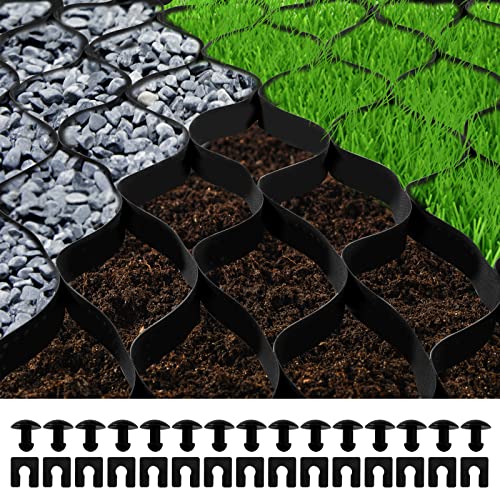
Best for: Larger DIY projects where a stable, modular base is needed for gravel, soil, or mixed-fill surfaces. It suits walkways, parking areas, and grass-covered sections requiring controlled surface migration.
Why selected: The 27 ft by 4 ft unit yields extensive coverage with a 108 sq ft footprint per unit, constructed from HDPE with 1885 lbs per square foot capacity. It uses a welded structure for enhanced stability and water-permeable design to minimize erosion.
Limitation: As a larger panel system, it may require careful alignment and securing across longer runs to avoid gaps at seams.
Buying Guide: Key Considerations When Choosing Plastic Mesh For Gravel Driveways
What load will the grid need to support?
Assess expected traffic: light pedestrian paths, moderate vehicle traffic, or heavy-duty driveways and parking. Look for stated load capacities per square foot and choose a grid with a margin above your anticipated load.
How important is drainage and erosion control?
Permeable honeycomb designs help water drain through the grid, reducing puddling and soil erosion. If your site has poor drainage or slope concerns, prioritize grids explicitly described as permeable with good water flow.
What ground condition considerations matter?
Soil stability, slope, and compaction influence performance. For soft or uneven ground, prefer deeper grids or modular systems that can be cut and connected to create a stable bed. Consider edging and anchoring needs for your climate.
What installation approach fits your project?
DIY-friendly grids are often designed for simple spreading, anchoring, filling, and connecting. Look for features like foldability, interlocking cells, or buckles that simplify assembly and extend surface area as needed.
Material and durability expectations
HDPE is common due to UV resistance, chemical resistance, and flexibility. Ensure your chosen grid maintains performance under temperature fluctuations and weather exposure.
Maintenance and longevity
Perimeter edging and regular inspection help prevent migration of gravel. Consider whether the design allows easy replacement sections if a panel is damaged or shifted over time.
Frequently Asked Questions
- What is a geocell or gravel grid? A geocell or gravel grid is a plastic honeycomb structure filled with gravel or soil to create a stable, permeable base for driveways, paths, and parking areas.
- Can these grids support vehicle traffic? Some grids are designed for light to moderate vehicle traffic; others claim very high load capacities. Always verify the load rating per square foot and ensure it matches your expected traffic.
- Are these grids easy to install for beginners? Many are designed for DIY installation: spread, anchor, fill, and connect. Complex slopes or large areas may benefit from planning and helper tools.
- Will these grids prevent gravel from migrating? Yes, the honeycomb cells hold gravel in place, reducing migration and rutting when properly filled and installed on stable ground.
- Do I need professional tools to install? Basic tools are often sufficient, but some projects may require stakes, buckles, or edging to secure panels, especially on slopes or uneven ground.
- How do I choose the right depth? Deeper grids (like 2 inches) provide greater stability on soft or sloped ground, while shallower options are adequate for lighter loads.