Choosing the right organic compost can improve soil structure, boost nutrient availability, and promote healthier, more productive vegetable gardens. The following selections emphasize natural ingredients, low odor, and suitability for raised beds and container gardening. Below is a quick guide to five top picks, followed by a buying guide to help you compare options and make an informed choice for your garden.
| Product | Brand |
|---|---|
| Michigan Peat Compost and Manure Blend | Garden Magic |
| Back to the Roots Organic Premium Compost | Back to the Roots |
| Charlie’s Compost | Charlie’s Compost |
| R&M Organics Premium Organic Compost | R&M Organics |
| Old Potters Organic Compost | Old Potters |
Michigan Peat Compost And Manure Blend

The Garden Magic blend combines organic reed sedge peat with composted animal manure to deliver an odor-minimized, ready-to-use mix. It provides essential nutrients designed to support robust growth in vegetables, flowers, and lawns. This product is aimed at soil revitalization for gardens and raised beds, helping to improve texture and nutrient availability for vegetables like tomatoes, peppers, and leafy greens.
Back To The Roots Organic Premium Compost

This 100% organic and peat-free compost uses upcycled plant matter and U.S.-sourced wood fines as its base. It includes moisture-control components like yucca extract, pH-balancing dolomitic limestone, and gypsum for improved water absorption. The mix is well-suited for raised beds and container plantings, providing a balanced nutrient baseline and supporting strong, flavorful harvests.
Charlie’s Compost Odor Free Organic Fertilizer

Charlie’s Compost emphasizes an odor-free blend ideal for urban and indoor gardens. It serves as a versatile soil amendment, enriching soil structure and providing essential nutrients for seedlings, raised beds, and containers. Its organic composition also supports soil microbiology, helping plants access nutrients more efficiently while keeping indoor air fresh.
Jobe’s Organics Fast Acting Granular Compost Starter

While primarily a compost starter, Jobe’s Organics provides a nutrient-rich boost to compost piles and garden beds. The product carries an NPK of 4-4-2 and is OMRI listed for organic gardening, ensuring it meets standards for organic vegetable production. It accelerates decomposition and contributes to a healthy, nutrient-dense finished compost for vegetables and other crops.
R&M Organics Premium Organic Compost
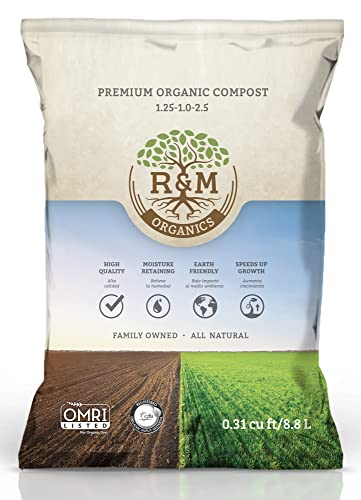
All-purpose, nutrient-dense compost derived from 100% dairy cow manure supports a range of plants, including fruits, vegetables, lawns, and trees. The product emphasizes low odor and a modest application rate, making it practical for both established gardens and new planting areas. Its rich mineral content helps improve soil structure and fertility over time.
Old Potters Organic Compost

Old Potters offers a plant-based potting soil that doubles as a complete food for indoor and outdoor gardens. This 100% organic, chemical-free blend enhances aeration, water retention, and nutrient availability to support strong, resilient plants. It is designed for a variety of garden setups, from containers to raised beds, and emphasizes sustainable gardening practices.
Buying Guide
Key purchase considerations for organic compost in vegetable gardening:
- Ingridients and source: Look for manure- or plant-based blends with minimal synthetic additives. Peat-free options support sustainability.
- Texture and particle size: Fine blends are ideal for seed starting and raised beds, while chunkier blends may suit outdoor beds and soil conditioning.
- Moisture retention: Components like yucca extract or other moisture-retaining agents help reduce irrigation needs in hot climates.
- pH and nutrient balance: A well-balanced compost should offer essential macronutrients (N-P-K) and micronutrients compatible with vegetable crops.
- Odor and usability: Odor-free formulations are preferable for indoor or urban gardening, while ready-to-use blends save preparation time.
- Certification and safety: OMRI listings or USDA organic certifications indicate suitability for organic gardening.
- Application rate: Use guidance on how thick a layer to apply and how often to amend soil, especially in established beds.
Comparison considerations:
- Availability: Some blends are designed for raised beds, others for lawns or containers. Choose based on your garden layout.
- Nutrient release: Granular starters and compost blends differ in how quickly nutrients become available to plants.
- Environmental impact: Peat-free options reduce environmental pressure and align with sustainable gardening practices.
- Odor control: For indoor or balcony gardens, odor-free options lessen the nuisance factor while enriching soil.
Overall, select a blend that matches your garden type (raised bed, container, or in-ground) and your crop goals. For vegetables requiring steady nutrition, blends with balanced NPK and soil amendments offer reliable performance. For gardeners prioritizing sustainability, peat-free and locally sourced components are advantageous. Always follow label directions for best results and to maintain soil health over time.