Best organic compost for plants helps improve soil structure, moisture retention, and nutrient availability for vegetables, herbs, and ornamentals. This guide highlights top picks for different gardeners—whether you’re growing in beds, containers, or raised beds. Each product is chosen for distinct strengths like nutrient richness, odor control, or sustainable sourcing. Use this overview to match a compost that fits your garden type, climate, and planting goals.
Summary of chosen products
| Product | Best For | Key Strength |
|---|---|---|
| Back to the Roots 25.7qt Organic Premium Compost | Raised beds and vegetable gardens | Peat-free, moisture control with yucca extract |
| R&M Organics Premium Organic Compost | All-purpose planting, outdoors and indoors | Low odor, fully composted for easy use |
| Michigan Peat Garden Magic Mix | Lawn and garden beds | Nutrient-rich blend with ready-to-use mix |
| Miracle-Gro Organic Outdoor Potting Mix | Outdoor containers | Quick-release fertilizer for up to 2 months |
| Back to the Roots Organic Worm Castings | Soil amendment and seedling care | Biological soil improvement from vermicompost |
Back to the Roots 25.7qt Organic Premium Compost

Best for raised-bed gardens and herbs. This 100% organic, peat-free blend uses upcycled plant matter and U.S.-sourced wood fines as its base. It emphasizes better moisture control with yucca extract, balanced pH with dolomitic limestone, and enhanced water absorption via gypsum. The product is positioned for nutrient-rich growth and flavorful harvests in home gardens. Choose this if you need a peat-free option with moisture management for larger plantings in raised beds.
Best for: gardeners seeking a peat-free, USA-made compost that supports robust growth in raised beds. Limitation: the data doesn’t specify nutrient concentrations, so plan for supplemental feeding if your crop demand is high.
R&M Organics Premium Organic Compost

Best for versatile garden use, indoors or outdoors. This compost is nutrient-rich and derived from dairy cow manure, designed to replenish depleted soil after harvests. It supports vegetable gardens, fruit trees, flowers, lawns, and container plants, improving soil structure and nutrient availability. It’s presented as a clean, low-odor option due to a thorough composting process. Choose this for an all-purpose soil amendment that performs across multiple planting scenarios.
Best for: broad-spectrum use in diverse plantings. Caution: odor and texture may vary slightly by batch; mixing with other amendments can help tailor texture for thin soils.
Michigan Peat Garden Magic Mix
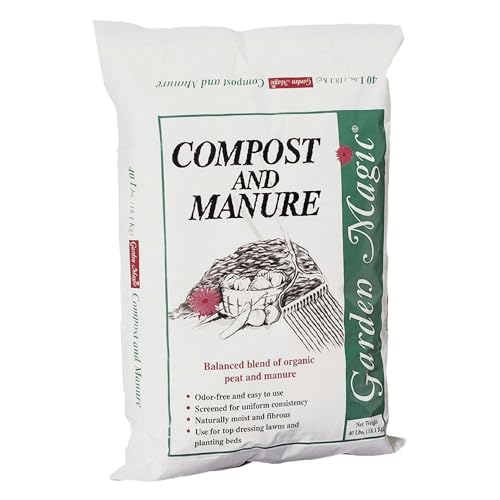
Best for lawns and garden beds requiring an odor-free blend. This 40-pound blend combines odorless organic reed sedge peat with composted animal manure and essential nutrients. It’s ready to use, making it convenient for immediate planting. The product claims to support healthy growth in flowers, vegetables, and grass, improving soil vitality and structure. Choose this if you want a ready-to-use mix with a focus on odor control.
Caution: peat content can influence soil pH; monitor pH when applying to sensitive crops, and consider supplemental amendments if needed.
Miracle-Gro Organic Outdoor Potting Mix

Best for outdoor container gardening. This mix includes a quick-release natural fertilizer to feed plants for up to two months, paired with peat moss from certified producers. It’s designed for outdoor container use with flowers, vegetables, herbs, and perennials. Choose this if you need a ready-to-use potting mix that supports container plants over the growing season. Limitation: may require additional feeding for long-season or heavy-feeding crops beyond two months.
Back to the Roots Organic Worm Castings

Best for soil enrichment and seedling care. This 5-pound bag contains earthworm castings that serve as a natural fertilizer and soil conditioner. Vermicompost introduces beneficial microbes that support plant health and protect seedlings from pathogens. It reduces the need for synthetic fertilizers and can be used indoors or outdoors. Choose this for a biological soil boost and sustainable gardening practices. Limitation: finer texture may require dilution or mixing with other amendments for heavy-feeding crops.
Buying Guide: Key Purchase Considerations
- Source and sustainability: Peat-free options and USA-made blends support environmental goals and carbon management. Consider whether the product uses upcycled materials or vermicompost for long-term soil health.
- Uses and compatibility: Some blends are ideal for raised beds, others for containers or lawns. Match your planting setup to the product’s recommended use.
- Nutrient content and release: Quick-release fertilizers provide short-term feeding, while compost and worm castings offer slow, steady nourishment. Balance with your crop needs and growing season.
- Odor and texture: Odor-free and fully composted options reduce handling concerns, especially for indoor use or small spaces.
- Application readiness: Ready-to-use mixes save prep time; some blends require aging or mixing with soil to achieve ideal texture.
Frequently asked questions
- What is the best organic compost for raised beds?
– A peat-free, nutrient-rich blend like Back to the Roots Organic Premium Compost is well-suited for raised beds due to moisture control and soil structure improvements. - Can I use worm castings directly in seed starting?
– Yes. Worm castings provide microbial benefits and gentle nutrition, but sprinkle lightly around seedlings to avoid over-fertilization. - Should I mix compost with potting soil for containers?
– Mixing compost with a quality potting mix improves nutrient availability and moisture retention, but maintain proper porosity to avoid overwatering. - Is organic compost safe for edible plants?
– Yes, when produced under proper composting conditions, organic compost supports edible crops by enriching nutrients and soil life. - What is the difference between compost and manure-based blends?
– Compost blends are decomposed organic matter; manure-based blends may contain manure-derived nutrients. Both can improve soil, but odor and nutrient content vary by material and processing. - How do I know if I need to add more compost over the season?
– Monitor soil structure and plant growth. If growth slows or soil density increases, add a top layer of compost or use a soil amendment like worm castings.