Finding the right nesting boxes for ducks helps protect eggs, support ducklings, and promote healthy migrations. This guide reviews five top-rated options designed for wood ducks and other North American waterfowl, focusing on durability, accessibility, and weather resilience. Each selection comes from trusted brands and includes practical features like predator guards, drainage, and easy cleaning. Use the buying guide below to compare construction materials, entry sizes, and mounting options to fit ponds, marshes, and backyard coops.
| Product | Brand | Key Feature |
|---|---|---|
| Woodlink WD1 Wood Duck Nesting Box (2 Pack) | Woodlink | 4 x 3-inch oval entrance; easy-open front; kiln-dried red cedar |
| Amcortn Duck House | Amcortn | 3×4 inch entrance; drain holes; ladder for ducklings |
| JCS Wildlife Cedar Wood Duck Nesting Box | JCs Wildlife | 4-inch oval entrance; predator guard; easy-cleanout door |
| Made in USA Premium Pine Wood Duck House | Applewood Outdoor | Wood duck-friendly dimensions; floor drains; ladder-ready design |
| Bavlesfuire 3 Compartments Nesting Box | Bavlesfuire | Three-compartment wooden nesting; enhanced ventilation; easy assembly |
The following sections highlight each product, including how it supports duck nesting, ease of use, and weather resilience. Each entry stays focused on merit and practical considerations for American duck habitats.
Woodlink WD1 Wood Duck Nesting Box (2 Pack)

The Woodlink WD1 nesting box is designed for marshland settings and built from kiln-dried inland red cedar. It uses chromate screws to join components, improving durability in wet conditions. The box features a 4 x 3-inch oval entrance, which is appropriately sized for wood ducks and hooded mergansers. An easy-open front simplifies annual cleaning and maintenance, reducing stress for nesting seasons and allowing quick material refresh between broods.
Amcortn Duck House – Wood Duck Box

Amcortn’s duck house is designed to attract tree-dwelling ducks with a 17x10x10-inch footprint and a 3×4-inch entrance opening. The design includes drainage holes to keep the interior dry and hygienic, supported by sturdy wood construction to withstand harsh weather. A duckling-friendly feature includes grooves beneath the entrance that act as a ladder, aiding ducklings as they exit. This nesting shelter emphasizes long-term durability and a secure nesting environment.
2 Wood Duck Nesting Boxes
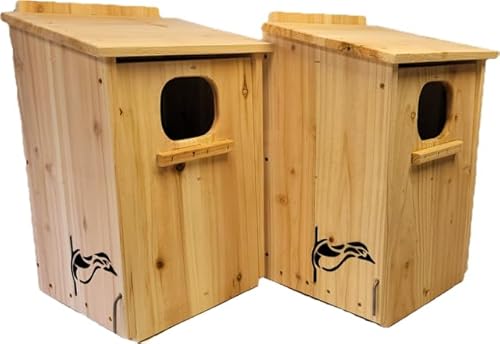
This set includes two wood duck nesting boxes with an easy swing-open design for simple seasonal cleaning, and no tools are required. A built-in hardware cloth ladder assists ducklings upon exit, while vent holes and a partial space above the front panel provide essential ventilation. The compact configuration helps fit ponds or marsh margins where space is limited, offering practical nesting options for multiple pairs.
Nesting Boxes for Chicken, Plastic Single Compartment
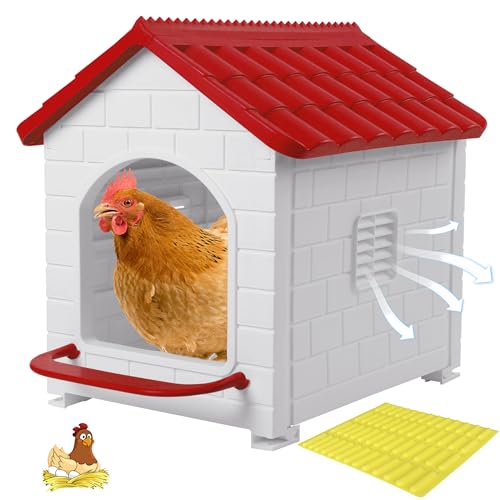
Although marketed for poultry in general, this plastic nesting box is designed to withstand weather and provide adequate ventilation. Its pointed roof aids drainage to keep nesting areas dry and reduce moisture exposure. The unit measures 14.4” by 15.8” by 17.4” and includes a removable pad and entrance perch for resting. While primarily used for chickens, the simple, weatherproof design can accommodate ducks in smaller poolside setups where space is limited and easy cleaning is prioritized.
Reallnaive 6 Pack Washable Nesting Boxes

The Reallnaive six-pack offers ready-to-use nesting boxes with a compact, stackable PVC construction. The design emphasizes quick setup, durable placement, and the ability to stack multiple layers with a supporting board. This configuration helps maximize nesting capacity in compact coops or elevated structures. The space-efficient design reduces clutter while maintaining a comfortable nesting environment for ducks and other poultry.
Chicken Nesting Box 3 Compartments

This wall-mount wooden egg-laying box features three compartments and a natural wood finish, delivering a rustic nesting option for hens, ducks, and other poultry. The design emphasizes multi-bird use and versatility in coops where wall mounting saves floor space. The wood construction provides good insulation, supporting a stable internal environment that can benefit duck nesting across varied climates. Assembly is straightforward, which helps in quickly deploying several boxes at a site.
Buying Guide: Key Considerations For Choosing Duck Nesting Boxes
- Material and durability: Wood (cedar, pine) tends to resist weather and predators better in outdoor settings. Plastic and PVC options are low-maintenance and easy to clean but may offer less insulation.
- Entrance hole size: For wood ducks and hooded mergansers, a 3×4 inch or 4×3 inch oval opening is common, balancing access for adults and protection for eggs from larger predators.
- Drainage and ventilation: Adequate drainage holes and ventilation gaps reduce moisture buildup, helping prevent mold and egg spoilage in damp climates.
- Predator protection: Predator guards and secure latches simplify maintenance and deter raccoons or other threats. Easy-cleanout doors save time during nest refreshes.
- Cleaning and maintenance: Front-access or removable panels facilitate annual cleaning and material replacement, ensuring a healthy nesting space across seasons.
- Size and capacity: Boxes sized for wood ducks should accommodate typical clutch sizes and allow ducklings to emerge safely. Consider whether you plan multiple boxes for larger marshes or ponds.
- Placement: Mirror natural habitats—set boxes near water with some shade, mounted at appropriate heights and angles to minimize predation while encouraging parent ducks to use them.
- Mounting and location: Some boxes are designed for wall mounting or on posts near water. Ensure the mounting method suits your landscape and provides stable support against wind and weather.
When selecting among these options, consider your local climate, predator presence, and the available space around ponds or wetlands. A combination of durable wood nesting boxes with easy maintenance and predator protection often yields the most reliable nesting sites for wood ducks and hooded mergansers while supporting sustainable backyard or park habitats.