Looking for the best metal or fabric privacy screens to shield your yard while maintaining airflow and style? This guide highlights five top options, tailored for different outdoor needs—from decorative metal panels to breathable fabric screens. It helps buyers choose by material, installation style, and footprint, so you can pick the right blend of privacy, durability, and aesthetics for your space.
| Product | Material Type | Best For |
|---|---|---|
| Shade&Beyond 4′ X 50′ Fence Privacy Screen | HDPE fabric with brass grommets | Large-area privacy with airflow for yards and walls |
| TALLYVER Outdoor Metal Privacy Screen | Decorative laser-cut steel | Modern elegance for patios, decks, and balconies |
| Sunnyglade 6′ X 50′ Privacy Screen | HDPE fabric with brass grommets | Budget-friendly privacy for chain-link or wood fences |
| Garvee 72″ H x 47″ W Outdoor Metal Privacy Screen | Galvanized steel, weather-resistant coating | Sturdy freestanding partition with long-term durability |
| MTART 72″ H x 47.2″ Privacy Screen | Powder-coated steel | Versatile outdoor privacy and decorative room divider |
Shade&Beyond 4′ X 50′ Fence Privacy Screen

Best for large, flexible privacy areas. This 170 GSM HDPE fabric screen offers high visibility control with a 90% blockage design, while allowing air and wind to pass to reduce tautness. The double-layered edges and rust-resistant stainless steel grommets support long-term weather exposure. Suitable for backyards, walls, and garden boundaries where airflow matters. A limitation is the fabric may show wear in extreme sun over time, so replace or retire panels as needed for continuous privacy.
TALLYVER Outdoor Metal Privacy Screen
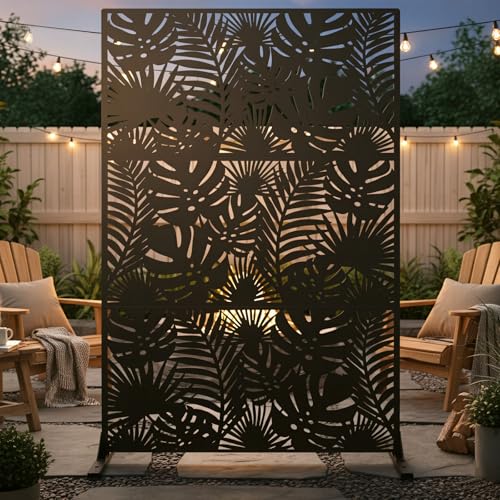
Best for a contemporary outdoor look with strong privacy. This 72×44 inch freestanding panel features a decorative tropical leaf laser-cut design and a heavy-duty steel frame with a black powder-coated finish for rust resistance. It functions well as a patio or balcony divider and provides reliable privacy while preserving light and air flow. A caveat is that heavy metal height and freestanding design may require stable anchoring on uneven surfaces.
Sunnyglade 6′ X 50′ Privacy Screen

Best value for large-area privacy on varied fence setups. This 6′ x 50′ HDPE fabric screen uses brass grommets and breathable weave to block sightlines while letting water and air through. It suits chain-link fences, wood walls, or garden backdrops. Its economical design means it may need periodic replacement sooner than metal screens, but it remains a practical choice for budget-conscious projects.
Garvee 72″ H x 47″ W Outdoor Metal Privacy Screen

Best for wind-prone spaces requiring sturdy, tall separation. Garvee uses a heavy-duty extended base and reinforced slats to resist bending, with a galvanized, anti-rust coating. The 72-inch height provides strong visual screening for patios or decks while allowing airflow. A potential limitation is heavier weight and installation effort due to the stand and base.
MTART Metal Privacy Screen 72″ H x 47.2″
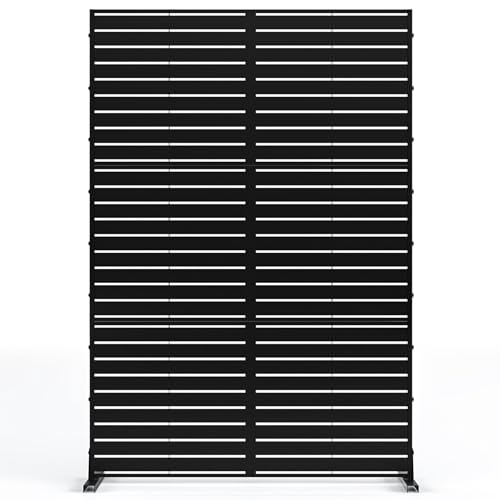
Best for flexible use as both outdoor privacy and interior décor. MTART offers a powder-coated steel frame with a sturdy U-shaped edge for stability. It serves well as a freestanding garden screen, balcony partition, or decorative backdrop in outdoor rooms. A limitation to watch is the need for stable anchoring in soft ground to maintain alignment in windy conditions.
Buying Guide
What should I consider when choosing privacy screens?
- Material: Fabric screens (HDPE) are lighter and more affordable; metal screens provide a more permanent, sturdy barrier and a premium look. Consider climate exposure and maintenance needs.
- Size and installation: Measure your space and assess whether you need freestanding panels with stands or panels that mount to existing structures. Heavier metal screens require solid anchoring.
- Ventilation and light: Fabric screens excel at airflow, while solid metal panels block light more effectively. Decide how much visibility is acceptable from neighboring views.
- Durability and maintenance: Metal screens resist weather longer but can rust without proper coating. Fabric screens may fade or wear with sun exposure; choose fabrics with UV protection when possible.
Choosing by installation style
- Freestanding panels with stands: Great for patios and balconies where no permanent mounting is desired. Look for wide bases and anchoring hardware for stability.
- Wall-mounted or fence-mounted: Ideal for backyards with existing walls or tall fences. Ensure grommets, hooks, or connectors are suitable for your surface.
- Decorative panels: If aesthetics matter, select laser-cut or ornate designs that complement outdoor décor while still providing privacy.
Weather and maintenance tips
- Seasonal inspection: Check for wear, rust, or fraying and address promptly to maintain privacy integrity.
- Cleaning: Use mild soap and water; avoid harsh abrasives that can damage coatings or fabric.
- Storage: For fabric screens in extreme weather, consider rolling or removing panels to extend life.
Who should buy these screens?
- If you want broad privacy across a wall or large yard, Shade&Beyond or Sunnyglade offer economical, large-area fabric solutions with airflow.
- If you prefer a modern, sculptural look with durable materials, TALLYVER, Garvee, and MTART provide steel options with lasting finishes.
- For a combination of stability and visual partitioning in windy spaces, Garvee and MTART stand out due to freestanding stands and reinforced construction.
FAQ
- Are metal privacy screens suitable for all weather? Yes, when they have rust-resistant coatings and proper anchoring; check the coating and base stability for your climate.
- Do fabric privacy screens block all visibility? They reduce visibility significantly (often 90% blocked), while remaining breathable to reduce wind resistance.
- Can these screens be used indoors? Some screens can serve as room dividers, especially metal panels; confirm product dimensions and stability for indoor use.
- How do I maintain the screens? Clean with mild soap and water, inspect grommets and edges, and store fabric panels during severe weather.
- What size should I choose for my yard? Measure the available wall length or fence span. For freestanding setups, ensure panel height matches or exceeds eye level for effective privacy.
- Do these screens reduce noise? They primarily block sightlines and wind, not sound; choosing denser fabric or multiple layered panels can help marginally reduce noise.