Metal blades designed for weed eaters deliver a tougher cut through brush, thick grasses, and small saplings. This guide highlights five highly capable options, balancing durability, compatibility, and cutting power. Each blade is chosen for American yards with varied terrain—from dense brush to woody grasses—so you can select the right blade for your trimmer and tasks. Below you’ll find practical details, installation notes, and what to consider when upgrading your weed eater blade.
| Product | Brand | Arbor Compatibility | Diameter |
|---|---|---|---|
| 12″ x 3T 12-Inch 3 Teeth Heave Duty Steel Brush Cutter Trimmer Weed Eater Blade | Pool Supply Town | 1″ or 20 mm | 12″ (300 mm) |
| AR-PRO 12″ x 3 Teeth Steel Brush Blades | AR-PRO | 1″ or 20 mm | 12″ (300 mm) |
| Dunhil 9″ 36T Brush Cutter Blade | Dunhil | 1″ | 9″ (approx.) |
| HK 9″ x 36 Teeth Carbide Tipped Blades | HK | 1″ or 20 mm | 9″ (approx.) |
| BlueNatHxRPR 8″ 80T Carbide Tip Blade | BlueNatHxRPR | 1″ or 20 mm | 8″ (approx.) |
Pool Supply Town 12-Inch 3 Teeth Blade

The 12-inch, three-tooth design from Pool Supply Town is built for heavier cutting tasks. It can attach to either a 1″ or 20 mm arbor, offering flexibility across common trimmer models. The large diameter increases the cutting surface, allowing quick pruning of brush, densely grown grass, and small shrubs. Users note its performance in clearing overgrowth with steady aggression, reducing the need for multiple passes. The blade is designed for durability with steel construction to withstand repeated contact with wood and dense plant matter. Proper installation and avoiding hard stones or metal objects will help preserve edge life and maintain cutting efficiency.
AR-PRO 12″ 3 Teeth Steel Brush Blades

AR-PRO’s 12-inch three-tooth blades emphasize durability and precision. Constructed from carbon steel, these blades are designed to resist rust and heat, extending their lifecycle even with frequent use. The blades fit most straight shaft trimmers with 1″ or 20 mm arbors and are compatible with popular brands like Husqvarna, Stihl, Ego, Oregon, and Hitachi. Reviews highlight the blades’ ability to cut through thick weeds with less pressure, which can minimize operator fatigue. The blades are marketed to meet or exceed OEM performance, offering a practical upgrade for homeowners seeking longer-lasting cutting power and reliable pruning efficiency.
Dunhil 9″ 36T Brush Cutter Blade (2 Pack)

Dunhil offers a compact 9-inch blade with 36 teeth in a two-pack, designed for easy installation on trimmers with a 1″ arbor. The smaller diameter makes it suitable for light- to medium-duty applications, including tall grasses, woody grasses, and light brush. Made from carbon steel, these blades emphasize sharpness and durability, delivering effective pruning without excessive effort. The product notes highlight ease of use and broad axial compatibility, making it a practical choice for homeowners who maintain smaller lots or need a quick blade swap for routine yard maintenance.
HK 9″ x 36 Teeth Carbide Tipped Blade

HK’s carbide-tipped blades target demanding trimming tasks, offering enhanced durability for tough brush and woody weeds. The carbide tips help maintain sharpness longer than standard steel, reducing re-sharpening frequency. The blade is designed for compatibility with 1″ or 20 mm gear cases and adapts to a broad range of straight-shaft trimmers, including common models from major brands. With carbide tips, this option is positioned for users who regularly face dense brush and want extended service life between replacements. Proper alignment and guarding are advised during operation to maximize safety and performance.
BlueNatHxRPR 8″ 80T Carbide Tip Blade
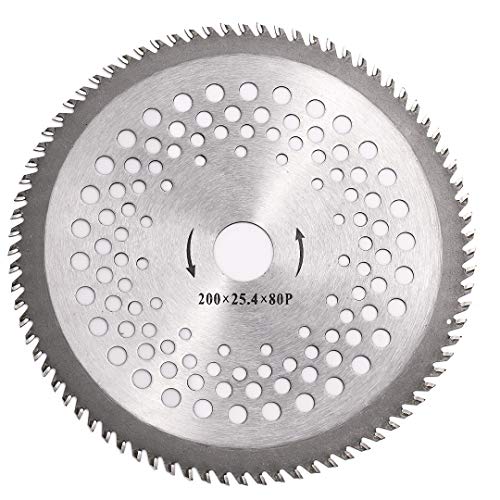
The BlueNatHxRPR 8-inch blade features an 80-tooth carbide tip configuration, providing a different balance of speed and precision. The carbide tips offer extended wear resistance, allowing longer cut life in tough conditions. This blade is described as a universal fit with adapters for 1″ and 20 mm arbors, suitable for many brush cutters and weed eaters. While the smaller diameter limits bulk removal compared to larger blades, it excels in edging, trimming along borders, and handling thick undergrowth when a quick, efficient cut is needed. The design emphasizes corrosion resistance and longevity, ideal for regular, moderate-use yard maintenance.
Buying Guide: Key Considerations For Picking The Right Blade
- Arbor compatibility: Confirm your trimmer’s arbor size (1″ or 20 mm) and verify whether the blade kit includes adapters for universal fit. An improper fit can cause vibration, damage, or safety hazards.
- Diameter and application: Larger blades remove more material per pass, which helps with dense brush, but they can reduce maneuverability in tight spaces. Choose a diameter that matches your yard’s typical tasks and clearance around obstacles.
- Material and durability: Carbide-tipped blades last longer under heavy use and resist dulling when cutting wood, woody weeds, and abrasive brush. Carbon steel blades offer strong performance at a lower cost but may require more frequent sharpening.
- Teeth configuration: More teeth generally provide smoother cuts and finer prunings but can reduce aggressiveness. Fewer heavy teeth deliver faster clearance through dense material but may require more passes.
- Installation and safety: Follow manufacturer instructions for mounting, guards, and torque limits. Use proper PPE, keep the working area clear, and avoid striking rocks or metal objects to prevent blade damage and kickback.
- Maintenance and compatibility: Consider blades that are designed to fit a broad range of brands (Husqvarna, Stihl, Ego, Oregon, Hitachi, etc.) to maximize your investment’s flexibility across tools you may own or borrow.
- Cost vs. lifespan: Carbide-tipped blades generally cost more upfront but deliver longer service life and fewer replacements, making them economical over time for frequent users.
- Intended tasks: For light grass and edging, a smaller blade with more teeth may provide cleaner cuts. For thick brush and small branches, a larger, robust blade will perform better with fewer passes.
When selecting a blade, assess your typical yard conditions: consistent brush growth, proximity to landscaping, and your trimmer’s power. A balanced choice aligns blade diameter, teeth design, and material with your maintenance routine, reducing time spent on trimming and improving overall yard aesthetics.