Answering the need for clear, research-based guidance, this guide highlights the best liquid fulvic acid products for plants. It targets gardeners, hydroponics enthusiasts, and small-scale farmers seeking better nutrient uptake, stronger roots, and more vigorous growth. The top five selections below are chosen for readability, accessibility, and clear usage scenarios. The quick-reference table at the start helps compare core benefits at a glance.
| Product | Best For | Key Benefit |
|---|---|---|
| Mr. Fulvic Organic Fulvic Acid for Plants | Home gardens, vegetables, fruit trees | Direct nutrient chelation and improved uptake |
| Soil Renewal – Humic & Fulvic Acid Soil Conditioner Concentrate Quart | Soil restoration, long-term health | Soil structure, moisture retention, nutrient availability |
| Humic Acid Liquid Aeration Lawn | Lawn and garden beds | Root development and soil aeration |
| GS Plant Foods Humic Acid Soil Amendment | Certified organic grows | Soil conditioning and nutrient access |
| RAW Full Up | General plant nutrition and soil health | Nutrient delivery and soil structure |
Mr. Fulvic Organic Fulvic Acid for Plants

Best for home gardeners seeking a complete organic supplement. This product is claimed to be extracted from ancient minerals, delivering fulvic and humic acids plus 70+ trace minerals. It is OMRI listed and positioned as safe for vegetables, fruit trees, lawns, and food crops. It supports nutrient transport into plant cells, aiming to boost yields and overall plant vigor. The formulation emphasizes avoiding synthetics and fillers, making it suitable for organic growing setups.
- Best for: Vegetable gardens, fruit trees, lawns, and hydroponic setups that require organic inputs.
- Why selected: Strong nutrient chelation and evidence of improving uptake in multiple plant systems.
- Caution: Individual results can vary; starts slowly to monitor leaf color and growth responses.
Soil Renewal – Humic & Fulvic Acid Soil Conditioner Concentrate Quart
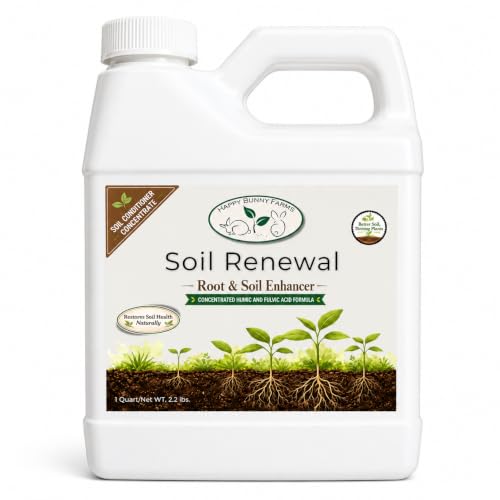
Best for restoring soil health and improving moisture retention. This quart concentrate emphasizes soil structure, nutrient availability, and root development, aiming to create a healthier growth medium for vegetables, ornamentals, and garden crops. It’s positioned as a practical option for gardeners facing compacted soils or nutrient lockout.
- Best for: Fixed or aging soils needing structure improvement and better nutrient access.
- Why selected: Clear emphasis on both soil conditioning and root establishment, with broad plant applicability.
- Caution: Concentrated formulas should be dosed according to directions to avoid over-saturation in small pots.
Humic Acid Liquid Aeration Lawn
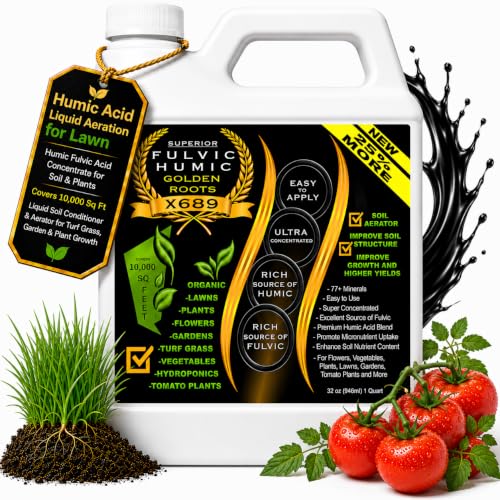
Best for lawns, turfgrass, and garden soils needing stronger root systems and improved nutrient availability. The product blends humic and fulvic acids to support soil health, optimization of water penetration, and better plant growth. It’s described as a liquid aerator that helps loosen compact soil and promote greener, thicker turf.
- Better for: Lawns and large garden areas where soil compaction is an issue.
- Why selected: Practical, broad-use formulation for several plant types, with clear lawn-focused benefits.
- Caution: May require multiple applications for established, dense soil compaction areas.
GS Plant Foods Humic Acid Soil Amendment

Best for certified organic growing programs. This Leonardite-derived liquid humic acid product enhances soil structure and nutrient availability, supporting healthier root zones. Being OMRI-listed, it fits organic farming and regenerative soil practices while improving cation exchange capacity in the root zone.
- Best for: Organic growers and soils needing improved nutrient access.
- Why selected: OMRI-listed and derived from Leonardite, offering a solid organic-compliant soil conditioner option.
- Caution: As with any soil amendment, apply per schedule to avoid potential microbial balance shifts.
RAW Full Up

Best for broad nutrient delivery and soil vitality. RAW Full Up emphasizes fulvic acid’s chelation properties to improve nutrient transport into plant cells and enhance soil structure through microbial activity. It aims to support healthier roots and improved overall plant health in a variety of settings.
- Best for: General plant nutrition and soil health across containers, beds, and gardens.
- Why selected: Focused on fulvic acid’s role in nutrient delivery and soil conditioning in a simple, versatile product.
- Caution: Check compatibility with other fertilizers to maintain balanced nutrient ratios.
Buying Guide
What should I look for in a liquid fulvic acid product?
- Source and purity: Prefer products with clear sourcing (ancient minerals, Leonardite) and organic or OMRI listings if you’re growing edible crops.
- Concentration and dosage: Higher concentrations aren’t always better; follow label directions and start with conservative dosages, especially in pots.
- Additional minerals: Fulvic products often include humic acids and trace minerals; choose blends that match your crop needs (vegetables vs. ornamentals).
How do fulvic acids impact different growing systems?
- Soil-based: Improves nutrient availability and root growth; helps with moisture retention in challenging soils.
- Hydroponics: Enhances nutrient transport and uptake efficiency, potentially reducing lockout and improving growth speed.
- Lawn and turf: Supports deeper roots and better water penetration, contributing to greener, thicker turf.
Choosing between organic and non-organic options
- Organic: Look for OMRI-listed products like Mr. Fulvic Organic Fulvic Acid and GS Plant Foods Humic Acid Soil Amendment for compliant growing.
- Non-organic blends: May offer higher immediate availability but check for synthetic additives and long-term soil impact.
Application timing and safety considerations
- Apply during active growth phases for best uptake, avoiding extreme heat or drought stress.
- Monitor plant responses; adjust frequency if leaves show unusual coloration or growth changes.
Frequently Asked Questions
- What is fulvic acid, and why is it beneficial for plants? It chelates nutrients, improving mobility into plant cells and enhancing uptake.
- Can fulvic acid be used with other fertilizers? Yes, but follow compatibility guidance to avoid negative interactions.
- Is fulvic acid safe for edible crops? Organic and OMRI-listed options are generally suitable for vegetables and fruit crops when used as directed.
- How often should I apply fulvic acid? Start with a conservative schedule and adjust based on plant response and growth stage.
- Does fulvic acid replace fertilizers? No, it complements them by increasing nutrient availability and efficiency.
- Can I use fulvic acid on lawns? Yes, products labeled for lawn use can improve root development and nutrient uptake in turf.