Find the right light box for plants by comparing compact, full-spectrum grow lights designed to support germination, growth, and flowering. This guide highlights five top options for different spaces and needs, from desk setups to larger plant shelves. Ideal buyers include apartment gardeners, hobbyists starting seeds, and anyone seeking reliable, timer-enabled lighting to supplement natural sun.
Summary table of selected products
| Product | Best For | Key Benefit |
|---|---|---|
| Bseah Grow Light | Full-spectrum indoor growth | 10 dimmable levels with auto timer for consistent daily cycles |
| 8.6” Mini LED Grow Light Strips (RWNTAO) | Compact shelving and gooseneck use | Full spectrum with 52 LEDs and flexible mounting |
| Sondiko Seed Starter Tray With Grow Light | Seed starting and climate control | Integrated bottom heater and dual full-spectrum LEDs |
| SANSI Grow Lights | Small plant setups and desks | Pot clip with 4-level dimming and timer |
| GYTF Halo Plant Grow Light | Adjustable height and stand-alone grow light | 4/8/12/18-hour timer with 6000K spectrum |
Bseah Grow Light Plant Lights
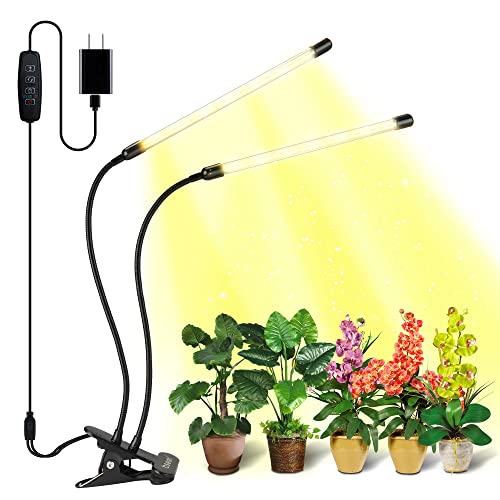
The Bseah LED grow light uses a full-spectrum blend with yellow and white LEDs to support photosynthesis, germination, growth, flowering, and fruiting. It features 10 dimmable levels and three timer options (3/9/12 hours) with auto on/off memory to simplify daily cycles. Best for: dedicated plant enthusiasts who want customizable light intensity and predictable daily schedules. Limitation: larger setups may require multiple units to cover broader plant areas.
8.6” Mini LED Grow Light Strips

This compact 8.6″ light strip hosts 52 full-spectrum LEDs across two bars, delivering a natural sunlight-like spectrum across 380nm to 800nm. It includes a cycle memory timer (3/9/12 hours) and 10 brightness levels with three switch modes. Best for: small shelves, desks, or plant stands where flexible mounting is key. Better for: users needing high-efficiency light in a narrow footprint. Limitation: coverage is narrower than larger panels, so may require multiple units for bigger collections.
Sondiko Seed Starter Tray With Grow Light

The Sondiko system integrates a heated germination tray with dual full-spectrum LEDs and a transparent humidity dome. It emphasizes an all-in-one climate control approach for seed starting and seedling growth. Best for: gardeners who want a contained, climate-controlled seed-start environment. Limitation: focus is on seed starting and seedling care rather than full plant maturity lighting, so expect to supplement with other lighting for larger plants.
SANSI Pot Clip Grow Lights

SANSI offers a smaller, clip-on plant light with a 4-level dimmable range and auto on/off timer. The 5W output is efficient for desk setups and small pots, with a 4000K natural white tone that’s easy on indoor living spaces. Best for: users needing a discreet, clip-on solution for small pots or desktop gardens. Limitation: lower wattage means less coverage for larger plants or dense foliage.
GYTF Halo Plant Grow Light

The GYTF Halo provides a 6000K white light with a full spectrum, arranged around a tall, adjustable stand. It includes a timer with four preset durations (4/8/12/18 hours) and allows height adjustment from 7″ to 18″ with 180° rotation. Best for: standing-light needs on a plant stand or desk with flexible height and angle. Limitation: larger footprint compared to strip lights or clip-ons, so space planning is important.
Buying Guide: Key Purchase Considerations
- Light spectrum and intensity: Look for full-spectrum LEDs (roughly 380-800 nm) to support germination through flowering. Higher PPFD is generally better for faster growth, but avoid oversaturation for small or slow-growing plants.
- Size and coverage: Choose a unit that matches your plant area. Compact clips and strips suit small desks; larger panels work for shelves or plant stands.
- Timing features: Auto on/off timers and cycle memory help maintain consistent daily cycles, reducing manual adjustments during trips or workdays.
- adjustability: Height, angle, and brightness should be adjustable to accommodate plant size and spectrum needs at different growth stages.
- Power and heat: Consider wattage and heat output. Efficient 5–20W units are common for small setups; higher wattages may require better heat management.
- Durability and mounting: Clip-on, stand-alone, and strip designs have different mounting options. Ensure compatibility with your space and ease of use.
- Energy and maintenance: Look for long-lasting LEDs and simple replacement options. The ability to replace parts or lamps can extend usability.
Frequently Asked Questions
- What is the best light for seed starting indoors? A full-spectrum LED setup with a built-in timer is ideal, as it supports germination and early growth while allowing hands-free operation.
- How many hours should indoor plants receive light daily? Many plants benefit from 12–16 hours of light during active growth, but use timers to avoid overexposure.
- Can I use regular house lamps as grow lights? Household bulbs typically don’t provide a full spectrum or intensity adequate for healthy plant growth; dedicated grow lights are recommended for reliable results.
- Should I mix different types of grow lights? Mixing spectrum types can be beneficial for certain stages (e.g., blue for vegetative growth and red for flowering), but ensure compatibility and avoid excessive heat.
- Is height adjustment important? Yes. Different plant heights and growth stages require changing the light’s distance to the canopy to optimize intensity without causing heat stress.
- Do these lights run on standard outlets? Most compact grow lights use standard AC power and built-in timers, making them suitable for home use without special wiring.