Finding an effective spray to protect trees from Japanese beetles and related pests can be challenging. The right product combines quick knockdown, residual protection, and safety for vegetables, flowers, and fruit trees. This guide reviews five highly-relevant sprays that target Japanese beetles and common garden pests while offering practical application tips for American yards and landscapes.
Product Snapshot
| Product | Brand | Best For | Key Benefit |
|---|---|---|---|
| Bonide Japanese Beetle Killer Ready-to-Use Spray | Bonide | Residential trees, ornamentals, and shrubs | Broad-spectrum control with contact kill |
| Pro Grub Control – 32oz | Liquid Harvest | Trees, shrubs, landscape ornamentals | Imidacloprid-based systemic protection |
| Spectracide Triazicide Insect Killer For Lawns & Landscapes | Spectracide | Lawns, trees, vegetables, fruit & nut trees | Fast-acting, broad insect coverage |
| Bonide Captain Jack’s Fruit Tree Spray | Bonide | Fruit trees, nuts, citrus | Organic-friendly disease and insect control |
| Deepthi Pure Neem Oil for Plants | Deepthi | Indoor/outdoor use on various plants | Natural pest and disease control |
Use this table as a quick reference to compare how each product aligns with your tree care and beetle-control needs. Below, you’ll find detailed product sections with practical guidance for application and safety.
Bonide Japanese Beetle Killer Ready-to-Use Spray
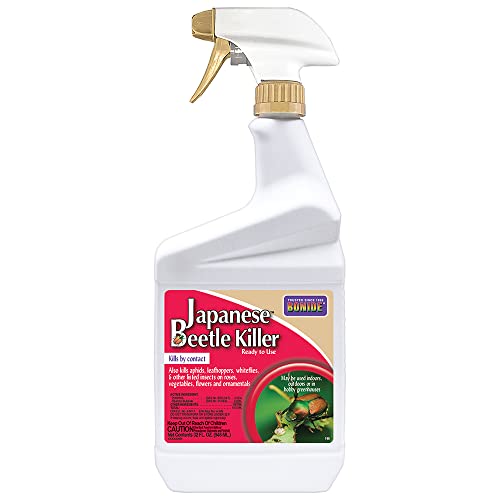
This ready-to-use spray offers broad-spectrum pest control suitable for trees, shrubs, flowers and vegetables. It kills by contact and provides coverage against a range of beetles, aphids, caterpillars, leafhoppers and moths, making it a practical option for mixed landscapes. It’s designed for indoor, outdoor, and greenhouse use, delivering quick knockdown with convenient spray delivery. Apply during dry weather for best adhesion and effectiveness. Always follow label directions for safe handling and targeted use on edible plants as needed.
Key considerations include its suitability for residential settings and its ability to act as a foliage protector. For best results, target the undersides of leaves and new growth where beetle activity tends to be concentrated. Reapplication intervals depend on weather and the severity of an infestation. This product is well-suited for homeowners seeking a simple, broad-spectrum tool in their beetle management arsenal.
Pro Grub Control – 32oz

Pro Grub Control is a concentrated insecticide designed to protect trees, shrubs and landscape ornamentals by targeting soil-dwelling pests and foliar insects. It contains 21.4% Imidacloprid as the active ingredient, enabling systemic uptake in plant tissues. The product can be applied to turf, as a foliar spray, or to the soil, offering flexibility for different pest pressures. It helps safeguard trees against beetles as well as other common garden insects, making it a strong option for integrated pest management programs.
Consider the soil-drench and spray compatibility to match your site conditions. Because it is systemic, timing is important: apply when plants are actively taking up moisture and nutrients. Evaluate your spray schedule to avoid overlapping with beneficial insects or pollinators during peak seasons. This product is best for homeowners who prefer a systemic solution that protects multiple plant types from a single application.
Spectracide Triazicide Insect Killer For Lawns & Landscapes

Spectracide Triazicide is a versatile concentrate designed to protect lawns, vegetables, fruit and nut trees, roses, flowers, shrubs, and more. Its fast-acting formula kills 260+ insects by contact, including Japanese beetles and grubs, across above- and below-ground environments. The product is labeled as non-staining on most home siding, depending on age and cleanliness, which makes it a convenient option for outdoor use around the home. It supports broad-spectrum control with a single application plan.
When selecting this option, consider the size of your landscape and the breadth of pests you face. Its broad coverage is beneficial in multi-species gardens but requires adherence to label directions to minimize impacts on non-target organisms. This product is suitable for homeowners who want a single solution capable of handling diverse pests in lawns and tree settings.
Bonide Captain Jack’s Fruit Tree Spray

Captain Jack’s Fruit Tree Spray is a concentrated option crafted for fruit trees, nuts, and citrus plants. It is designed to control diseases and insects while also helping prevent fungal issues like powdery mildew, blight, black spot, and mold. The product also repels many common garden insects such as aphids, gnats, and beetles. This makes it a robust choice for orchard-style settings or home fruit trees where pest and disease pressure can be high.
Evaluate how you manage fruit trees in your yard. If your emphasis is on organic or near-organic practices, this product offers a balance of disease control with insect management. Follow label directions for mixing, application timing, and safety precautions, particularly when fruit is in development or nearing harvest.
Deepthi Pure Neem Oil for Plants
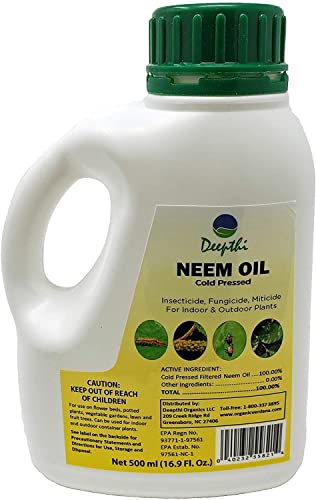
Deepthi Neem Oil is a 100% pure, cold-pressed neem oil product suitable for indoor and outdoor use. It provides natural pest suppression and acts as both an insecticide and fungicide. Neem oil is effective against aphids, mites, caterpillars, whiteflies, Japanese beetles, and other pests, while also supporting plant health by reducing fungal issues. Its natural formulation makes it appealing for those pursuing low-toxicity pest management strategies.
Neem oil works best as part of an Integrated Pest Management plan. Apply during calm, dry conditions and cover both leaf surfaces for maximum efficacy. Overuse or repeated applications may affect beneficial insects, so timing and rate should be adjusted to pest pressure and plant tolerance. This option is ideal for gardeners seeking a natural, multi-purpose spray with tree- and shrub-friendly use.
Buying Guide: Key Considerations For Japanese Beetle Sprays
- Target pests: Confirm the product’s primary pests (Japanese beetles, grubs, aphids, etc.) align with your garden’s challenges. Some products emphasize systemic control, while others focus on contact killing.
- Plant safety: Check label directions for edible crops, fruit trees, and ornamentals. Consider risk to pollinators and beneficial insects, and use selective timing to minimize impact.
- Mode of action: Decide between contact killers, systemic systemic insecticides, and natural oils. Systemics provide longer protection but require careful integration with irrigation schedules.
- Application method: Sprays, soil drenches, and foliar applications each have different timing and coverage requirements. Plan around weather, pruning cycles, and harvest times.
- Residue and wear: Some products may leave residues on siding or fruit surfaces. Consider whether non-staining formulas or indoor-outdoor compatibility matters for your site.
- Environmental and safety considerations: If you favor organic methods, prioritize products labeled for organic gardening (e.g., Captain Jack’s and neem oil) and avoid broad-spectrum use when beneficials are active.
- Long-term strategy: Combine sprays with cultural controls (hand-picking beetles, row covers, healthy pruning, and proper irrigation) to reduce repeated chemical reliance.
- Re-entry and harvest timing: Adhere to re-entry intervals and post-treatment waiting periods to ensure safety for family, pets, and harvest.
These considerations help balance immediate beetle suppression with long-term tree health and ecosystem stewardship. When choosing a spray, weigh your landscape size, plant types, and tolerance for chemical versus natural options. A layered approach—combining targeted sprays with preventative care—often yields the most durable results.