Debating the right herbicide to stop stump sprouts and clear unwanted trees? This guide highlights five top picks that are widely used for stump removal, detailing how they work, where they’re most effective, and what to consider before you buy. Each option below is selected for American landscapes and offers practical outcomes for roadsides, fences, pastures, and remote sites. Read on to compare formulations, application methods, and safety notes to choose the best stump killer for your property.
| Product | Brand | Type | Best For |
|---|---|---|---|
| Tordon RTU Specialty Herbicide | Dow AgroSciences | Selective stump killer (ready-to-use) | Cut-stump treatment on fences, roadsides, rights-of-way |
| Stump-Out Stump & Vine Killer | Bonide | Concentrate with applicator | Stumps and vines; versatile for foliar spray |
| Stump Stop | OMNI DEPOT | Ready-to-use stump killer | Forests, pastures, roadsides, fence lines |
| Martin Stump Killer | OMNI DEPOT | Ready-to-use tree and stump kill solution | Backyards, roadsides, pastures |
| PastureGard HL | PastureGard HL | Herbicide concentrate | Control of trees and brush in pastures |
Tordon RTU Specialty Herbicide 1 Qt

Tordon RTU Specialty Herbicide is designed to translocate into a tree’s root system after cut-surface application, effectively stopping resprouts in many woody species. This product is not approved for sale in several states including California, so check local restrictions before purchase. It is widely used for treating stumps on fence lines, roadsides, and other non-cropland areas where control of woody plants is desired. The formulation emphasizes high effectiveness across more than 20 woody species, helping to minimize future sprouting after cutting. Safety notes include avoiding treated stumps near desirable vegetation and following label directions for application on cut surfaces to maximize translocation and impact.
Key points:
– Translocates to roots to suppress regrowth
– Effective across many woody species
– Not available in certain states due to regulatory restrictions
– Primarily for cut-stump treatments in non-crop areas
Stump-Out Stump & Vine Killer
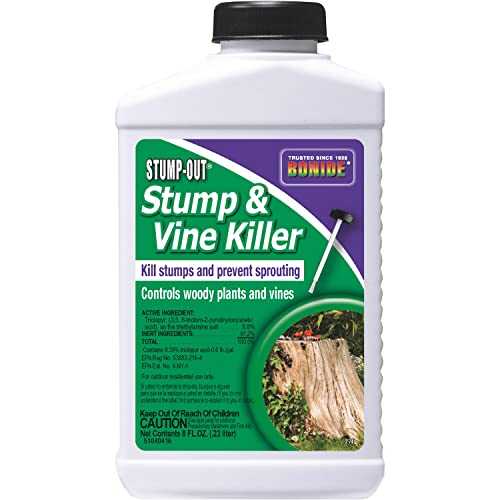
Stump-Out is a versatile concentrate designed to control woody plants and vines. The product can be used as a stump killer—undiluted to directly target stumps to prevent sprouting—and also serves as a foliar spray for broader weed control. Its dual-use format makes it convenient for mixed vegetation management on fence rows, roadsides, and non-crop landscapes. When applying to stumps, ensure thorough coverage on the cut surface for optimal absorption and translocation. For integrated vegetation management, Stump-Out supports broadleaf and woody species control in a single chemical approach.
Highlights:
– Undiluted stump killer option
– Also suitable for foliar applications
– Broad utility against woody plants and vines
– Helpful for quick, on-site stump removal efforts
Stump Stop Ready-to-Use Stump Killer
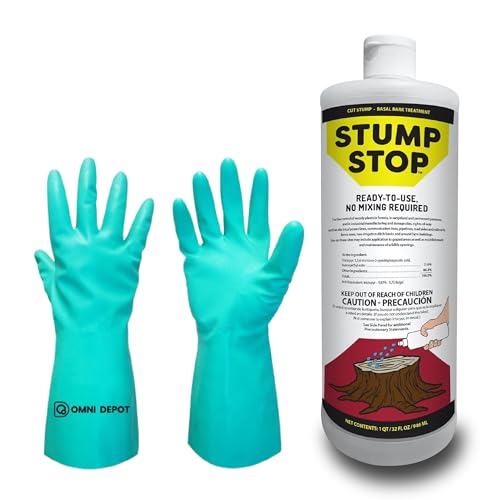
Stump Stop is a ready-to-use formula designed for immediate application in forests, pastures, roadsides, and along rail corridors. Its pre-mixed solution reduces handling time, making it suitable for remote or industrial sites where quick deployment matters. The product’s versatility extends to fence rows and farm buildings, enabling consistent vegetation control across multiple settings. Typical use involves applying directly to cut stumps to ensure deep penetration and reduced sprouting. The packaging often includes protective gloves for safer handling in field conditions.
Key considerations:
– No mixing required, ready-to-use
– Works across diverse sites (forests, pastures, roadsides)
– Effective on hard-to-manage locations like railways and fences
– Emphasizes straightforward, on-site application
Martin Stump Killer Ready-to-Use

Martin Stump Killer provides a ready-to-use formula designed for deep stump penetration to stop sprouting in various settings, including backyards, roadsides, and pastures. The product emphasizes ease of use—no mixing required—so users can apply directly from the container. It targets cutting-induced regrowth by delivering active compounds into the stump core. This option is commonly chosen for small-to-medium property projects where quick results and minimal preparation are valued. It’s compatible with multiple environments, from residential areas to rural landscapes.
Main points:
– Ready-to-use, no measuring
– Deep stump penetration to deter resprouts
– Suitable for diverse locations, including residential and rural areas
– Suitable for immediate application in field conditions
PastureGard HL Herbicide
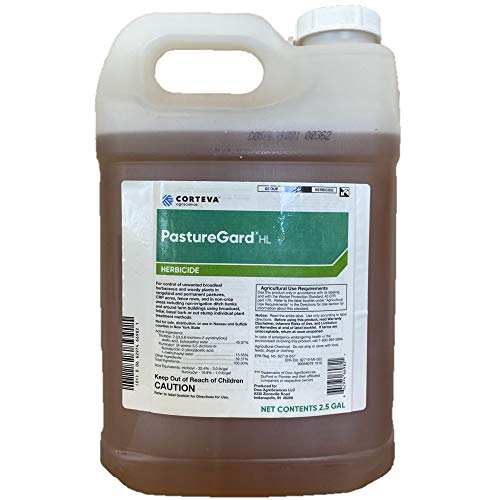
PastureGard HL is a broader herbicide designed to control tree and brush species in pasture environments. It lists wide-ranging woody plants and several weed species as targets, providing pasture management benefits and brush control. While not exclusively a stump killer, its use on cut stumps and regrowth suppression is common in property management where large areas require vegetation control. The product’s strength lies in its capacity to reduce woody regrowth over extensive areas, particularly in pastures and rights-of-way where vegetation density can impede grazing or access.
Considerations:
– Effective for large-area vegetation management
– Addresses multiple woody species and common brush
– Strong option for pasture and fence-line control
– May require monitoring for regrowth and retreatment cycles
Buying Guide: Key Purchase Considerations And Comparisons
When choosing a stump-killing herbicide, consider land use, target species, safety, and handling. Here are the main factors to weigh:
- Target species and site: Some products are broad-spectrum, others are more selective. If you need stump control after tree cutting in fenced areas or rights-of-way, pick a formulation proven to work on woody species in those settings.
- Application method: Ready-to-use products save time, especially in remote sites. Concentrates may offer cost savings per use but require mixing and proper dilution.
- Translocation and efficacy: The best stump killers translocate into the root system after application, reducing the chance of sprouting. Look for descriptions that emphasize deep penetration or root-system activity.
- Regulatory restrictions: Some products are not available in certain states. Verify local regulations and label restrictions before purchasing.
- Safety and handling: Always follow label directions for protective gear, storage, and disposal. Consider gloves, goggles, and clothing appropriate for chemical handling, especially in residential or farm environments.
- Environmental impact: If avoiding soil or nearby vegetation damage is a concern, choose products with targeted action and documented safety profiles. In pastoral settings, consider effects on grazing areas and non-target plants.
- Cost and coverage: Compare prices per quart or per gallon and consider the required application scale. Larger volumes may be more economical for extensive properties, while smaller projects may benefit from ready-to-use formats.
- Residue and retreatment: Some products may require follow-up applications to prevent regrowth. Plan for a schedule based on observed stump response and vegetation pressure.
In sum, selecting the best stump killer involves aligning the product’s action with your site, understanding regulatory boundaries, and prioritizing safety in field use. For small yards, ready-to-use formulas may be most convenient, while larger properties might benefit from concentrated mixes paired with proper application equipment. Always read the label to confirm pest targets, usage sites, and safety requirements before purchasing.