Answering the specific buyer need: these herbicides are designed to control duckweed, watermilfoil, hydrilla, curly leaf pondweed, and other common pond weeds to improve water quality and fish habitat. Best for lakefront property owners, HOA ponds, and small- to mid-size water bodies seeking fast-acting, targeted weed control with manageable application requirements.
Summary table of selected products
| Product | Brand | Volume | Best For | Notes |
|---|---|---|---|---|
| Tsunami DQ Aquatic Herbicide (Quart) | Crystal Blue | Quart (1 qt) | Domestic ponds with diverse weed species | Diquat-based, fast-acting; not for sale in several states |
| Airmax Wipeout Pond Weed Defense | Airmax | 4 Ounce | Small to medium ponds needing long-lasting control | Systemic floridone-based; slow-acting for gradual weed suppression |
| Airmax Shoreline Defense Emergent Weed Control (1 Gallon) | Airmax | 1 Gallon | Shorelines, cattails, phragmites | Kills rooted emergent weeds; broad-spectrum |
| Alligare Diquat Aquatic Herbicide | ALLIGARE | 1 Gallon | Fast-acting broad weed control | Glyphosate-free, fast contact action |
| Airmax Ultra Pondweed Defense | Airmax | 1 Quart | Submerged and floating pond weeds | Broad-spectrum; may affect duckweed temporarily |
Tsunami DQ Aquatic Herbicide Quart

Features include a diquat-based formulation designed to target a wide range of submerged, floating, and emergent weeds, helping maintain a cleaner water environment. It is fast-acting, delivering rapid results in ponds and lakes. This product is not for sale in several states due to regulatory restrictions. Best for pond owners needing broad-spectrum control with quick knockdown of invasive aquatic plants. Caution: Check local regulations before purchase and use in your state.
Airmax Wipeout Pond Weed Defense
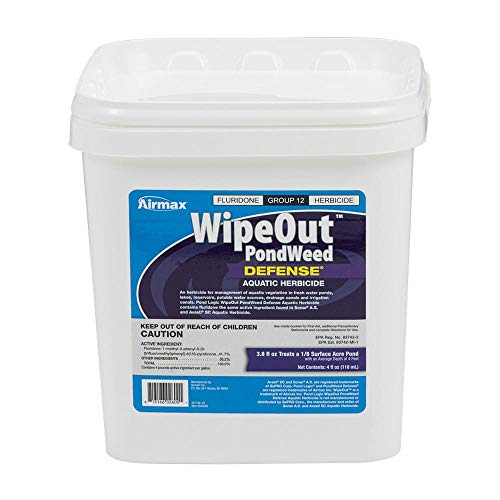
Best for: small-to-medium ponds needing an easy-to-use, long-lasting treatment. This systemic floridone herbicide suppresses weed growth by limiting chlorophyll, reducing nutrient uptake without rapid oxygen depletion. It targets both submerged and floating species, including duckweed, water lilies, hydrilla, and hornwort. Advantage: no spray equipment required for application. Caution: It works gradually; results may take time to become noticeable.
Airmax Shoreline Defense Emergent Weed Control 1 Gallon

Best for: shorelines, docks, and marsh edges where emergent plants like cattails and phragmites dominate. This glyphosate-based concentrate kills the roots of persistent emergent weeds, helping restore access and aesthetics. It is easy to apply with a tank sprayer. Limitation: effectiveness depends on thorough contact with foliage; avoid overspray on non-target vegetation near decorative plants.
Alligare Diquat Aquatic Herbicide

Best for: pond owners seeking glyphosate-free, fast-acting control across both aquatic and terrestrial areas. This non-selective liquid weed killer works on contact, killing a broad spectrum of weeds including duckweed and hydrilla. Advantage: provides quick visible results. Caution: may require precise dosing to minimize impact on non-target plants and should be used according to label directions.
Airmax Ultra Pondweed Defense

Best for: larger ponds or lakes with active growth of submerged species like watermilfoil, hydrilla, and pondweed. It provides broad-spectrum control for submerged and floating weeds, with potential temporary suppression of duckweed and watermeal in slow-moving water. Advantage: quick tank sprayer application for season-long control. Limitation: efficacy depends on thorough coverage and proper water movement; slower waterways may impact results.
Buying Guide: Key Purchase Considerations
- Weed species: Identify dominant weeds (duckweed, hydrilla, pondweed, cattails) to select a product with the appropriate spectrum.
- Water body size: Larger ponds may require higher volumes or multiple applications; consider products labeled for your pond size.
- Application method: Some products require sprayers or tank mixes; others offer simpler “pour-and-treat” formats. Match to your setup and labor capacity.
- On-label restrictions: Some products have state-sale limitations; verify local regulations before purchase.
- Environmental safety: Look for formulations designed to minimize rapid oxygen depletion and protect fish and beneficial organisms; consider products with slow-release or systemic action if you need extended control.
- Timing and persistence: Fast-acting products may deliver quick knockdown, while systemic or long-acting products may provide season-long suppression. Plan treatments to reduce weed regrowth during peak growing periods.
- Non-target impact: Some herbicides can affect non-target plants or algae; review label guidance on aquatic plant specificity and any temporary impacts on submerged vegetation.
Frequently Asked Questions
- Which pond weed herbicide is best for fast results?
– Products containing diquat (like Tsunami DQ variants) typically offer rapid knockdown of many weeds. - Can I treat my shoreline with emergent weed killers?
– Yes, products labeled for emergent weeds (such as Shoreline Defense) target cattails, phragmites, and similar plants along shorelines. Use as directed near water access areas. - Is glyphosate-based treatment safe for fish?
– Glyphosate-based products can be effective for emergent weeds but should be applied carefully to minimize exposure to aquatic life. Follow label instructions and avoid spraying near fish habitats when possible. - Do these products require spraying equipment?
– Some products are designed for simple edge treatments or mixing in water, while others require a tank sprayer for even coverage. Choose based on your setup and skill level. - Are diquat and fluroidone-based products safe for all ponds?
– Safety depends on pond size, weed species, and proximity to non-target plants. Review product labels for usage restrictions and environmental cautions. - Should I use multiple products for different weed types?
– For diverse weed communities, a combination approach targeting distinct life stages (submerged, floating, emergent) can be effective, but always follow product mixing and label guidelines to avoid negative interactions.