Answer: These heated chicken waterers keep water from freezing in cold weather and are best for farm owners, backyard poultry keepers, and small farmers who need reliable access to unfrozen water for multiple birds. This guide highlights five top options and explains who each is best for, plus practical buying considerations for winter poultry care.
| Product | Best For | Key Feature | Capacity |
|---|---|---|---|
| Farm Innovators Heated Chicken Waterer | Small to mid-size flocks needing a simple, reliable frost-proof unit | Thermostatic 100W heater, durable plastic, outdoor use | 3 gallons |
| Lilyang Heated Chicken Waterer | Backyard flocks wanting automatic thermostat control | 250W thermostat with auto on/off, freeze-proof to -20°F | 3 gallons |
| Premier 1 All-Season Heated Poultry Waterer | Hobby farmers who value clean water and easy refills | Built-in thermostat, quick-fill hinged cap | 3 gallons |
| JELSVOP Heated Chicken Waterer | Multiple birds needing clean water from multiple nipples | 4 nipples, anti-freeze heater, safe low-watt heating | ≤11L (about 2.9 gallons) |
| PAUQRWIE Heated Chicken Waterer | Flexible placement with adjustable temperature range | Thermostatic control, 32–210°F, horizontal or upright use | 1.5 gallons |
Farm Innovators Heated Chicken Waterer, 3 Gallon

Best for: Small farms or backyard setups that want a straightforward, thermostatically controlled waterer for outdoor use. The unit provides a 3-gallon reservoir, durable plastic construction, and a 100-watt heating element. This model is known for simple operation and year-round reliability in freezing conditions. Limitation: Some users may prefer more advanced nipple configurations for very large flocks.
Omlet Insulated Chicken Waterer, 3 Gallon

Best for: Keepers who want insulated, cleaner water with anti-roost features. This 3-gallon unit provides insulation to resist summer heat and winter chill while blocking 99% of light to reduce algae and slime buildup. Limitation: BPA-free plastic is good, but some users may prefer metal fittings for heavy-use environments.
Lilyang Heated Chicken Waterer 3 Gallon

Best for: Flocks needing reliable automatic heating with energy efficiency. The 250W thermostat activates at 35°F and deactivates at 70°F, offering a balance between preventing ice and avoiding overheating. Note: Water does not get hot; the goal is to prevent freezing. Limitation: Cast aluminum base may be heavier to move than plastic-only models.
Afarnook 4 Pcs 3 Gallon 2 in 1 Heated Waterer Kit

Best for: Gardeners and small farm setups that want an all-in-one winter kit. Includes a heated waterer, a large feeder, insulation tape, and a weatherproof outlet box, designed to minimize refills and weather-related power concerns. Limitation: Bulkier footprint may require more coop space and hanging options.
Premier 1 All-Season Heated Poultry Waterer

Best for: Hobby farmers who prioritize keeping water unfrozen with clean nipple drinkers. The 100W heating element is thermostatically controlled to 40°F and 60°F, ensuring water remains accessible without heating much. Limitation: Water does not heat; its purpose is to prevent freezing, which may be insufficient in extremely severe cold without supplemental heat.
JELSVOP Heated Chicken Waterer, 11L
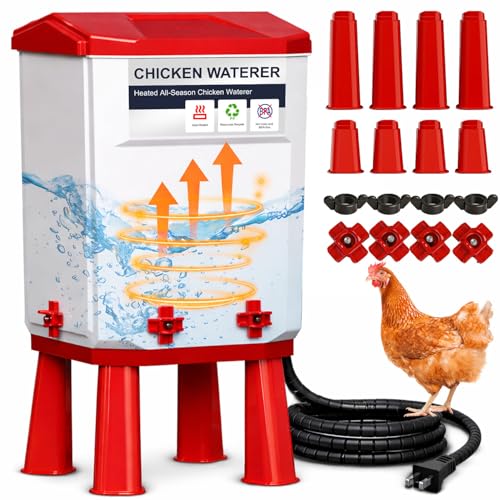
Best for: Backyard or small farm operations needing multiple nipples for faster hydration. This 11L unit includes four stainless-steel nipples and a low-wattage heater with anti-chew protection. Limitation: Water may require occasional nipple maintenance to prevent clogs, impacting long-term reliability if not cleaned regularly.
PAUQRWIE 1.5 Gallon Heated Waterer

Best for: Keepers who want adjustable temperature control and flexible placement (horizontal or upright). The device supports a range up to 210°F and includes a control panel for easy temperature management. Limitation: Smaller capacity at 1.5 gallons may require more frequent refills for larger flocks.
Buying Guide
What to consider when choosing a heated waterer for winter:
- Capacity vs flock size: Larger flocks need bigger reservoirs or multiple drinkers to reduce refills.
- Heating method: Thermostatic elements prevent freezing with a timer-like on/off cycle; some units heat water slightly but not hot, which is enough to prevent ice.
- Power and safety: Look for weatherproof components, insulated housings, and safety features like protected cords and drip-proof plugs.
- Placement flexibility: Hanging versus standing installations affect coop layout and accessibility.
- Maintenance: Nipples, basins, and seals influence cleanliness and ease of upkeep.
- Cost of operation: Energy-efficient models with auto shutoff save power over a long winter.
Frequently Asked Questions
- Do heated waterers actually warm the water? They prevent freezing by maintaining a temperature above freezing. Water can remain unfrozen, but it may not become hot.
- How often should I refill a 3-gallon unit in winter? That depends on flock size and climate. Larger flocks may need refills every 1–2 days during cold snaps.
- Are nipple drinkers better than basins in winter? Nipple drinkers keep water cleaner longer and reduce spillover, but may require training birds. Basins are simple but can ice over quickly.
- Can I use any water heater with my existing waterer? Most units are designed to work as self-contained systems. Compatibility with third-party heaters is not guaranteed.
- Is stainless steel better than plastic for winter use? Stainless components resist corrosion and may be more durable in harsh weather, but plastic options are often lighter and cheaper.
- What maintenance helps prevent freezing besides heating? Insulation, weatherproof housing, and keeping the coop sheltered from wind reduce heat loss and keep water from freezing.