Looking for space-saving ways to grow vegetables with less bending and more versatility? This guide highlights top hanging grow bags designed for vegetables, including tomatoes, strawberries, herbs, and more. The selections favor durable fabric, good aeration, and easy hanging. Ideal buyers include urban gardeners, balcony growers, and anyone seeking vertical gardening options without soil-heavy commitments. Below is a quick buyer’s table to compare key picks at a glance.
| Product | Best For | Why It Stands Out |
|---|---|---|
| SouilGoal Upside Down Tomato Planter (Set of 3) | Families, small patios | Durable felt fabric, 12 planting holes, removable for reuse |
| Pri Gardens Upside Down Tomato Planter (2-Pack) | Beginners, space-saving setups | Upright growth, easy access, good root oxygen |
| Lesimnky 4-Pack Upside Down Planter (3 Gal) | Large balcony or patio | 4 bags with 6 pockets each, versatile hanging kit |
| Homyhoo 2-Pack Green Upside Down Tomato & Herb Planter | Herbs and small vegetables | Turning flexibility, durable fabric, simple hanging |
| GrowLaLa 3-Piece Upside Down Set | Year-round vertical gardening | All-in-one kit, multiple configurations, space-saving |
SouilGoal Upside Down Tomato Planter Set
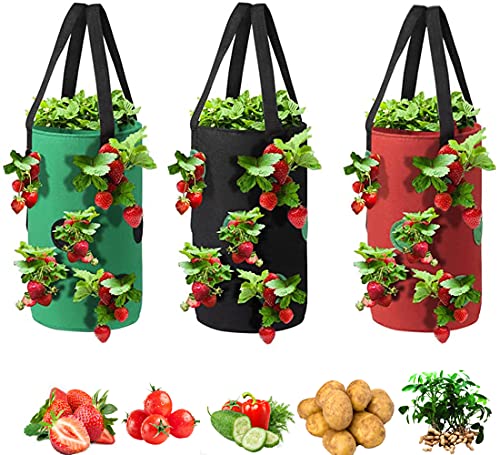
Features include a durable felt cloth planting bag with good permeability. The set contains three bags in different colors for easy distinction. Each bag has multiple planting holes suitable for strawberries, potatoes, tomatoes, carrots, onions, and more. The upside-down design saves floor space and reduces back strain by allowing easy access from above. Best for compact outdoor spaces and gardeners who want a quick, reusable solution. Caution: check for fit with your chosen plants to ensure adequate light exposure.
Best for: Small patios or apartment balconies where vertical growing is preferred. The three-pack provides color-coded options to separate plant types or varieties.
Pri Gardens Upside Down Tomato Planter (2-Pack)
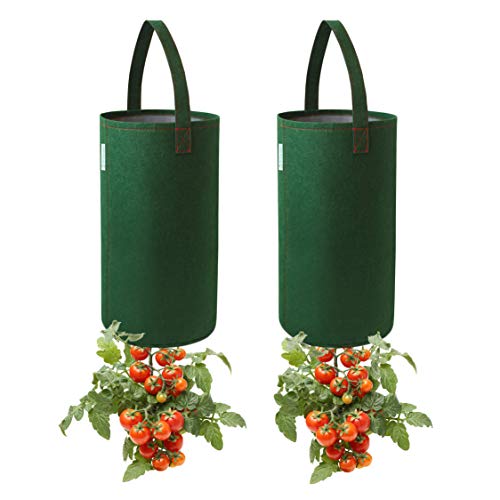
Features highlight easy planting without bending, enhanced root oxygen, and space-saving upside-down design that uses gravity to help deliver nutrients. Fabric material promotes aeration and healthier roots. Best for beginners or anyone seeking a straightforward, upright-access system. Limitation: some users prefer larger plants to be grown in single-bag setups, though the two-pack provides flexibility for different crops.
Best for: Gardeners who want accessible maintenance and clear separation between plants, with efficient use of vertical space.
Lesimnky 4-Pack Upside Down Planter (3 Gal)
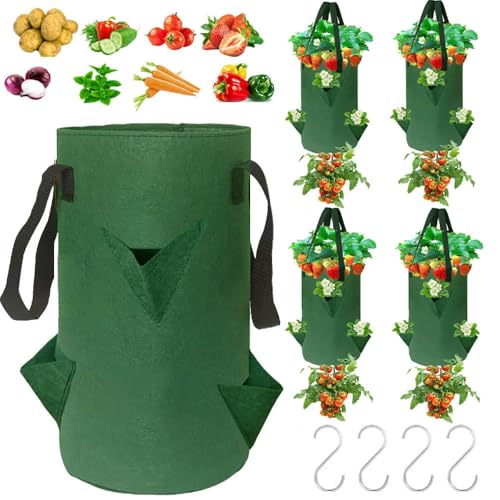
This set includes four fabric hanging bags, each with 6 triangular pockets and a bottom hole for inverted planting. The heavy-duty nonwoven fabric provides permeability and warmth retention, optimizing root structure and yield. Best for multi-plant arrangements on a balcony or fence line. Consider the setup complexity of four bags; ensure adequate hanging support for heavier crops.
Best for: Year-round harvests on larger balconies or fences where multiple varieties can be grown in one vertical installation.
Homyhoo 2-Pack Green Upside Down Planter

Includes two green fabric planters with easy hanging hooks. The heavy-duty nonwoven fabric offers good permeability to encourage root breathing and better yields. The upside-down design is advertised to deter specific pests and maximize root nutrient access. Best for herb gardens or tomato/vegetable mixes where space and deer pressure are considerations. Limitation: ensure sun exposure consistency for optimal growth in shaded areas.
GrowLaLa 3-Piece Upside Down Set

This all-in-one kit emphasizes vertical gardening with three pieces that can accommodate strawberries, tomatoes, and other vegetables. It highlights easy setup and space-saving design suitable for year-round harvests. The kit’s versatility makes it attractive for gardeners who want a flexible, expandable system. Caution: verify ceiling or wall clearance for hanging configurations before purchase.
Buying Guide: Key Purchase Considerations
What to consider when choosing hanging grow bags for vegetables?
- Material and durability: Look for nonwoven or felt fabrics that breathe and resist tearing. Reusability matters for long-term value.
- Sizing and capacity: Check the bag size and hole count to match intended crops, e.g., tomatoes or strawberries require multiple pockets.
- Hanging hardware: Ensure the system includes hooks, cords, or straps and that your mounting surface can support the weight when bags are full.
- Light and water needs: Consider sunlight exposure and irrigation options. Fabric bags dry faster but may need more frequent watering in hot climates.
- Root health: Favor designs that promote aeration and avoid root circling. Upside-down setups rely on gravity to improve nutrient flow.
Practical Comparisons
- Best for space savings: SouilGoal set and Pri Gardens two-pack both emphasize upside-down planting for compact spaces.
- Better for multi-plant displays: Lesimnky’s four-bag pack provides multiple pockets per bag for diverse crops.
- Best for beginners: Pri Gardens offers straightforward setup with upright access and clear root oxygen benefits.
- Best all-in-one kit: GrowLaLa’s three-piece set bundles flexibility and vertical growth in one purchase.
FAQ
- Are hanging grow bags suitable for all vegetables?
They work best for compact crops like tomatoes, strawberries, peppers, and herbs. Larger root vegetables may require larger bags or traditional ground planting. - Do hanging bags need drainage?
Yes. Ensure bags have bottom drainage to prevent waterlogging and promote healthy roots. - How many plants can fit in a typical bag?
It varies by bag size, but most upside-down designs with multiple pockets support several plants per bag. - Can these bags be reused year after year?
Durable felt or nonwoven fabrics are designed for reuse, but inspect for wear and clean between seasons. - What is the best location for installation?
A sunny balcony, fence line, or garden wall with protection from strong winds provides stable growth.