Answering shopping questions for parents and educators: these kid-friendly gardening sets are designed to fit small hands, teach basic planting skills, and encourage outdoor play. The top picks below cater to different ages and interests—from pretend play to real gardening tasks. The best picks include beginner-friendly kits, durable metal tools, and creative kits that mix art with growing plants. Each product is evaluated for safety, value, and educational potential, helping you choose the right fit for your budding gardener.
Quick comparison table of selected products:
| Product | Best For | Key Feature | Age Range |
|---|---|---|---|
| Grenebo Kids Gardening Set | Young kids (4–6) | All-in-one 9-piece set with hat, apron, gloves, and tool bag | 3–6 |
| National Geographic Flower & Herb Kit | Creative kids (5–9) | Decorate pots, grow cosmos, nasturtium, basil | 5–9 |
| FHOZGECY Kids Gardening Set | Active families (3–8) | Four-wheeled wheelbarrow and dual-size metal tools | 3–8 |
| Duckura 7-Piece Wheelbarrow Set | Outdoor exploration (2–5) | Wooden handles, durable metal heads, wheelbarrow | 2–5 |
| Dan&Darci Root Viewer Kit | Science-minded kids (4–8) | See-through planter to watch roots grow | 4–8 |
Grenebo Kids Gardening Set Toys

Best for young beginners who want an all-in-one starter kit. The 9-piece collection includes two shovels, a rake, garden hat, apron, gloves, watering can, tool organizer bag, and a trowel. Ergonomic, lightweight tools make it easy for small hands to grasp and use effectively. The kit emphasizes durability with reinforced handles to withstand active play. A potential limitation is that gloves are sized for children aged 4–6, so older kids may outgrow the fit.
Who it’s best for: families seeking a complete starter set with protective gear and storage. Why selected: comprehensive package at a beginner-friendly price point, encouraging hands-on garden activities at a young age.
National Geographic Flower & Herb Gardening Kit
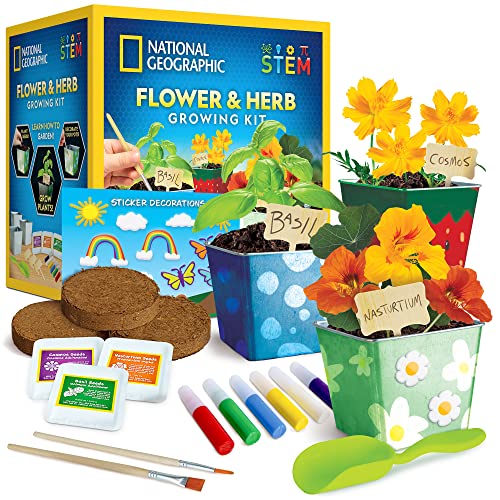
Best for creative kids who enjoy decorating and then growing plants. The kit includes three stainless steel pots, cosmos, nasturtium, and basil seeds, plus paints, brushes, stickers, wooden labels, and a Learning Guide. It blends art with science by letting kids personalize pots before planting. A caveat: adult supervision helps with painting and planting to keep the activity mess-free and organized.
Who it’s best for: budding artists and scientists who love hands-on decorating and growing. Why selected: combines creativity with a real growing project, fostering responsibility and observation skills.
FHOZGECY Kids Gardening Set

Best for families wanting a robust, realistic gardening experience. This kit features a four-wheeled wheelbarrow for stability, metal tools with wooden handles, and a complete set including pots, labels, a waterproof mat, apron, gloves, and a watering can. It supports the full planting process from digging to labeling and watering. Limitation: assembly is required, which may be a barrier for very young children to start independently.
Who it’s best for: households that value durability and a multi-step gardening workflow. Why selected: durable metal tools and a stable wheelbarrow enable real planting tasks, not just pretend play.
Duckura Kids Gardening Tools Set

Best for outdoor exploration with a balance of play and real gardening tools. This 7-piece wheelbarrow set includes a shovel, rake, leaf rake, wheelbarrow, gloves, and a spray bottle. Handles are wood with metal heads, designed for durability and real digging activities. A noted limitation: ensure proper assembly and storage to prevent loosening parts over time.
Who it’s best for: families wanting a compact, all-purpose outdoor gardening kit. Why selected: sturdy construction and age-appropriate sizing promote practical gardening skills and outdoor play.
Dan&Darci Root Viewer Kit

Best for curious minds interested in plant science. The transparent root viewer reveals underground root growth, turning gardening into a learning experience. The package includes a see-through viewer, soil, seeds (Spring Onion and Cilantro), stickers, and an instructional booklet. Risk: the see-through design should be used with care to avoid misplacing components, and supervision is advised for younger children.
Who it’s best for: kids who love science and observations. Why selected: unique root-viewing feature makes botany tangible and engaging, bridgingplay and learning.
Buying Guide
How to choose the right kids’ garden kit:
- Age and skill level: select kits that match the child’s age to ensure tools are safe and comfortable to use.
- Durability vs. size: metal tools last longer than plastic; ensure handles fit small hands and are easy to grip.
- Curriculum or play emphasis: buy kits that balance learning (root viewing, plant life cycles) with creative play (painting pots, decorating labels).
- Storage and organization: consider kits with bags or organizers to keep tools tidy after playtime.
- Outdoor suitability: check whether the kit is designed for real gardening or pretend play to align with your goals.
FAQ
- What age is appropriate for kid gardening kits? Most kits target ages 3–8, with variants for younger and older children. Always check the manufacturer’s recommended age range.
- Are these kits safe for toddlers? Some are, but supervision is advised for younger children due to small parts and metal tools.
- Do these kits teach real gardening skills? Many kits include real tools and activities such as transplanting, watering, and labeling to build practical gardening skills.
- What should I consider for storage after play? Look for kits with tool bags, boxes, or shelves to keep tools organized and prevent loss.
- Can these kits be used indoors? Some kits with pots and decorative elements can be used indoors, but outdoor use is often recommended for real growing.
- Is assembly required? Several kits require some setup, particularly wheelbarrows or tool organizers; consider this when selecting for younger kids.