Facing prime loss or backflow in your garden irrigation? This guide highlights the best foot valves for garden hoses, focusing on durability, backflow prevention, and debris filtration. Each product targets specific buyers: homeowners with small garden setups, well or pump systems, or industrial irrigation needs. The following selections emphasize reliability, ease of installation, and preventive features to keep pumps primed and efficient.
- Product table summarizes the five highlighted items for quick comparison.
| Product | Best For | Key Benefit | Material |
|---|---|---|---|
| 3/4″ Brass Foot Valve, DN20 Check Valve | Small-to-medium irrigation setups | Debris filtration reduces suction resistance | Copper/brass with stainless steel screen |
| Foot Valve with Filter 3/4″ NPT, Brass Bottom Valve | Residential and light commercial | Sturdy brass body and filtration | Brass with stainless steel strainer |
| 1 Inch Foot Valve With Backflow Prevention | Lakes, wells, ponds; horizontal/vertical use | Lead-free brass, reliable backflow prevention | Lead-free brass |
| Brass Foot Valve 3/4″ NPT Heavy Duty | Jet/pump systems requiring filtering | Filtering holes and durable brass | Brass with stainless steel spring |
| 2 Pack 1″ DN25 Brass Foot Valve with Strainer | Higher flow irrigation and pumps | Two-pack value with strong backflow prevention | Brass |
3/4″ Brass Foot Valve, DN20 Check Valve

The 3/4″ brass foot valve uses a copper vertical spring check valve combined with a stainless steel filter screen. It’s designed to filter debris at the intake, helping prevent sediment from entering the pump and reducing suction resistance. Suitable for small to medium irrigation systems and home water setups. Best for buyers who need improved pump prime and debris filtration in a compact footprint. A potential limitation is the maximum working pressure of up to 1.6 MPa, which may be lower than industrial needs.
Foot Valve with Filter 3/4″ NPT, Brass Bottom Valve

This single-acting valve integrates a brass spring check valve with a stainless steel strainer to filter out impurities. It’s explosion-proof and wear-resistant, designed for durable performance in irrigation, water supply, and industrial piping. Best for users who want a robust filtration solution that reduces pump strain and energy use. Choose this when you need reliable filtration and a strong, long-lasting build; note size compatibility for existing threads.
1 Inch Foot Valve With Backflow Prevention

This 1-inch foot valve uses lead-free brass with a unidirectional flow design to prevent backflow. It holds prime effectively in ponds, wells, and irrigation systems and supports vertical or horizontal installation. It includes a nitrile O-ring for a tighter seal and reliability in various environments. Best for potable-water-adjacent installations and larger pump priming needs; avoid if your system requires smaller fittings or non-lead materials for stricter codes.
Brass Foot Valve 3/4 inch NPT Heavy Duty

This heavy-duty, 3/4″ NPT brass foot valve features multiple small holes to filter larger impurities, with a stainless steel spring and NBR gasket for a solid seal. Its brass body provides durability and corrosion resistance, and the thread is designed for good sealing under up to 232 psi. Best for deep-well or jet-pump setups that require reliable filtration and a robust connection. Limitation: larger head pressure may require compatible fittings and proper installation.
2 Pack 1″ DN25 Brass Foot Valve with Strainer
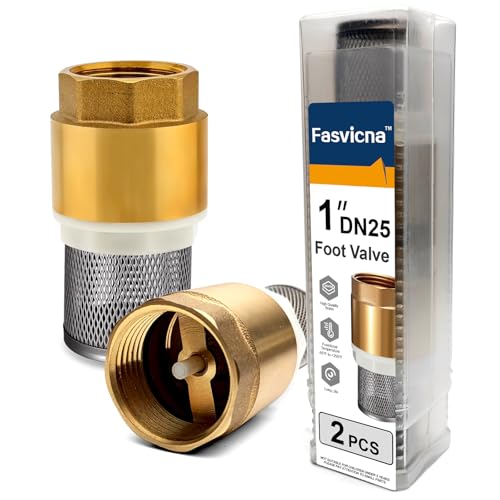
A two-pack solution built from premium solid brass, designed for backflow prevention and pump priming across water pump, irrigation, well, and sump systems. The heavy-duty construction and strainer help prevent debris entry, maintaining prime and reducing energy use. Best for users needing a value pack for multiple installations or larger-scale irrigation. Limitation: the two-pack configuration assumes multiple valve deployments; plan installation accordingly.
Buying Guide
What should you consider when choosing a foot valve for garden hoses?
- Flow capacity and pressure rating: Match the valve’s maximum working pressure to your pump and piping to avoid leaks or failure.
- Material and safety: Lead-free brass is common for potable-use applications; PVC or brass variants suit different environments and budgets.
- Filtration and debris handling: Valves with built-in screens help protect pumps but may clog faster, requiring maintenance.
- Installation orientation: Some valves support vertical and horizontal placement; verify arrow direction for proper flow.
- Backflow prevention: Especially important for water systems to protect pumps and prevent contamination.
- Quantity and value: Multi-pack options provide cost efficiency for multiple lines or future projects.
Common scenarios
Small garden irrigation with shallow wells benefits from compact, reliable foot valves with filtration. Farms or larger homes may require heavier-duty brass valves with higher pressure ratings and robust backflow prevention. If you need potable-water compatibility, prioritize lead-free brass and certified components.
Installation tips
- Follow the flow direction indicated on the valve housing.
- Use thread sealant or Teflon tape appropriate for metal threads to prevent leaks.
- Inspect the strainer for debris before final assembly and after initial startup.
FAQ
- What is a foot valve used for?
It prevents backflow and helps keep a pump primed by stopping water from draining back into the source when the pump stops.
- Do all foot valves filter debris?
Not all do; valves with an attached strainer or screen provide debris filtration, which helps protect pumps from clogging.
- Can foot valves be used in horizontal installations?
Yes, many models support horizontal placement, but always check the arrow direction for proper flow.
- Are non-lead brass foot valves safe for drinking water?
Lead-free brass is designed to be safer for potable applications, but always confirm certification and local codes for your installation.
- What maintenance is required?
Regular inspection of the filter screen and seals helps prevent reduced suction and leaks. Clean or replace parts as needed.
- Which valve should I choose for a deep-well pump?
Choose a heavy-duty brass valve with reliable backflow prevention and a robust seal designed for higher pressure and deeper suction.