The following guide helps buyers choose the right fertilizer for rose bushes, based on needs like rapid growth, disease protection, or long-lasting feeding. These products are selected for different rose types, climates, and care goals. Whether you want bigger blooms, stronger roots, or simple all‑in‑one care, you’ll find options here that suit common American garden setups. The top picks are organized to help you compare quickly and decide which product is best for you.
Summary table of chosen products
| Product | Best For | Notes |
|---|---|---|
| Miracle-Gro Water Soluble Rose Plant Food | You want instant feeding and quick results | Soluble formula feeds every 7–14 days |
| BioAdvanced All-In-One Rose & Flower Care I Granules | All-in-one protection and nutrient support | Fertilizer plus insect and disease control |
| Scotts Rose & Bloom Continuous Release | Low-maintenance, extended feeding | Feeds up to 2 months |
| TPS NUTRIENTS Rose Bush Fertilizer | Specialized rose bloom support | Liquid formula focused on blooms |
| BioAdvanced 2 In 1 Systemic Granules II | Long protection with systemic insect control | Up to 8 weeks protection |
Miracle-Gro Water Soluble Rose Plant Food

Best for quick, visible results. This water-soluble formula feeds roses immediately and supports bigger, more beautiful blooms versus unfed plants. It is designed for regular feeding every 7 to 14 days, making it ideal for gardeners who prefer a predictable schedule and fast nutrient delivery after watering. This option is well-suited for container roses and beds where rapid response matters.
Who it’s best for: homeowners seeking fast-acting nutrition and simple, repeatable feeding intervals. Caution: avoid over‑applying to prevent nutrient buildup; follow directions for dilution and frequency.
BioAdvanced All-In-One Rose & Flower Care I Granules

Best for gardeners seeking a one-step solution that combines fertilizer with pest and disease prevention. This 3‑in‑1 formula feeds, and also guards against common rose pests and fungal diseases for up to six weeks. It’s especially convenient for roses, irises, hibiscus, azaleas, camellias, rhododendrons, and other shrubs that benefit from a steady protection window.
Who it’s best for: those who prefer a single product that reduces the number of garden tasks. Caution: the product provides systemic protection; apply as directed to avoid harming beneficial insects in the vicinity.
Scotts Rose & Bloom Continuous Release Plant Food

Best for low-maintenance feeding with steady bloom support. This continuous-release granule formula feeds roses and other flowering plants for up to two months, promoting ongoing bloom production. It’s useful for busy gardeners who want reliable, scheduled nutrition without frequent applications.
Who it’s best for: gardeners who want a long‑lasting feeding cycle with minimal effort. Caution: timing is important; avoid feeding during extreme heat or drought without adequate watering.
TPS NUTRIENTS Rose Bush Fertilizer

Best for rose bushes that respond well to a purpose-built bloom booster. This 8‑oz liquid plant food is designed to support all rose varieties, including mini roses, by promoting fuller blooms, brighter flowers, and consistent flowering performance. It also aims to strengthen roots and overall plant health.
Who it’s best for: growers who want a bloom-focused solution with straightforward application. Caution: as a liquid fertilizer, dosing accuracy matters; measure per the label to avoid over-concentration.
BioAdvanced 2 In 1 Rose Fertilizer II Insect Killer
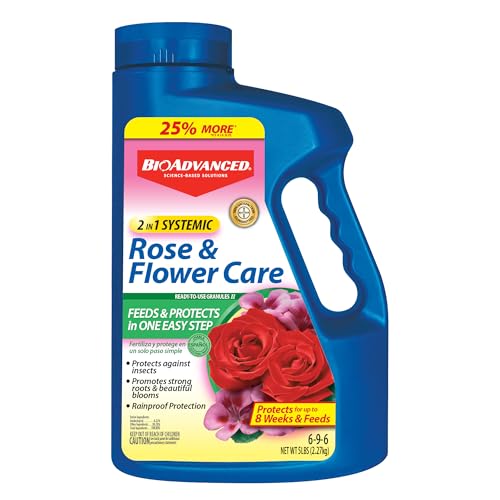
Best for gardeners who want both nutrition and insect control with a systemic approach. These granules nourish roses and flowers while providing extended protection against several pests for up to eight weeks. It is a practical pick for outdoor roses that face common insects such as aphids, beetles, and leafhoppers.
Who it’s best for: those who prioritize combined fertilization and pest defense. Caution: ensure compatibility with other garden treatments and avoid overlapping application with separate insecticides unless advised.
BioAdvanced All-In-One Rose & Flower Care Fertilizer
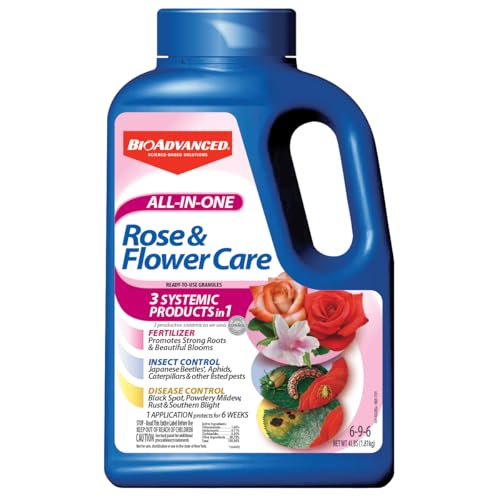
Best for a complete care routine in one product. This granulated fertilizer provides plant nourishment alongside insect and disease control, with systemic rainproof protection lasting up to six weeks. It’s suitable for roses, iris, hibiscus, azaleas, camellias, rhododendrons, and similar shrubs.
Who it’s best for: landscape managers seeking an all-in-one solution for a broader set of ornamental plants. Caution: like other granular options, avoid applying in very hot conditions without watering to prevent leaf burn risk.
Miracle-Gro Shake ‘n Feed Rose & Bloom Plant Food

Best for long-lasting bloom nutrition with soil- and root-friendly ingredients. This granular plant food feeds up to three months and contains natural ingredients like kelp, feather meal, bone meal, and earthworm castings to support soil microbes and root development. It is designed to prevent burn when used as directed.
Who it’s best for: gardeners who want a natural-leaning formula that prolongs feeding intervals and supports soil health. Caution: ensure even distribution around plants to avoid hotspots of nutrient concentration.
Great Big Roses Rose Fertilizer Booster

Best for soil improvement and uptake efficiency. This concentrate boosts rose fertilizer effectiveness by enhancing soil structure and delivering nutrients closer to the root zone. It includes compost extract with bioavailable humic acids, trace minerals, and seaweed for a holistic growth boost.
Who it’s best for: homeowners seeking to maximize the effectiveness of existing fertilizers and improve overall soil vitality. Caution: concentrates require proper dilution; follow label directions to prevent overuse and potential soil imbalance.
Buying Guide: Key Purchase Considerations
What matters most when choosing rose fertilizer?
- Feeding frequency: Do you prefer quick-dissolving liquids, easy granules, or long-lasting granules that reduce applications?
- Protection needs: Is pest and disease control part of your plan, or do you want a pure fertilizer only?
- Rose variety and climate: Are you growing minis, hybrid teas, or old garden roses in hot summers or cool climates?
- Soil health: Do you benefit from soil-enhancing ingredients like kelp, bone meal, or compost extracts?
- Application method: Are you comfortable with granular distribution, liquid dosing, or spray-free systemic options?
Practical buying questions
- Which product offers the best balance of growth and bloom for container roses? Miracle-Gro Water Soluble and Shake ‘n Feed options are strong contenders for quick results and long intervals.
- Do I need insect and disease control in the same product as fertilizer? If yes, consider BioAdvanced All-In-One or BioAdvanced 2 In 1 options for combined protection.
- Will a continuous-release fertilizer suit a busy garden schedule? Scotts Rose & Bloom provides up to two months of feeding with minimal effort.
- Are liquid formulas better for adjusting strength? Liquids allow precise dosing; use TPS NUTRIENTS for controlled bloom-focused feeding.
FAQ
- Q: How often should I fertilize rose bushes? A: Follow product guidelines; many options suggest every 4–8 weeks during the growing season, with adjustments for climate and rainfall.
- Q: Can I mix fertilizers with other garden chemicals? A: It is best to follow label directions and avoid mixing unless explicitly advised by the manufacturer.
- Q: Should I water after applying fertilizer? A: Yes, water helps dissolve and move nutrients to the root zone, reducing the risk of fertilizer burn.
- Q: Are all these products safe for potted roses? A: Most are suitable, but follow container-specific instructions and consider slower-release formulas for pots.
- Q: Do I need pest control if my roses aren’t showing insects? A: If you’re not dealing with pests, a standard fertilizer may be sufficient; pest-control formulations are optional depending on exposure.