Answering your seed-starting needs: foam seed starter trays offer lightweight, durable options with built-in drainage and efficient space use. This guide highlights five foam or foam-like seed starter trays ideal for beginners and seasoned gardeners alike. Each pick targets different growing goals—compact spaces, higher humidity control, or ease of transplanting. Best for indoor seedling setups, balcony gardeners, and those seeking reusable options. The following comparisons help you choose trays that match your seed types, space, and maintenance preferences.
| Product | Cells | Best For | |
|---|---|---|---|
| Burpee SuperSeed 36 Cell | 36 | General Indoor Seed Starting | Flexible pop-out cells with easy transplanting |
| DJGINRO 144 Cells (12 Pack) | 144 | Humidity-Controlled Germination | Adjustable humidity dome and clear design |
| Prudiut 144 Cells | 144 | Biodegradable Pots | Wood pulp pots that decompose in soil |
| Bonviee 60 Cells (5×12) | 60 | Observability & Temperature Control | Clear trays with adjustable humidity vents |
| Gardzen 30 Pack 6-Cell | 30 | Durable, Portable Starter | Dedicated drainage and top-channel water guidance |
Burpee SuperSeed Seed Starting Tray

The Burpee SuperSeed tray features 36 flexible pop-out cells designed for easy transplanting and seedling growth. It includes alphanumeric labeling and a Plant-o-Gram diagram for seedling identification. The molded corner drainage slots improve water management, while deep channels in the tray pull away excess moisture. A raised perimeter edge keeps water contained, helping to prevent spills. Soft silicone-like cells cradle seedlings and pop out gently for transplanting, reducing root disruption.
Best for: Home gardeners starting a mix of vegetables, herbs, and flowers indoors. This tray is especially suitable for growers who want straightforward transplanting and clear seedling tracking. Caution: When fully saturated, handling may require care to avoid disturbing delicate roots.
DJGINRO 144 Cells Seed Starter Tray

This kit provides a large 144-cell tray with a humidity-adjustable dome to control germination conditions. The tray and lid are transparent for easy root observation, and each cell includes a bottom drainage hole to prevent overwatering. The dome’s ventilation can be adjusted to balance humidity and air exchange, supporting faster germination and healthier seedlings.
Best for: Growers who need precise humidity control and a high-density starter for many varieties. Choose this if you start many seeds and want visible root development. Caution: The larger size requires more space and careful handling during transplanting.
Prudiut 144 Cells Seed Starter Tray

Prudiut’s 144-cell kit emphasizes natural, biodegradable materials. The seedling pots are made from thickened wood pulp, promoting root penetration and soil permeability. The design balances moisture drainage and retention, supporting a wide range of seeds. When ready, the whole pot can be buried, leaving minimal transplant shock and contributing organic matter to the soil as it decomposes.
Best for: Eco-minded gardeners who want biodegradable starter options and gentle transplanting. Limitation: Biodegradable pots may require more frequent moisture management to avoid drying out during germination.
Bonviee 5-Pack Seed Starter Trays
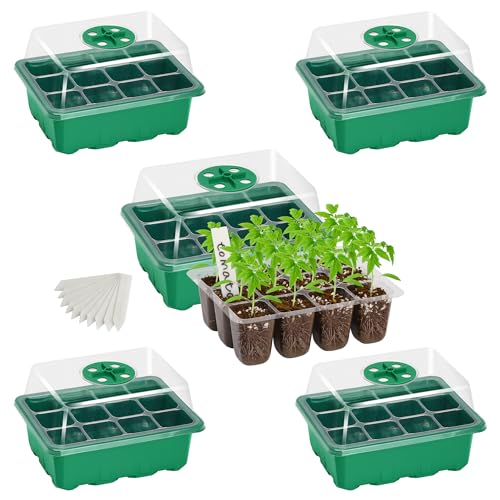
Bonviee offers five 12-cell trays with a clear design for easy seedling monitoring. The adjustable vents help regulate temperature and humidity, and the trays are noted for heat-mat compatibility. This kit is suitable for gardeners who want a compact, observable setup with simple environmental control for germination success.
Best for: Small-space setups and beginners who want clear visibility and straightforward climate control. Caution: The compact 12-cell-per-tray design means more frequent reseeding if you grow many varieties.
Gardzen 30 Pack 6-Cell Seed Starter Tray
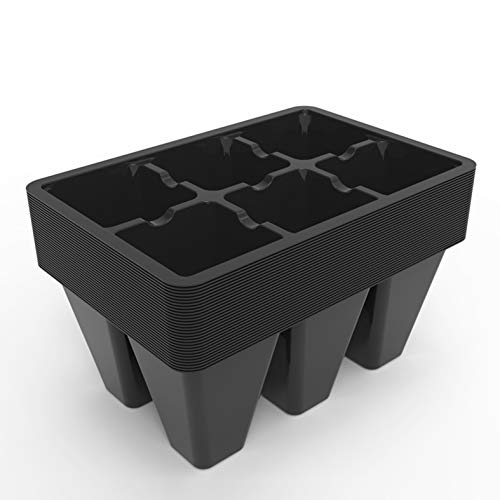
Gardzen’s tray set provides six-cell cells with bottom drainage holes and top guide channels to ensure even water distribution. The material is described as durable, making the tray a reliable option for ongoing seed starting. The compact 5.4 x 3.7-inch footprint helps maximize a small indoor space for starting herbs, flowers, or vegetables.
Best for: Gardeners who want a sturdy, economical option with reliable drainage and an easy-to-clean design. Limitation: Fewer cells per tray may require more units for large seed runs.
Buying Guide: Key Purchase Considerations
- Cell count vs. space: Higher cell counts maximize space efficiency, but require more storage and transplanting work. Choose a setup that fits your available growing area.
- Material and sustainability: Biodegradable pots reduce transplant shock but may need careful moisture management. Reusable plastic options save money over time but require cleaning between seasons.
- Drainage and humidity control: Trays with bottom drainage holes and adjustable domes help prevent overwatering and maintain consistent moisture for germination.
- Transplant ease: Pop-out cells or soft-root-friendly materials reduce root disturbance during transplanting, promoting stronger seedlings.
- Observability: Clear lids or transparent trays allow easy monitoring of root and shoot development without disturbing plants.
- Compatibility with heat mats: If using heat mats, ensure trays are rated for higher temperatures to avoid warping or damage.
Frequently Asked Questions
- What are the main advantages of foam seed starter trays?
They are lightweight, transfer easily, and provide consistent moisture distribution in many designs. - Are biodegradable seed pots better than plastic trays?
Biodegradable pots reduce transplant shock and add organic matter, but may require more frequent moisture checks. - How many cells should I start with for a new garden?
Start with a mix of 24 to 144 cells depending on how many varieties you plan and your available space. - Can I reuse seed starter trays after germination?
Reusable trays can be rinsed and used again; some biodegradable options are designed to be planted directly into soil. - What should I consider when choosing a humidity dome?
Look for adjustable vents and a clear design to monitor seedling growth without disturbing the environment. - Do these trays support heat mats?
Many do, but verify material tolerance and manufacturer guidelines to prevent warping.