Find the right floating stock tank heater to keep water unfrozen for livestock in cold weather. This guide covers five reliable options, highlighting who each product is best for, why it stands out, and any limitations. Ideal buyers include ranchers, horse owners, and livestock keepers needing safe, energy-efficient de-icing. A quick comparison table follows to help you choose at a glance.
| Product | Best For | Key Benefit |
|---|---|---|
| Pixol 1800W Immersion Heater | Outdoor campers and livestock keepers needing fast heating | Thermostat with GFCI protection for safety |
| Relaxweex 500W Floating Heater | Small stock tanks and ponds | Multiple wattage options, compact design |
| Farm Innovators H-418C | Versatile floating or submersible use | Thermostatically controlled, cast aluminum |
| K&H Stock Tank Deicer | General livestock water needs | Safety cage and cord clip included |
| Allied Precision 7521 | Durable, surface-floating deicer | Rugged buoyant enclosure and stainless heating element |
Notes: This article uses product features and stated designs to guide selection. Each option has distinct strengths in safety, durability, and ease of use. Consider tank size, expected winter temperatures, and whether you prefer floating, submersible, or dual-use devices when choosing.
Pixol 1800W Immersion Heater
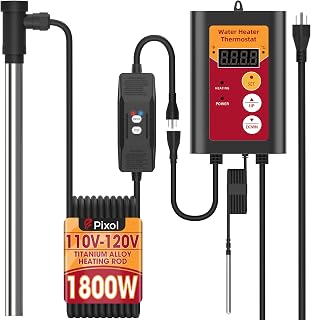
Best for: Outdoor enthusiasts and livestock caretakers who need rapid heating with enhanced safety. This model includes a thermostat and GFCI protection, supporting fast warm-up in buckets or stock tanks while minimizing electrical risk. A potential limitation is its larger 1800W draw, which may require a dedicated outlet.
Relaxweex 500W Floating Heater

Best for: Smaller tanks or tight spaces where a lower-wattage heater is appropriate. Its floating design provides simple use, and the selectable wattage helps balance heat with energy use. Limitation: lower power means slower de-icing in very cold conditions.
Farm Innovators H-418C Floating & Submergible De-Icer

Best for: Users needing versatility between floating and submergible use. The cast aluminum construction supports efficient heating and safer operation. It includes automatic thermostatic control to run only when necessary. Caution: Only use as directed to prevent icing or overheating in larger tanks.
K&H Stock Tank Deicer, Pond Heater

Best for: Livestock owners who want a straightforward floating or submersible heater with a protective cage and cord clip. The automatic thermostat reduces energy use by turning on only when water risk exists. Consider availability of compatible tanks and ensure cage fits your setup.
Allied Precision 7521 Floating 1,500W De-Icer

Best for: Those who want a robust, buoyant enclosure that keeps the de-icer at the water surface. The stainless steel heating element resists rust and corrosion. Limitation: Some environments may require extra protection against debris in rough weather.
Buying Guide: Key Considerations for Floating Stock Tank Heaters
- Tank compatibility: Check whether the heater is designed for floating use, submersible use, or both. Some models include adaptable features or cages.
- Power and heating needs: Higher wattage provides faster de-icing but may require a dedicated circuit. Consider tank size and climate to select the right wattage.
- Thermostat and automatic operation: Thermostatic controls improve energy efficiency by turning the heater off when water is warm enough and on when it risks freezing.
- Durability and materials: Cast aluminum and stainless steel elements resist corrosion in damp outdoor conditions. Enclosures add protection in exposed locations.
- Safety features: Look for GFCI protection, overheat prevention, and stable mounting options to protect both livestock and equipment.
- Ease of installation and maintenance: Floating designs should be simple to position; submersible units may require more care during cleaning and placement.
FAQ
- What is the difference between floating and submersible stock tank heaters?
Floating heaters stay on the water surface and are easy to reposition. Submersible heaters are placed beneath the surface for direct heating and may require a float mechanism or cage for safety.
- Can I use a stock tank heater in very cold climates?
Yes, but select a model with higher wattage or automatic thermostat control to ensure reliable operation in freezing temperatures.
- Do I need a dedicated circuit for these heaters?
Many floating heaters draw substantial power. Check your outlet rating and consider a dedicated circuit or outlet, especially for 1500W or higher units.
- Are there safety accessories I should use?
Yes. A protective cage, cord clips, and, where applicable, GFCI protection help prevent accidents and electrical hazards in livestock areas.
- How do I choose the right wattage for my tank size?
For small tanks, a 100–500W heater may suffice. For larger stock tanks, 750–1500W provides faster de-icing. Always match wattage to tank volume and climate.
- What maintenance is required for these heaters?
Regularly inspect the power cord, housing, and heating element area for wear. Clean debris from the water surface to prevent clogging and ensure consistent heating.