Answer: A dethatcher-plug aerator combo helps loosen compacted soil while removing cores, promoting better air, water, and nutrient flow to grass roots. This guide highlights five solid options that fit common American lawns, with clear pros, best-use cases, and practical cautions. Ideal buyers include DIY homeowners, mid-size lawn caretakers, and those needing easy-to-transport equipment for seasonal lawn maintenance.
Summary of chosen products:
| Product | Best For | Key Benefit | Possible Limitation |
|---|---|---|---|
| Agri-Fab 48 In Tow Behind Lawn Plug Aerator | Large lawns, tractor owners | Deep 3-inch core plugs for strong root growth | Requires vehicle hitch |
| Agri-Fab 40 In Tow Behind Lawn Plug Aerator | Medium lawns, efficiency seekers | 40-inch wide coverage for faster aeration | Less deep cores than larger model |
| Bigwish 2-in-1 Lawn Aerator Tool | Budget buyers, multi-task users | Two heads: spike and plug core in one tool | Manual operation, stamina needed |
| Jardineer Core Aerator Lawn Tool | Comfort-focused users | 5″ deep plugs, ergonomic triangular handle | Manual effort required |
| AUTOSAVER88 40″ Tow Plug Aerator | Weight-tunable depth control | Adjustable tray for added weight and adjustable handle | Assembly and setup needed |
Agri-Fab 48 In Tow Behind Lawn Plug Aerator
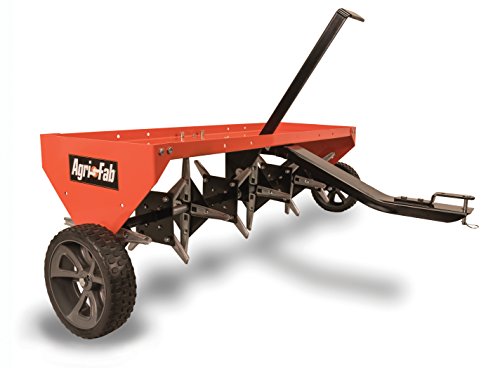
Best for large lawns and tractor users who need deep core aeration. Features include deep soil aeration to 3 inches, improving airflow, water absorption, and nutrient penetration. The design supports stronger root development and a thicker lawn appearance. It also offers smooth operation with flat-free tires and a cantilever transport handle for tractor-seat control. Choose this if you have a compatible tractor hitch and want maximum deep-core impact in one pass.
Who it’s best for: homeowners with sizeable lawns and a tractor setup seeking deep, long-lasting soil channels. Limitation: requires tractor and hitch compatibility; setup and hauling weight can be higher than manual tools.
Agri-Fab 40 In Tow Behind Lawn Plug Aerator
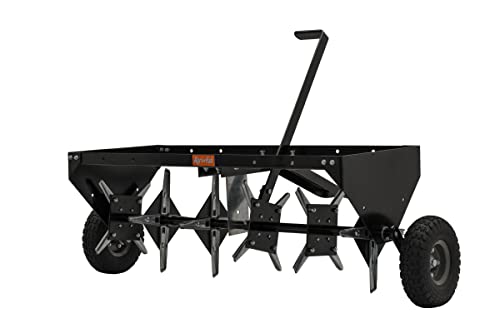
Best for mid-sized lawns where efficiency and coverage matter. This model provides a 40-inch working width with galvanized coring knives to remove soil plugs, promoting healthier turf through improved root health and nutrient exchange. The single-lever transport handle facilitates easy raising and lowering, and the unit folds for compact off-season storage. Choose this if you want a balance between coverage and depth without going to the largest model.
Who it’s best for: owners with medium-to-large lawns seeking efficient aeration. Limitation: cores may not reach as deep as larger models; manual handling still involved during operation.
Bigwish 2-in-1 Lawn Aerator Tool

Best for a flexible, budget-friendly solution. This tool combines two heads: a spike aerator for looser soil and a plug core head for deeper core removal. The interchangeable heads let you switch between aeration styles as lawn conditions change. An adjustable handle increases comfort during use, and the ergonomic design supports better balance and stronger downward force. Choose this if you want versatility and a single tool that covers multiple aeration needs.
Who it’s best for: DIYers who want a two-in-one tool without purchasing multiple devices. Limitation: manual operation requires physical effort; may not match powered tow-behind performance on very large lawns.
Jardineer Core Aerator Lawn Tool

Best for users seeking deep cores with ergonomic handling. It removes 5-inch soil plugs to create channels for water, oxygen, and nutrients, promoting lush grass growth. The upgraded triangular handle reduces fatigue and improves leverage, while non-clogging hollow tines minimize maintenance interruptions. Choose this if you prioritize deep aeration and user comfort on larger or compacted lawns.
Who it’s best for: gardeners needing deeper core aeration with a comfortable grip. Limitation: manual operation means more effort; may be slower on very large areas compared with tow-behind options.
Jardineer Lawn Aerator Core Tool With Tray

Best for tidy-up enthusiasts who want minimal cleanup after core removal. This model includes a built-in collection tray that catches soil plugs as they’re ejected, keeping the yard cleaner and saving extra raking. It digs 4-inch deep cores for effective drainage and root development. Choose this if you want a tidier aeration process and easier post-aeration cleanup.
Who it’s best for: gardeners who value cleanliness and efficiency in core removal. Limitation: manual effort required; tray capacity may be limited for very large jobs.
AUTOSAVER88 40″ Tow Plug Aerator

Best for adjustable depth control and towing convenience. This tow-behind aerator features 24 steel tines capable of reaching up to 3 inches deep. A weight tray supports up to 150 pounds for deeper penetration, and a secure locking mechanism maintains stability during operation. A corrosion-resistant coating adds durability for outdoor use. Choose this if you want customizable depth and straightforward towing across varied terrains.
Who it’s best for: lawn care setups needing adjustable depth and the ability to add weight for deeper cores. Limitation: heavier unit may require more powerful towing and maintenance checks.
Buying Guide: Key Considerations For Choosing A Dethatcher Plug Aerator Combo
- Lawn size and equipment compatibility: Tow-behind models require a compatible tractor or hitch. Manual models suit smaller lawns or tighter spaces.
- Aeration depth and core size: Deeper cores (3-5 inches) improve deep root growth but demand more effort or power. Consider core diameter and tine design (hollow vs solid).
- Head type and versatility: Spike heads loosen soil; plug cores relieve compaction for nutrient penetration. Some tools offer interchangeable heads for year-round use.
- Weight and stability: Weight trays and adjustable transports help achieve consistent depths on uneven ground. Rust-resistant coatings extend life.
- Storage and maintenance: Foldable units and built-in trays simplify storage and cleanup. Check for clogging tendencies and tine durability.
- Ease of use: Ergonomic handles, vertical operation recommendations, and minimal maintenance contribute to long-term satisfaction.
- Budget vs. performance: Manual options are cheaper upfront but require more labor; tow-behind options provide efficiency at higher initial cost.
- Best-use scenarios: For large, mature lawns with Tractor access, tow-behind aerators provide the fastest results. For small-to-medium lawns or renters, 2-in-1 or manual models offer flexibility and control.
Frequently Asked Questions
- What’s the difference between spike aeration and plug aeration?
– Spike aeration loosens soil without removing cores, which may help with momentary airflow but can still compact soil over time. Plug aeration removes soil cores to relieve compaction and promote deeper root growth. - Do I need a dethatcher along with a plug aerator?
– A dethatcher removes thatch buildup; a plug aerator targets soil compaction. Some combo tools provide both capabilities, but many users pair an aerator with a separate dethatcher for best results. - Is deeper always better for aeration?
– Deeper cores improve root access in dense soils, but the best depth depends on soil type and lawn condition. Start with moderate depths and test lawn response. - Can I use these tools on a regular lawn care schedule?
– Yes, aeration is most effective seasonally. In many regions, fall or spring aeration aligns with primary growth periods, but consult local guidelines. - What maintenance is required after aeration?
– Clean exposed tines, oil moving parts if needed, and store in a dry place. For tow-behind models, ensure hitch connections remain secure and tires are properly inflated if applicable. - What should I consider about depth control and weight?
– Depth control helps adapt to soil moisture and type. Weight trays increase penetration in hard soil but add to unit weight, affecting towing and handling.