Choosing the right concrete sealer for a pond requires evaluating waterproofing strength, UV stability, breathability, and flexibility to handle temperature changes. The following picks balance penetrating protection with durable surface finishes, helping to guard against leaks, cracking, and moisture intrusion around pond walls and liners. Read on to compare these options and find the best fit for outdoor water features.
| Product | Brand |
|---|---|
| Liquid Rubber Basement & Foundation Sealant (1 Gallon) | Liquid Rubber |
| Siloxa-Tek 8500 Ready to Use (1 Gallon) | Ghostshield |
| MasonryDefender Concrete Sealer (1 Gallon) | MasonryDefender |
| Armor AR350 Low Gloss Wet Look Sealer (5 Gallon) | Foundation Armor |
| BEEST CS-9500 Ready to Use (1 Gallon) | BEEST |
Liquid Rubber Basement & Foundation Sealant

Liquid Rubber’s foundation sealer creates a permanent waterproof membrane suitable for basement waterproofing, foundation leak repair, and shower liners. Its high elasticity—up to 900% elongation—helps prevent leaks by accommodating movement and temperature shifts. Designed to serve as a complete basement waterproofing system, it outperforms traditional paints and sealers by sealing against active moisture while remaining compatible with self-leveling concrete. It also functions as a flexible crack filler, offering strong adhesion to concrete, masonry, wood, metal, and other surfaces for DIY projects both indoors and outdoors.
BEEST CS-9500 Ready to Use Silane/Siloxane Sealer

CS-9500 is a contractor-grade penetrating sealer that uses silane/siloxane chemistry to provide a natural finish without film formation. It penetrates deep to repel moisture, resisting weathering, salts, and freeze-thaw cycles. The low-VOC formula is breathable, maintaining the surface’s natural appearance while offering 30–50% more resistance than many competing sealers. It’s designed for concrete, brick, and masonry, and is ideal for outdoor pond edges, patios, and driveways where a non-slip, long-lasting protection is desired.
MasonryDefender Concrete Sealer for Driveways & Patios
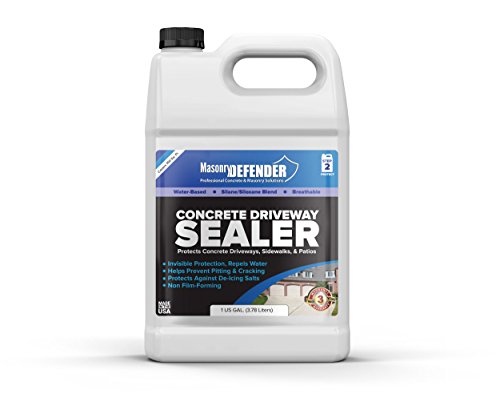
Designed as a clear penetrating sealer, MasonryDefender protects concrete and masonry surfaces without altering color. It creates a water-repellent barrier that beads water while allowing the surface to breathe, helping to prevent cracking, efflorescence, and surface damage from moisture. It’s suitable for driveways, sidewalks, and patios adjacent to ponds, where long-term protection against moisture and salts is valuable for maintaining structural integrity and appearance.
Armor AR350 Low Gloss Wet Look Sealer

Armor AR350 is a professional-grade solvent-based acrylic sealer that provides a low-gloss, wet-look finish. It’s designed for exterior concrete and pavers, offering dramatic color enhancement while delivering durable protection against abrasion, UV exposure, and moisture. The sealer forms a strong barrier against water intrusion around pond edges and deck areas, helping to preserve color and reduce staining from environmental exposure. It’s suitable for both new and previously sealed surfaces.
Liquid Rubber 1 Gallon Basement & Foundation Sealant

This variant provides the same flexible, waterproof membrane with 900% elongation for sealing basements, foundations, and other concrete substrates. It adheres well to concrete, masonry, and metal, making it a versatile option for pond foundations or liner interfaces where flexible, durable protection is needed against leaks and moisture movement. The product emphasizes compatibility with self-leveling concrete and broad substrate adhesion to support DIY pond projects.
Buying Guide: Key Considerations For Pond Projects
- Penetration vs. surface protection: Penetrating sealers guard against moisture intrusion from within the concrete pores, while surface sealers provide a protective film. For ponds, penetrating sealers often offer long-term moisture resistance without changing appearance, whereas surface sealers can enhance color and provide a wet look.
- Breathability: A breathable sealer allows trapped moisture to escape, reducing the risk of moisture-related damage behind the coating. Look for low-VOC formulas that maintain surface aesthetics without forming a non-breathable film.
- Elasticity and movement: Foundations and pond walls experience movement. High-elasticity sealants (like liquid rubber products) help prevent cracks and leaks caused by substrate movement and temperature changes.
- UV and weather resistance: Outdoor ponds require UV-stable sealers to minimize color fading and surface degradation. Silane/siloxane-based sealers often excel here.
- Color and finish: If you want a natural look, choose clear or low-gloss formulas. For enhanced appearance, consider low-gloss wet-look sealers, but ensure they remain non-slip for safety near water features.
- Safety and VOCs: For outdoor use, opt for water-based or low-VOC options when possible to reduce fumes and environmental impact while maintaining performance.
- Maintenance and recoat interval: Some sealers require reapplication every few years, especially in areas with freeze-thaw cycles or high moisture exposure. Review manufacturer recommendations for recoat timing.
- Compatibility with liners and mortars: Confirm the sealer’s compatibility with pond liners, concrete, brick, or stone used around the pond perimeter to avoid adhesion conflicts or surface damage.
Usage Tips And Implementation Notes
- Surface preparation: Clean the area, remove loose material, and ensure the surface is dry before application. Refrain from sealing wet surfaces as moisture can hinder adhesion.
- Application method: Follow product guidelines for brush, roller, or sprayer application. Apply in thin, even coats and avoid pooling to prevent uneven drying or finish.
- Temperature and humidity: Apply sealers within the recommended temperature range and humidity levels. High humidity can slow curing and affect finish quality.
- Test area: For color-enhancing sealers, test on a small inconspicuous area to verify color and sheen before full-scale application.
- Maintenance plan: Keep a record of the product used, application date, and the expected recoat interval to maintain continuous protection around the pond.
These selections provide a range of penetrative and film-forming options suitable for ponds and water-adjacent concrete. When choosing, weigh the need for immediacy of dampness protection, surface aesthetics, and long-term durability under outdoor conditions. Each product listed offers distinct advantages depending on whether the priority is deep penetration, transparent protection, or a lasting wet-look finish.