Answering the common question “What coir mat is best for erosion control?” this guide highlights top coir mat products designed to stabilize soil, promote vegetation, and reduce runoff. The selections below are suited for homeowners, contractors, and landscape professionals tackling hillsides, riverbanks, and coastal shorelines. Each entry explains who it’s best for, why it was chosen, and a practical limitation to consider. A compact buying table follows to compare key specs at a glance.
| Product | Best For | Approx. Coverage | Notes |
|---|---|---|---|
| Sandbaggy Coir Mat – 6.5 ft x 165 ft | Large restoration projects, riverbanks | Over 1,000 sq ft | Very durable; long-term soil retention |
| Sandbaggy Coir Mat – 4 ft x 80 ft | Smaller slopes, residential yards | Over 320 sq ft | Good balance of coverage and handling |
| Sandbaggy Coconut Erosion Control Blanket – 3.75 ft x 120 ft | Moderate slopes, 1:1 stabilization | ≈450 sq ft | Trusted for slope stabilization |
| 4 ft x 60 ft Coconut Coir Mat | Garden beds, embankments | ≈240 sq ft | Natural, biodegradable option |
| Farm Plastic Supply Biodegradable Coir Mat – 6 ft x 164 ft | DOT projects, highways landscaping | ≈984 sq ft | DOT-approved and eco-friendly |
Next, explore detailed product profiles to compare features, best-use scenarios, and limitations. Each section uses practical language to help buyers pick the right mat for their site conditions and vegetation goals.
Sandbaggy Coir Mat 6.5 Ft By 165 Ft For Erosion Control

Product type: erosion-control mat using dense coconut coir fibers. Best for extensive restoration projects on riverbanks, hillside stabilization, and oceanfronts. This mat delivers 2–5 years of soil retention on challenging slopes and edges, outperforming straw blankets in durability. Suitable for homeowners and professionals seeking long-lasting stabilization with vegetation support. Limitations include handling large rolls requiring equipment for unrolling and placement on very steep terrains.
Sandbaggy Coir Mat 6.5 Ft By 165 Ft (Alternative Roll)
Product type: erosion-control mat with large-scale coverage. Best for riverbanks and coastal stabilization where over 1,000 square feet of cover is needed. It reaches up to 2–5 years of soil retention and is more durable than straw blankets. Choose this if you need long-term slope protection and native vegetation support. Limitation: heavier roll size may require equipment for installation in tight spaces.
Sandbaggy Coconut Erosion Control Blanket – 3.75 Ft x 120 Ft
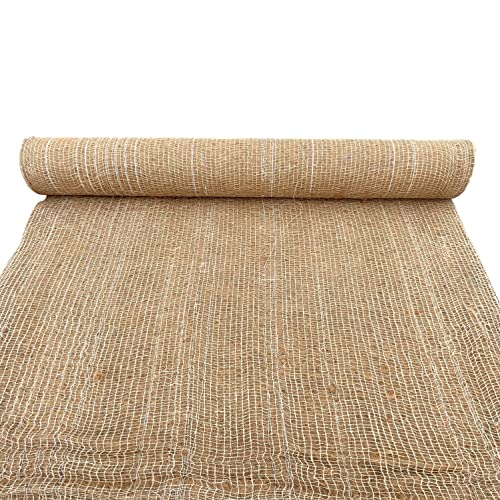
Product type: coconut fiber erosion blanket designed for 1:1 slope stabilization and vegetation establishment. Best for contractors and agencies seeking a proven solution for hillside protection and seed germination support. Benefits include moisture retention and a net-like structure that helps seed growth. Limitation: may require more material management on uneven terrain and more precise installation compared with loose mats.
4ft x 60ft Coconut Coir Mat Erosion Control Blanket

Product type: natural coir netting for slope protection and soil retention. Best for smaller projects, gardens, or embankments where breathable, soil-friendly erosion control is preferred. It supports seed germination, weed suppression, and moisture retention. Limitation: smaller footprint means more seams and potential for gaps on larger slopes; plan for seam alignment to maintain coverage.
Farm Plastic Supply Biodegradable Coir Mat – 6×164

Product type: 6 ft by 164 ft biodegradable coir mat designed for erosion control with prolonged moisture retention. Best for DOT-approved projects and landscape stabilization where eco-friendliness and regulatory compliance are priorities. It offers 2–5 years of protection and supports vegetation growth. Limitation: biodegradability means gradual breakdown; plan for lifecycle management in longer-term projects.
Farm Plastic Supply Biodegradable Coir Mat – 6′ x 164′

Product type: 6 by 164 feet coconut coir mat with Erosion Control Blanket features. Best for sustainable erosion management on slopes, hillsides, riverbanks, and similar sites. It is DOT-approved and promotes healthy vegetation establishment. Limitation: data indicates it is a biodegradable option; ensure project timelines align with material degradation rates.
Buying Guide: Key Considerations For Coir Erosion Mats
- Project scale and coverage: Larger projects require mats with expansive coverage to minimize joints and edges exposed to erosion. Opt for rolls offering 1,000+ sq ft coverage where possible.
- Durability vs. degradability: Coir mats vary by longevity (2–5 years) and biodegradability timelines. Choose based on project duration, site disturbance, and restoration goals.
- Slope and environmental conditions: Steeper slopes and water-edge applications benefit from denser coir fibers and robust netting structures to resist washout.
- Vegetation support: Many options promote seed germination and native vegetation growth. If revegetation is a goal, prioritize mats with good moisture retention and permeability.
- Installation considerations: Large rolls may require equipment for placement. Smaller mats offer flexibility but may need more seams and edge management.
- Regulatory and DOT alignment: For public works, select mats that carry DOT approval or equivalent certifications to meet project specifications.
- Environmental impact: Biodegradable options help reduce long-term waste but may require more frequent replacement in high-flow areas.
Frequently Asked Questions
- What is coir and why is it used for erosion control?
– Coir is coconut fiber used for natural, breathable erosion control mats that support vegetation while stabilizing soil. - How long do coir mats last?
– Longevity typically ranges from 2 to 5 years depending on product and site conditions. - Are coir mats suitable for coastal environments?
– Yes, many are designed for riverbanks and oceanfronts, offering durable protection against wind and water erosion. - Can coir mats help with seed germination?
– Yes, several mats retain moisture and provide a favorable environment for seeds to germinate and roots to establish. - Do I need professional installation for large rolls?
– Larger rolls may require equipment or multiple workers for efficient placement and seam management.