For indoor gardening, choosing the right CFL lighting is essential to support robust growth and healthy yields. This guide highlights five reliable CFL-based options that deliver full-spectrum or daylight-balanced light suitable for various plant stages. Each product is chosen for energy efficiency, light output, and compatibility with common indoor setups. Explore practical details, compare features, and discover key considerations to help you select the best CFL grow light for your space.
| Product | Brand | Key Feature |
|---|---|---|
| SunBlaster SL0900151 13W Set | SunBlaster | 4 CFL bulbs, 6,400K, 900 lumens each |
| Agrobrite FLC26D 26W | Hydrofarm | 26W, 6400K, 130W incandescent equivalent |
| EMART Full Spectrum 105W CFL | EMART | 2-pack, 5500K daylight spectrum |
| Xtricity 150W Eq. CFL Bulb | Xtricity | 40W replacement, 2650 lumens, 4100K |
| SANSI Grow Lights LED (not CFL) | SANSI | Full spectrum LED with secondary optical design |
SunBlaster 13W CFL Grow Light Set

The SunBlaster set includes four 13-watt CFL bulbs with a color temperature around 6,400K, designed to replicate natural sunlight indoors. This kit emphasizes energy efficiency and compact design, delivering about 900 lumens per bulb. It is suited for small-to-moderate indoor gardens, seed starting, and year-round growth in homes or apartments. The included bulbs help support vegetative growth and can be paired with basic reflectors for improved light distribution.
Agrobrite FLC26D 26-Watt CFL
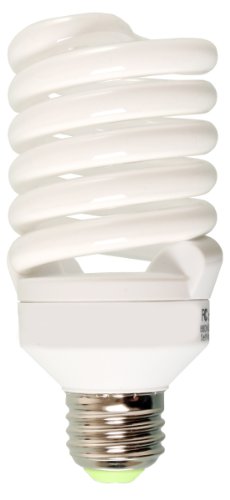
Agrobrite’s 26-watt CFL bulb is a compact spiral with 6400K color temperature, designed to replace higher-wattage incandescent bulbs while lowering energy costs. It provides a bright, full spectrum suitable for seedling development and leafy stages. The unit’s spiral shape helps with heat management, and its UL listing adds a degree of reliability for home setups. This bulb is a practical upgrade for small grow tents, shelves, or desk-side gardening projects.
EMART Full Spectrum 105W CFL (2-Pack)

This EMART two-pack features 105W CFL bulbs with a 5500K daylight spectrum. While marketed for photography lighting, the 105W output and broad spectral blend support various indoor plants during growth and flowering. The bulbs offer a sizable light footprint, suitability for larger plant clusters, and compatibility with common E26 bases. They are a practical option for hobbyists seeking strong light output without complex setups.
Xtricity CFL Bulb 150W Eqv (40W)

The Xtricity 150W equivalent CFL bulb provides 2650 lumens with a 4100K daylight color. It serves as a high-output option for larger setups or areas with limited natural light. As a compact spiral CFL, it fits standard fixtures and supports a variety of growth stages, from early vegetative growth to ongoing plant development. The bulb’s longevity and energy efficiency are notable advantages for budget-conscious indoor gardeners.
SANSI Full Spectrum LED Grow Light

Although not a CFL, the SANSI full-spectrum LED grow light provides a high-PPFD output with secondary optical design to maximize light distribution. It covers the full 400–780 nm spectrum and is designed for seeding and growing in indoor environments. This option appeals to growers seeking efficient LEDs with long lifespan, low heat output, and precise spectral control. It’s a potential alternative when CFL performance and heat management become limiting factors.
Buying Guide: Key Considerations For CFL Grow Lights
- Light spectrum: For vegetative growth, look for daylight or full-spectrum bulbs around 5000–6500K. Bloom or flowering stages may benefit from mixed spectra including warmer tones.
- Wattage and intensity: Higher-wattage CFLs deliver more light but generate more heat. Match wattage to your growing area size and available ventilation.
- Bulb shape and base: Spiral CFLs fit most fixtures and are common in grow setups. Verify base type (E26/E27) and compatibility with your fixture.
- Lumens and PPFD: Lumens measure perceived brightness; PPFD (photosynthetic photon flux density) better indicates plant-usable light. For compact spaces, prioritize higher PPFD at the canopy level.
- Energy efficiency: CFLs are generally energy-efficient compared to incandescent options, but compare lumens per watt to maximize efficiency.
- Heat management: CFLs produce less heat than high-wattage incandescent bulbs, but adequate airflow and placement are still essential to prevent heat buildup.
- Durability and lifecycle: Look for bulbs with longer rated lifespans and UL listings for safety and reliability in home environments.
- Fixture compatibility: Some grow spaces use fixtures with reflectors or hoods. Ensure bulbs work with your reflector design and mounting.
- Cost of ownership: Consider bulb replacement frequency, energy use, and initial setup cost when evaluating options.
- Mixing wavelengths: For best results, combine multiple bulbs to provide a broader spectral range across growth stages, while avoiding spectral gaps.
These selections illustrate practical CFL options for small-to-medium indoor gardens, seed starting, and leafy plant growth. When choosing, consider your space, plant type, and growth goals. If heat, fixture compatibility, or spectrum flexibility are priorities, LED alternatives can complement or replace CFLs for extended performances.