If you’re growing starting seeds or transplanting seedlings, biodegradable peat pots provide a simple, eco-friendly option. These 3.15″ and 4″ pots support healthy root growth and reduce transplant shock by letting you plant the pot directly into the soil. This guide highlights five reliable options, who they’re best for, and practical buying considerations.
Summary table of selected products:
| Product | Size | Count | Material | Best For |
|---|---|---|---|---|
| JNYONG 60 Packs 3.15 Inch Peat Pots | 3.15 inches | 60 | Biodegradable pulp | Small starter trays, mixed seed varieties |
| JERIA 50-Pack 3.15 Inch Peat Pots | 3.15 inches | 50 | Biodegradable pulp | Herbs, flowers, compact germination |
| JNYONG 60 Packs 4 Inch Peat Pots | 4 inches | 60 | Biodegradable pulp | Larger seedlings, faster growth |
| JERIA 200-Pack 3.15 Inch Peat Pots | 3.15 inches | 200 | Biodegradable pulp | Seed starting at scale, community garden prep |
| Dalzom 60Pcs 3.1” Peat Pots | 3.1 inches | 60 | Biodegradable pulp | Seedling trays, transplant-friendly |
JNYONG 60 Packs 3.15 Inch Peat Pots

Best for beginners and small-space growers. This package includes 60 peat pots with drainage holes and 50 plant labels, plus 100% biodegradable materials from recycled pulp. Pots are 3.15 inches in diameter, a standard starter size that supports a wide range of herbs and vegetables. Choose this if you want an affordable, all-in-one starter kit for seed germination and labeling.
Who it’s best for: hobbyists new to seed starting or gardeners needing many pots per batch. Limitation: labels are included but may require additional tagging for long-term projects.
JERIA 50-Pack 3.15 Inch Peat Pots

Best for versatile seed starting in a compact kit. This pack offers 50 peat pots with 50 plant labels, sized at 3.15 inches to accommodate a broad range of seedlings, including herbs and flowering annuals. The pots are biodegradable and designed to promote healthy root systems. Opt for this if you value labeling convenience and a straightforward germination setup.
Who it’s best for: home gardeners and urban growers focusing on a moderate starter batch. Limitation: fewer pots than some bulk options.
JNYONG 60 Packs 4 Inch Peat Pots
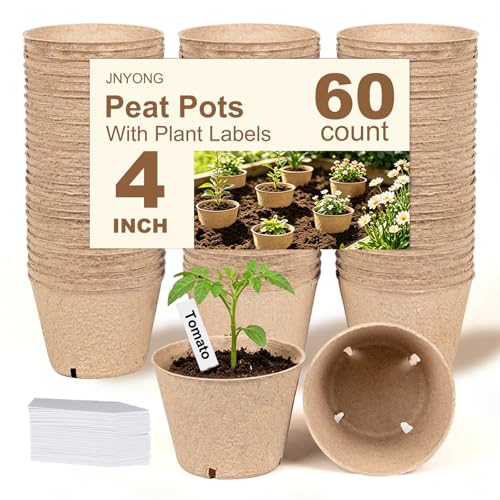
Best for larger seed starts and transplant-ready plants. The 4-inch pots provide more room for root development, with 60 units and 50 plant labels. They maintain drainage with four holes and are fully biodegradable. Choose this if you’re starting robust seedlings or planning earlier transplanting windows.
Who it’s best for: growers needing bigger pots for vigorous seedlings. Limitation: bulkier size may require more potting medium and space.
JERIA 120 Packs 3.15 Inch Peat Pots
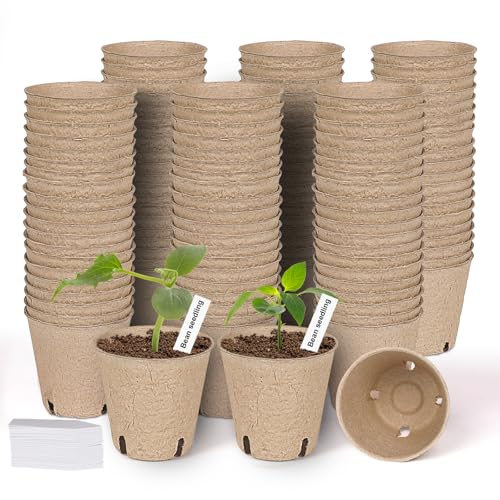
Best for large-scale germination and school or community garden projects. This option includes 120 peat pots with 100 plant labels, each 3.15 inches in diameter, with four drainage holes for healthy soil moisture management. The pots are biodegradable and easy to transplant. Use this when you need a high-volume, consistent starter kit.
Who it’s best for: seed banks, classrooms, or large home gardens. Limitation: larger order may require more labeling management and storage space.
JERIA 200-Pack 3.15 Inch Peat Pots

Best for large-scale commercial or community garden seed starting. This 200-pack includes plant labels and 3.15-inch pots with four drainage holes. Biodegradable and designed for direct transplant into soil, reducing root disturbance. Pick this for bulk projects that require consistent size and materials.
Who it’s best for: large growers and educational programs. Limitation: higher initial count may be unnecessary for small households.
Dalzom 60Pcs 3.1” Peat Pots

Best for compact spaces and easy transplanting. The Dalzom set includes 60 peat pots sized at 3.1 inches with 60 plant labels. Made from recycled pulp and fully biodegradable, these pots are designed to decompose in soil, enriching the ground as plants grow. Choose this if space is limited but you still want reliable biodegradable options.
Who it’s best for: small studios or balconies with limited space. Limitation: slightly smaller diameter may limit root capacity for larger plants.
Buying Guide: Cardboard/Peat Pots For Planting
What size should you choose? For most herbs, greens, and small flowers, 3.15-inch pots are a versatile standard. For larger seedlings or faster root establishment, 4-inch pots offer more space. If you’re buying in bulk for a classroom or community garden, consider 120–200 count packs to minimize reordering.
What about materials? Biodegradable peat pots made from recycled pulp mimic natural soil conditions and are designed to break down when planted. Look for pots with multiple drainage holes to prevent waterlogging and root rot.
Are plant labels included? Many sets include plant labels to help organize seeds. If not, plan to buy inexpensive labels or use small stakes for clarity.
How should you pot and transplant? Fill with a standard seed-start mix. After germination, plant the entire pot into the ground or larger container to avoid root disturbance, then water thoroughly. Ensure soil remains evenly moist but not soggy during establishment.
What if you’re growing multiple plant types? Group pots by crop type and ensure labeling reflects variety to avoid cross-contamination or mix-ups during transplanting.
Frequently Asked Questions
- Are peat pots truly biodegradable? Yes, peat pots made from recycled pulp are designed to biodegrade when planted in soil, helping nutrient cycling as plants grow.
- Can I transplant the pots with seedlings into the ground? Yes. The pots are designed for direct transplant without removing the seedling from the pot, reducing root disturbance.
- What size pot should I start with for vegetables? For most vegetables, 3.15″ is suitable for early seedling stages; switch to larger pots like 4″ if plants need more root space.
- Do these pots come with labels? Many sets include plant labels; check the package details to confirm included labels and quantity.
- What are the key advantages of biodegradable pots? They simplify transplanting, reduce waste, and support sustainable gardening by returning nutrients to the soil.
- Are these pots suitable for indoor use? Yes, they work well for indoor seed starting and controlled environments before outdoor planting.