When choosing Bermuda grass seed for hay, look for rapid germination, drought tolerance, and strong, forage-ready growth. This guide highlights five top options ideal for hay production and rotational grazing, with clear reasons for who each product suits best. The selections emphasize perennial, high-yielding varieties that perform well across common American pastoral environments. Use this overview to compare establishment speed, climate adaptability, and overall forage potential for livestock hay.
Summary table of selected products:
| Product | Best For | Key Benefit | Notes |
|---|---|---|---|
| Outsidepride Forage Bermuda Seeds | Farmers and ranchers needing early forage | Early spring growth, multiple cuttings | Yellow Jacket coating for better germination |
| Outsidepride Chilly Verde Bermuda Grass Seed | Pasture and hay in mixed climates | Winter hardy, drought tolerant | Tall, broad leaves; aggressive spreading |
| Pennington Bermudagrass Grass Seeds | Lawn-to-pasture transitionists | Improved cold tolerance, deep roots | Thick, aggressive spread |
| Scotts Turf Builder Bermudagrass Seed (8 lb) | New lawns and overseeding | 3-in-1 formula: seed, fertilizer, soil improver | Strong drought resistance |
| O.M. Scott Bermudagrass Seed | Hot southern climates | Dense growth, drought tolerance | 3-in-1 seed mix with soil improvement |
Outsidepride Forage Bermuda Seeds

Best for: Farmers seeking early forage and multiple harvests. This perennial Bermuda offers quick spring green-up, enabling earlier grazing or hay cutting. It supports several cuttings every 4-6 weeks, delivering abundant forage for cost-efficient production. Its drought tolerance and broad climate adaptability make it suitable for diverse soils and regions where Bermuda is traditionally grown.
Why selected: The seed’s Yellow Jacket coating improves germination under limited irrigation, enhancing establishment efficiency. The coating also supports better mass growth, contributing to consistent hay supply across a growing season.
Limitations: While highly adaptable, results vary with soil quality and irrigation; expect best results with adequate moisture during early establishment. For hay-focused operations, monitor forage yield in extreme heat to optimize cutting intervals.
Outsidepride Chilly Verde Bermuda Grass Seed

Best for: Pastures that require winter hardiness and strong drought tolerance. Chilly Verde is a tall, warm-season perennial that forms dense sod and spreads aggressively by stolons and rhizomes, supporting consistent hay production and grazing across seasons.
Why selected: Its winter hardiness broadens forage windows, while the wide leaves promote substantial forage yield. This variety adapts to a wide pH range (4.5–8.0) and a variety of soils, reducing establishment risks in mixed pastures.
Limitations: Growth rate can be influenced by seasonal heat and moisture swings. It may require careful grazing management early on to avoid overgrazing during rapid establishment.
Pennington Bermudagrass Grass Seeds for Lawn

Best for: Lawn-to-pasture transitions where thick, aggressive spread is desired for hay fields. This variety emphasizes deep roots and cold tolerance, making it a versatile option for multiple climates while supporting dense turf-like hay stands.
Why selected: The seed’s ability to self-spread aggressively helps establish robust forage coverage quickly, which is valuable for hay production without constant reseeding. It’s well-suited for operations seeking resilient stands that endure grazing pressure.
Limitations: Extremely dry conditions can slow establishment; adequate moisture after planting is important to maximize germination rates and early growth.
Scotts Turf Builder Bermudagrass Seed (8 lb)
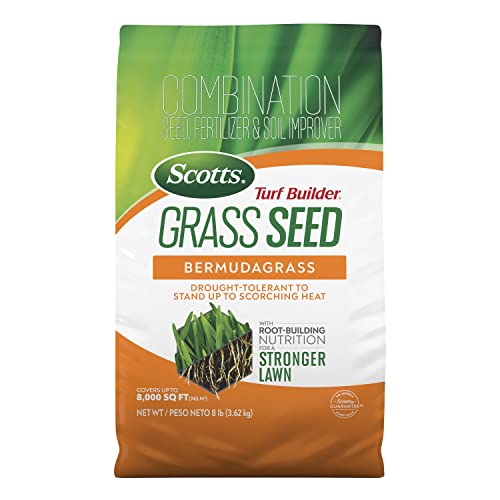
Best for: New lawns and overseeding with a focus on drought resistance and deep rooting. This 3-in-1 product combines seed, fertilizer, and soil improver for a streamlined establishment process, suitable for hay production operations seeking consolidated inputs.
Why selected: The integrated fertilizer and soil improver support faster root development and a stronger stand under heat stress, which can translate into more reliable hay harvests in hot climates.
Limitations: Designed primarily for lawn use; results may vary in pure hay pastures, and site-specific soil care is still essential for optimum forage yield.
O.M. Scott Bermudagrass Seed

Best for: Hot southern climates where drought tolerance and dense growth are critical for hay yield. The 3-in-1 seed mix combines seed, fertilizer, and soil improver, crafted to support robust establishment in challenging conditions.
Why selected: California-grown seed varieties paired with soil-improving components can help establish resilient stands for late-season forage production. This option emphasizes safety for use around people and pets when used as directed.
Limitations: Doesn’t replace tailored grazing plans; ensure adequate seed-soil contact and moisture during the establishment phase for best results.
Buying Guide: Bermuda Grass Seed For Hay
- Climate and soil compatibility: Choose a variety that matches your region’s heat, drought patterns, and soil pH range. Warm-season types thrive in hot summers but may need winter protection in cooler zones.
- Forage yield potential: Look for seeds marketed for early growth and multiple cuttings, especially if hay production is time-sensitive.
- Germination aids: Seed coatings such as Yellow Jacket can improve germination under limited irrigation and enhance early establishment.
- Establishment requirements: Some blends include fertilizer or soil improvers. Consider whether you want a single-step product or a seed-and-input approach.
- Grazing management: For hay-focused operations, select varieties with dense sod formation and rapid regrowth to maximize harvest intervals without overgrazing.
- Seed origin and reliability: Favor established brands with regional adaptability and known cold- or heat-tolerance traits for consistent yields.
Frequently Asked Questions
- What Bermuda grass seed is best for hay production? Look for high-yield, drought-tolerant, forage-focused varieties with strong establishment traits and multi-cut potential.
- Can Bermuda grass grow well in cool seasons? Some varieties have improved cold tolerance, but Bermuda generally performs best in warm-season climates; consider winter-hardier options for shoulder seasons.
- Do seed coatings improve germination? Yes, water-absorbent coatings can enhance germination rates and early growth, especially under limited irrigation.
- Should I choose a 3-in-1 seed product? If you prefer a simplified approach, 3-in-1 products provide seed, fertilizer, and soil improvement, but verify nutrient needs for your soil.
- Is overseeding better than replanting? Overseeding can help establish dense stands in existing pastures, but successful results depend on current soil health and management practices.
- How soon can I harvest hay after sowing? This varies by variety and conditions, but early spring green-up is common in forage-focused Bermuda types with good moisture.