Find the right walk-behind aerator to loosen soil, improve drainage, and boost lawn health. This guide focuses on sturdy, tow-behind core aerators that pair with common lawn tractors or riding mowers. Ideal for medium to large lawns, these picks support deeper core penetration, weight-assisted stability, and wide working widths to cover more ground per pass. The top products cater to different yard sizes and soil conditions, helping you choose the best fit for your needs.
| Product | Working Width | Core Depth |
|---|---|---|
| VEVOR 32-Inch Tow Behind Core Aerator | 32 inches | Up to 2 inches |
| VEVOR 40-Inch Tow Behind Core Aerator (Heavy Duty 150 lbs) | 40 inches | Up to 2 inches |
| Agri-Fab 48-Inch Tow Behind Lawn Plug Aerator | 48 inches | Up to 3 inches |
| Agri-Fab 40-Inch Tow Behind Lawn Plug Aerator | 40 inches | Up to 3 inches |
| Suchtale 40-Inch Tow Behind Spike Aerator | 40 inches | Up to 2 inches |
Note: Each option is best for homeowners with walk-behind or lawn tractors. If you have very compacted soil or large areas, consider models with wider working widths and higher weight capacities to maximize efficiency.
VEVOR Tow Behind 32-Inch Aerator

Best for mid-size lawns and tractor-towed use. This model uses 32-inch coverage with coring tines that reach up to 2 inches deep to break through compacted soil. The weight tray supports up to 100 pounds, helping tines press deeper for uniform cores. Strap slots on the tray allow secure placement of sandbags or weights while towing. Choose this if you want faster coverage without sacrificing depth in average soil conditions. Caution: lighter setups may underperform on very hard clay soils without added ballast.
VEVOR 40-Inch Tow Behind Core Aerator (150 lbs)
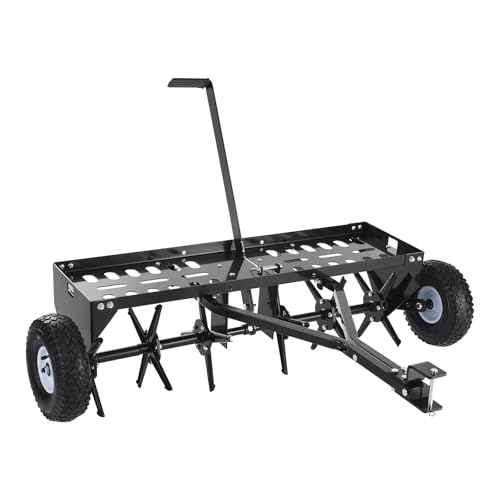
Best for larger lawns or spaces needing rapid coverage. This 40-inch aerator expands the working width to cover more ground per pass while reaching up to 2 inches deep cores. The heavier 150-pound weight capacity improves stability and core depth, supporting more consistent aeration across uneven ground. Opt for this if you have a riding mower or lawn tractor and want fewer passes with more thorough results. Limitation: heavier equipment may require more careful towing in uneven terrain.
Agri-Fab 48-Inch Tow Behind Lawn Plug Aerator
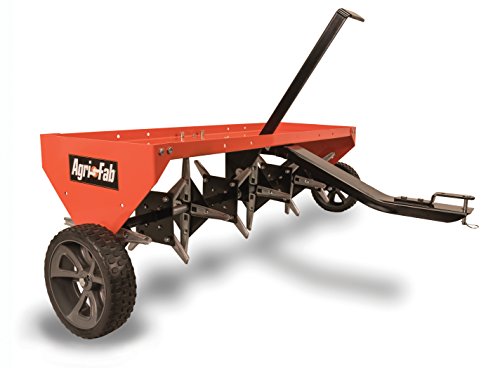
Best for expansive lawns needing deep soil plugs. This model pulls plugs up to 3 inches deep with its galvanized knives and wide 48-inch coverage, enabling faster treatment of large areas. The universal hitch makes it compatible with many lawn tractors, and flat-free tires ease transport. Choose this if you require deeper penetration and broad reach; avoid if you have very tight turning spaces or small yards where a 48-inch width may be impractical.
Agri-Fab 40-Inch Tow Behind Lawn Plug Aerator
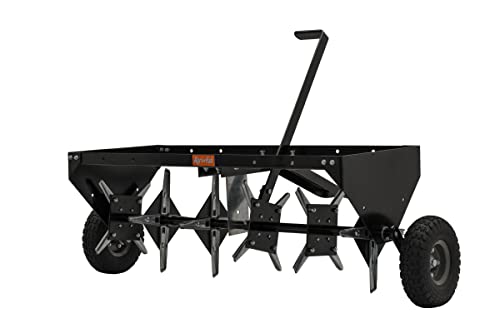
Best for medium to large lawns with a balance of efficiency and cost. The 40-inch width suits many lawns, and galvanized coring knives support reliable plug removal up to 3 inches deep. The single-lever transport handle simplifies raising and lowering during operation. This model provides a strong combination of depth and ease of use for typical suburban yards. Limitation: may require more passes on very large or highly compacted areas compared to wider models.
Suchtale 40-Inch Spike Aerator

Best for soil penetration with independent tines. The 10-star-shaped steel tines reach up to 2 inches deep and rotate to maintain coverage during turns, reducing missed spots. The all-steel construction and reinforced frame support durability in tough soils. Pick this if you want a robust spike design with reliable turning coverage. Caution: spike aerators do not remove soil cores, which may be less effective for thatch-heavy lawns compared to core aerators.
Buying Guide
What size lawn do you maintain?
For compact or irregular lawns, a 32–40 inch model provides good balance between maneuverability and coverage. For large properties, 40–48 inch models cover more area per pass, saving time.
How deep should aeration go?
Most lawns benefit from core depths of 2–3 inches in compacted soil. If your soil is particularly dense, select models claiming deeper cores and higher weight capacity to press tines more effectively.
What about weight and stability?
Heavier weight capacities (e.g., 120–150 lbs) improve tine penetration and uniform cores, especially in dry or hard ground. Weight trays and strap slots help secure ballast for consistent results.
Core vs spike aeration?
Core aerators remove plugs and are generally better for reducing compaction and improving soil health. Spike aerators open channels but do not remove soil, which may be less effective for heavy thatch but can be adequate for light soil compaction.
Compatibility and setup tips
Ensure the aerator is compatible with your lawn tractor or walk-behind mower via a universal hitch. Look for ease of hitching, simple raising/lowering, and straightforward assembly to minimize downtime.
Maintenance considerations
Choose corrosion-resistant materials and robust tines to withstand repeated use. A weight tray with secure strap slots helps prevent weight shift during towing, preserving aeration uniformity.
FAQ
- Which aerator is best for a medium-sized lawn? A 32–40 inch model with a 100–120 lb weight capacity often provides a good balance between maneuverability and deep core aeration.
- Do I need to remove soil plugs? Core aerators remove plugs, improving airflow, water absorption, and nutrient penetration. Spike aerators do not remove plugs and may be less effective on compacted soil.
- How deep should I aerate? Target 2–3 inches depth for most lawns; adjust based on soil compaction and tree root zones.
- Can I use these on clay soil? Yes, many models are designed for clay and sandy soils, but deeper cores and added ballast improve results in clay.
- Is a universal hitch necessary? Yes for broad compatibility with common lawn tractors and riding mowers.
- What maintenance is required? Regularly inspect tines for wear, keep the frame rust-resistant, and secure weights to prevent shifting during towing.