Answering the need for efficient soil turning, aeration, and weed control, these hand tillers and cultivators are best for small to mid-sized garden plots, raised beds, and tight spaces where motorized tillers aren’t practical. The top picks suit different gardeners: beginners preferring simple assembly, seniors or gardeners with joint strain seeking ergonomic design, and those wanting deeper, broader soil penetration. Below is a quick buying table, followed by detailed product insights.
| Product | Best For | Key Benefit |
|---|---|---|
| Walensee Upgrade Twist Tiller | Deep loosening in beds and boxes | Long 16.5″ handle with ergonomic grip and removable big claw |
| Jardineer Hand Tiller | Easy soil penetration for seniors | Anti-slip foot plate and razor-sharp tines |
| BARAYSTUS Garden Hand Tiller | Medium gardens and planters | Longer, wider tines with sturdy construction |
| CKLT 66in Rotary Cultivator | Heavy-duty soil mixing | 66-inch adjustable handle and star-shaped tines |
| Fiskars Ergo Cultivator | General digging and weeding | Ergonomic, hardened aluminum head with durable tines |
Walensee Upgrade Twist Tiller Manual Hand Tiller

Best for: gardeners who need deep, broad soil penetration in beds, boxes, and narrow spaces without a powered tiller. The four sharp curved tines penetrate soil smoothly, allowing easy turning and shifting of dirt. The tines dig deeper and wider to save time and effort, making it ideal for preparing planting beds in loose soil.
Why selected: The long 16.5-inch ergonomic T-shaped handle reduces twist strain, while the removable big claw facilitates aggressive cultivation in a single tool. It assembles in three parts, saving space for storage and transport. A caution: not suitable for cement or extremely hard substrates.
Jardineer Hand Tiller for Gardening
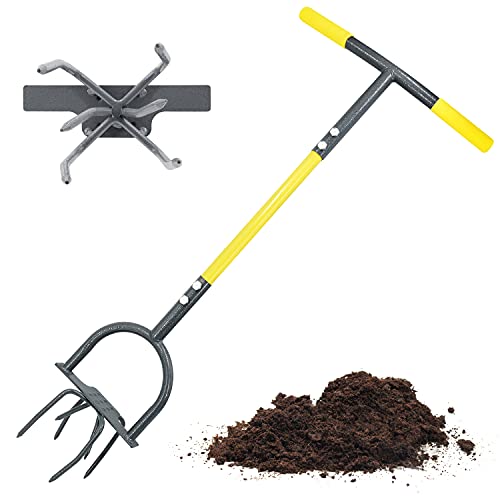
Best for: seniors or gardeners with joint strain who still want effective soil penetration and aeration. Anti-slip foot plate provides strong downward force with reduced effort, while razor-sharp tines enable aggressive soil penetration for deep tillage and aeration.
Why selected: The combination of an anti-slip plate and curved, long handle supports comfortable use. It promotes ventilated soil and healthier plants by loosening soil and allowing water and fertilizer to move freely. Caution: metal parts may require occasional maintenance to prevent rust in damp conditions.
BARAYSTUS Garden Hand Tiller With Steel Claw

Best for: small to medium garden plots, raised beds, and planter boxes where efficient tilling is needed. The longer, wider curve tines dig deeper and wider, enabling faster soil loosening and turning.
Why selected: The tool emphasizes a sturdy, reliable structure with a screw-connected handle to prevent loosening, and its wider tines reduce work time. Caution: assembly and maintenance ensure screws remain tight to avoid wobble during use.
CKLT 66in Rotary Cultivator

Best for: gardeners needing heavy-duty soil mixing and deep tillage across larger beds or raised beds. The star-shaped, multi-angled tines and tempered spring steel blades handle compacted soil and weeds effectively.
Why selected: The 66-inch adjustable stainless steel handle offers customizable reach for comfort, reducing strain during long sessions. Caution: may be heavier than compact hand tillers, requiring more user effort in tight spaces.
Fiskars Ergo Cultivator

Best for: general digging, aeration, and weed control in a broad range of garden tasks. The durable, polished aluminum head and tines deliver reliable performance with reduced fatigue thanks to ergonomic design.
Why selected: Fiskars tools are known for durability and rust resistance, making this a solid long-term choice for typical garden upkeep. Caution: heavier tasks may benefit from additional leverage tools in very dense soils.
Buying Guide
What soil type and garden size should guide your choice?
Smaller plots and raised beds benefit from hand tillers with longer ergonomic handles and compact heads, like the Walensee or Jardineer models. For larger beds and tougher soil, consider CKLT’s longer reach and stiffer tines for deeper penetration.
What features matter most?
- Tines: sharper, wider, and longer tines dig more soil per stroke, reducing effort.
- Handle design: ergonomic grips, anti-slip plates, and length adjustability lower fatigue and back strain.
- Construction: tempered steel, stainless handles, and rust resistance extend tool life.
Should you prioritize ease of use or depth of tillage?
Ease of use: Jardineer and Walensee emphasize ergonomic handling and simple assembly. Depth of tillage: CKLT and BARAYSTUS models offer robust performance for deeper soil penetration, especially in compacted soil.
Maintenance considerations
- Clean soil and debris after use to prevent rust and wear.
- Check fasteners and screws regularly on multi-piece tools.
- Store in a dry place to preserve metal components.
Safety tips
- Wear gloves and sturdy footwear to protect hands and feet.
- Use proper posture; avoid twisting the back during operation.
FAQ
- What is the main advantage of a hand tiller over a powered tiller?
Answer: It’s cheaper, lighter, quieter, and suitable for small or sensitive garden areas where motors aren’t practical. - Can these tools be used in raised beds and planter boxes?
Answer: Yes, most models are designed for raised beds, planters, and narrow spaces. - Are all tines replaceable or adjustable?
Answer: Some models feature removable or replaceable tines; check product specifics for each item. - Is there a risk of damaging cement surfaces when using a hand tiller?
Answer: Yes; these tools are designed for soil, not hard cement or concrete. - Which tool is best for seniors with limited grip strength?
Answer: Models with anti-slip foot plates, ergonomic handles, and longer reach are generally best. - How deep can most hand tillers till?
Answer: Depending on model, depths vary; some are designed for multi-inch penetration in loose to moderately compact soil.