A garden hose is long enough when it reaches the places you water by a sensible route, with room to work at the far end. Measuring the straight line from the spigot to the back fence can miss the gate, patio furniture, corners, and planted areas that determine how the hose actually moves through your yard.
Before buying the longest hose on the shelf, map the jobs you need it to reach and the place where it will live between uses. A hose that technically reaches everywhere can still be awkward if you have to drag the whole thing through a small garden every time you water one pot.
Start at the connection you will actually use
Mark the outdoor spigot you plan to use, and check that you can reach its handle and connection comfortably. A spigot hidden behind a large container or an awkward gate may need a different garden arrangement before you need a different hose.
Look at the connection and the product instructions before adding adapters or extra fittings. You want the intended components to fit properly, rather than solving a mismatch by forcing threads or tightening something you cannot inspect.
Decide where you will stand when you turn the water on and off. The route should remain workable after plants grow and after the hose is connected, not just when the yard is empty at the start of the season.
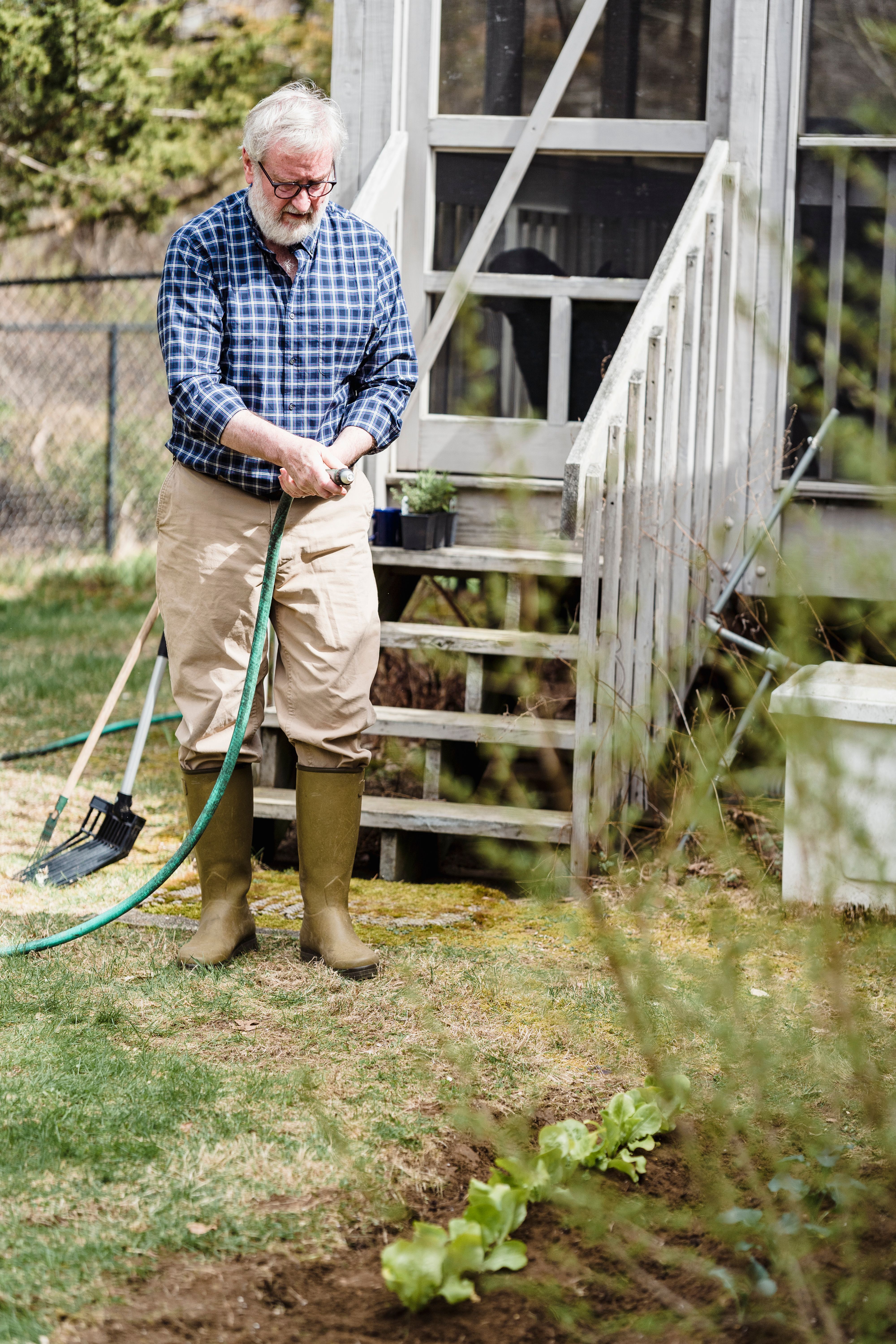
Measure the route around the obstacles
Use a tape measure, measuring wheel, or a suitable length of cord to trace the route the hose should follow. Go around beds, furniture, and corners instead of cutting across a planted patch you will not want to disturb later.
Break a winding route into short measured sections and add them together. Write each section beside a simple sketch so you can check the total and see where a change in the layout would shorten the run.
You can record an approximate distance when the exact route is still being planned. Label it as an estimate, and measure again before ordering if a few extra feet will determine whether the product works.
Add room for the task at the end
Reaching the edge of a bed is not always the same as reaching the soil you need to water. Include enough working room to hold the nozzle in a useful position without stretching the hose tightly across a corner or pulling against a plant.
Walk around the farthest container or planting area while holding the measuring cord as though it were the hose. That simple check can reveal the extra turn you need to make when the shortest route only reaches one side of the job.
Keep the extra allowance connected to a real movement rather than adding a very large length by habit. Every additional section has to be moved, drained, and stored, even when you are only watering the closest plants.

Compare two ordinary yard layouts
Imagine a spigot near your back door, a bed past a patio, and a row of containers beyond a gate. The line drawn diagonally across the patio may look short, but it is not the route you want if it crosses a seating area or rubs against a sharp corner.
Measure a route along a clear edge, through the gate opening, and into a useful position beside the containers. Now compare that total with the shorter route to the nearby bed, so you can decide whether one hose is convenient for both jobs.
You may find that a shorter hose serves most of your watering and that a separate extension is only occasionally needed. That is a layout choice to compare, not a promise that extra connections are always better than one continuous hose.
Consider the hose you will have to handle
Compare the documented length, diameter, empty weight, and storage requirements of the exact products you are considering. Those details are more useful than assuming that every hose sold at the same length will feel the same when you carry or coil it.
Remember that a working hose contains water and may feel different from an empty display sample. If handling weight matters to you, look for credible specifications and a setup you can manage without relying on repeated heavy lifting.
Check the maker's instructions for bend limits, storage, temperature exposure, and the intended use. A material or expanding design should not be treated as universally suitable for every surface, climate, or watering attachment.
Do not use length to diagnose every flow problem
If water delivery seems weak, inspect the whole setup before ordering a different hose. Check for kinks, a partly closed valve, a blocked or unsuitable attachment, and a connection that is leaking or not operating as intended.
For a practical delivery check, Iowa State Extension describes timing how long a known-size bucket takes to fill using the hose, nozzle, and setting you intend to use. That measures the setup in front of you rather than assuming that a catalog length tells you the flow at your plants.
Keep the bucket's volume and the measured filling time together in your notes, and use consistent units if you calculate a rate. The result describes that particular setup and setting; it is not a guarantee that every nozzle position delivers the same amount.
Choose a storage place before you buy
Measure the space where the hose or reel will sit, including room to move the connection and operate any handle. A reel that fits against a wall on paper may become awkward if a door swings across it or a planting blocks the winding motion.
Think about what happens after watering, when the hose is wet and you want to put it away quickly. A clear route to storage makes it easier to avoid leaving loops across a walking path.
Do not assume a reel and a hose are compatible just because both are sold for garden use. Check their documented capacities, fitting requirements, and any limits related to hose type before combining them.
Make the first run a layout check
Once you have the hose, lay it along the intended route before you begin watering. Notice any corner that pulls tightly, any bend that kinks, and any section that lies where someone is likely to trip over it.
Use the actual watering attachment and check the farthest ordinary task. If you have to stretch the hose or stand somewhere awkward to reach a plant, revisit the route rather than relying on extra pulling every day.
Put the hose away once using the storage arrangement you planned. That is part of the practical fit, and it is easier to correct an awkward setup while you are still paying attention to how all the pieces work together.
Check the route with the gate in use
A garden gate can change your measurement when it swings across the route or closes on the hose. Test the ordinary open position and think about how other people need to pass through while you are watering, keeping the hose away from pinching points.
If the safest route requires moving a chair or opening a second access point, include that task in your routine. A length that works only after an inconvenient rearrangement may still be a poor practical fit, even when the measurement itself is accurate.
Keep the purchase decision tied to the yard
Write your measured route, working allowance, connection details, and storage plan on one short shopping note. If you compare a different hose later, you will have a concrete set of requirements instead of trying to remember which distance you guessed.
Check local watering instructions when restrictions or seasonal rules apply, and select equipment suited to the water source and purpose. A convenient route does not replace the need to use the system as its manufacturer and local supplier intend.
You are looking for the shortest practical arrangement that serves your real jobs comfortably, not the greatest possible reach at any cost. When the hose reaches the work, stays out of the way, and goes back into storage without a struggle, the length has done its job.
Sources
Primary references checked October 25, 2026. The examples in this guide are illustrative planning exercises.
NEXT JOB
Keep the work moving.
Before putting a tool away, check its condition, follow its care instructions, and store it ready for the next job.

Garden Hose Spray Patterns: Which One Fits the Job?
Match the spray and control to the plant and watering job in front of you.

Best Garden Hose Nozzles for Pots, Beds, and Cleanup
Compare nozzle controls and spray changes with your ordinary watering tasks.