Bypass and anvil pruners may look similar in a store, but they close in different ways. If you know which part of the tool moves past the stem and which part supports it, you can make a more sensible choice for the cut in front of you instead of buying by handle color or a vague heavy-duty label.
Start with the plant material, then check the tool's condition, fit, and documented capacity. The mechanism matters, but a suitable tool used beyond its limits can still leave an awkward cut or become damaged.
Watch the blades before you compare the handles
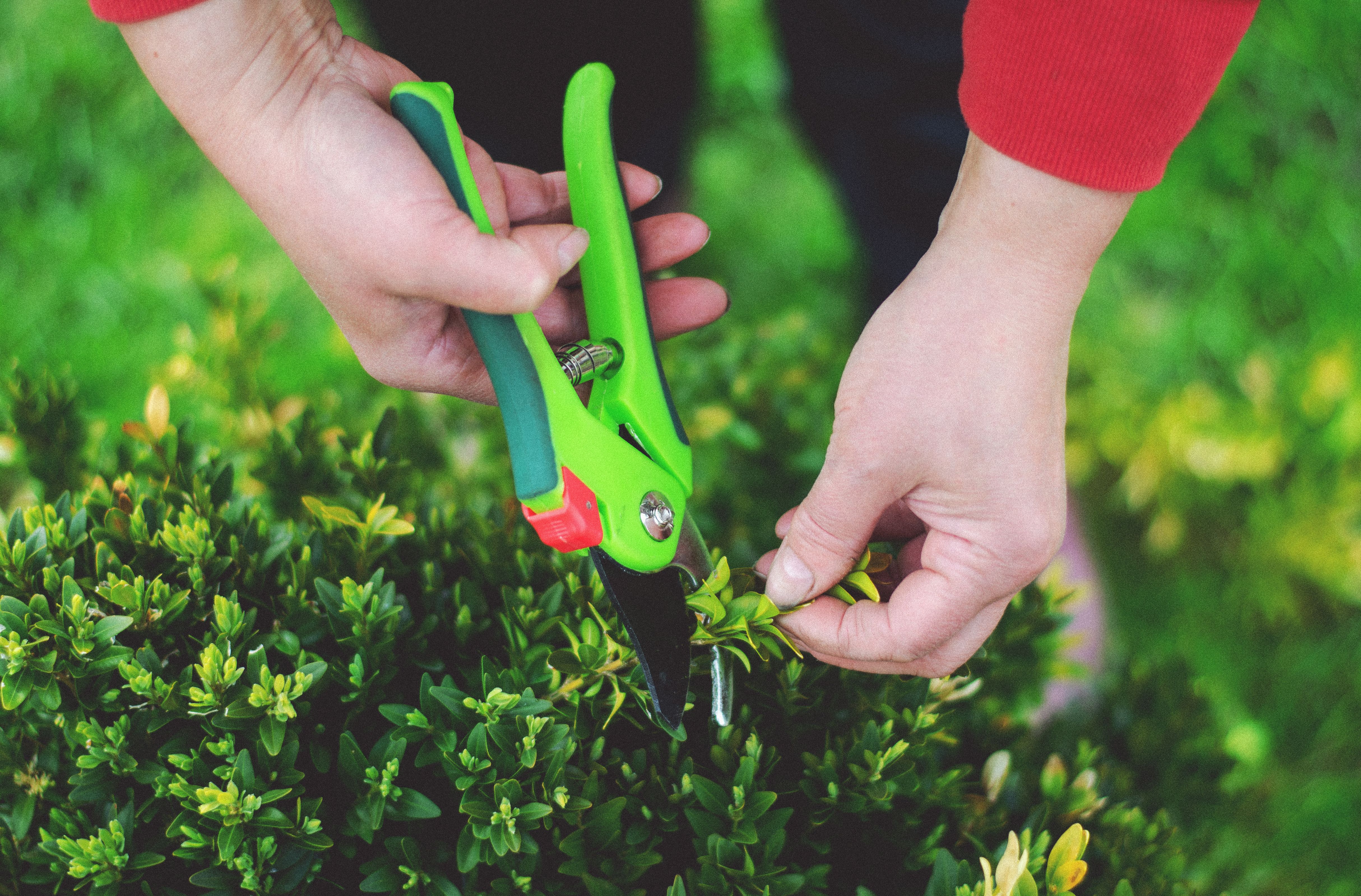
Open a bypass pruner and look for a curved cutting blade that passes beside a broader counterblade as the handles close. The two parts overlap rather than bringing the sharpened edge straight down onto a flat stop.
An anvil pruner closes its sharpened blade against a supporting surface, usually called the anvil. You can often recognize the action by watching the empty tool close slowly, keeping your fingers well away from the blade and moving parts.
Iowa State Extension describes the bypass mechanism as a scissor action and notes that anvil tools are more likely to crush stems. That difference is a useful starting point, rather than a claim that every tool with the same mechanism performs identically.
Separate living growth from dead material
For ordinary cuts on living stems, a sharp bypass pruner is generally the more useful starting choice. Both Iowa State and University of Maryland Extension favor bypass cutting when a clean cut with less tissue crushing is the aim.
Anvil pruners can be useful for dead stems, and Iowa State notes that they can be less likely to jam in that material. That does not make an anvil tool a substitute for a larger tool when a branch does not fit the jaws properly.
If you are unsure whether a branch is alive, do not choose the mechanism as a way to skip identifying the material. Work out the plant and the pruning goal first, especially when removing the wrong stem would change the shape or health of a valued plant.
Read capacity as a limit, not a challenge
Check the instructions for your exact model and the material the stated capacity describes. A general gardening article cannot tell you that every pair of hand pruners will comfortably cut the same branch diameter.
A branch that barely fits the open jaws may still require more effort than you can control comfortably. If you have to twist, wrench, or repeatedly force the handles, stop and reassess the tool and the cut instead of treating it as a test of your grip strength.
University of Maryland Extension warns that cutting material too large for a pruner can damage both the plant and the tool. A more suitable lopper or pruning saw may make sense, provided you can use it safely in the available space.

Think about the stem you are keeping
Before you close the handles, identify the part of the plant that will remain. You want a controlled cut and an appropriate final position, rather than simply getting the unwanted piece off by any available angle.
With a bypass tool, the sharp blade and supporting side do different jobs, so pay attention to how the model is meant to sit against the stem. Follow the maker's technique instructions and plant-specific pruning guidance if the position is unclear.
Do not use a general tool comparison as a pruning prescription for every shrub or tree. Where and when you cut depends on the plant and the purpose, which is a separate decision from recognizing the pruner's mechanism.
Check hand fit while the tool is empty
A comfortable-looking grip in a photograph tells you less than a safe, empty-tool check in your own hand. See whether you can open and close the handles without stretching your fingers or changing your grip awkwardly.
Check the lock and the resting position of the handles as well. A lock you struggle to operate can make the tool inconvenient to secure and store, even if the blade mechanism suits the plant material.
If a tool offers an adjustable opening, read what the adjustment changes and how to set it. A smaller grip opening does not automatically change the blade's documented cutting limit or turn a difficult branch into a suitable hand-pruner job.
Inspect condition before blaming the mechanism
Look for obvious damage, looseness, a bent part, or debris that prevents the blades from moving as intended. Follow the model's inspection and adjustment instructions rather than tightening every visible screw until the tool becomes stiff.
A dirty or dull cutting edge can make a suitable bypass pruner disappointing. The answer may be appropriate cleaning or sharpening, but a damaged blade or an uncertain adjustment deserves more careful attention than a quick pass with a file.
Do not assume a very cheap replacement and an extensively damaged older tool are your only choices. Check whether the manufacturer offers the correct service parts and instructions before deciding what is worth repairing.
Work through a mixed pruning session
Imagine you have a few small living shoots and several dry twigs to remove from a garden shrub. First confirm the pruning goal and the plant's timing, then separate the jobs by material and access rather than making one tool handle everything.
A sharp bypass tool may suit the small living shoots when they are within its documented capacity. For dead material, an appropriate anvil tool may be an option, but you still need a clear view of the cut and a stem that fits the tool.
If one branch is thicker or hidden behind other stems, stop and plan that cut separately. You do not have to finish every branch in the same session, especially if the next step requires more reach, different equipment, or professional help.
Keep the working area simple
Clear loose objects from the place where you will stand, and decide where the cut material will go. A tidy position makes it easier to watch the blades and the plant rather than balancing around buckets and discarded branches.
Keep your free hand away from the cutting path and use protection appropriate to the task and tool instructions. If you cannot hold the work safely without putting a hand near the blade, change the setup or seek a safer approach.
Do not carry an open pruner loose in a pocket or leave it on the ground between tasks. Close and secure it as its instructions specify, and use a suitable carrying arrangement when you move around the garden.
Turn your observations into a short checklist
Before shopping, write down the living stems you regularly cut, the dead material you encounter, and the awkward positions you want to avoid. Add what you noticed about handle opening and the lock, so your comparison stays connected to the garden rather than to a product's name.
If you already own a pruner, describe the specific problem with it instead of simply writing that it is old. A loose joint, uncomfortable grip, missing part, and unsuitable mechanism are different reasons to consider maintenance or replacement, and they need different answers.
Make a useful first purchase
For a modest home garden with routine living-stem cuts, a well-fitting bypass pruner is usually a practical first tool to research. Add a different mechanism because you have a recurring job for it, rather than because a set looks more complete with two matching handles.
Compare the documented capacity, grip opening, lock, maintenance instructions, and availability of the exact replacement parts you might need. Those details make a more useful buying checklist than an untested promise that one model will make all pruning effortless.
If neither mechanism feels comfortable or suits the material, keep looking at the job before choosing another product. The right decision may be a different size of tool, a revised pruning plan, or help with a cut you should not attempt on your own.
Sources
Primary references checked October 25, 2026. The examples in this guide are illustrative planning exercises.
NEXT JOB
Keep the work moving.
Before putting a tool away, check its condition, follow its care instructions, and store it ready for the next job.

How to Choose Pruners That Fit Your Hand
Check your hand measurements, opening reach, and working hand before choosing a pruner.

Pruners, Loppers, or a Saw: Choose Before You Squeeze
Decide whether the next branch calls for hand pruners, two handles, or a saw.